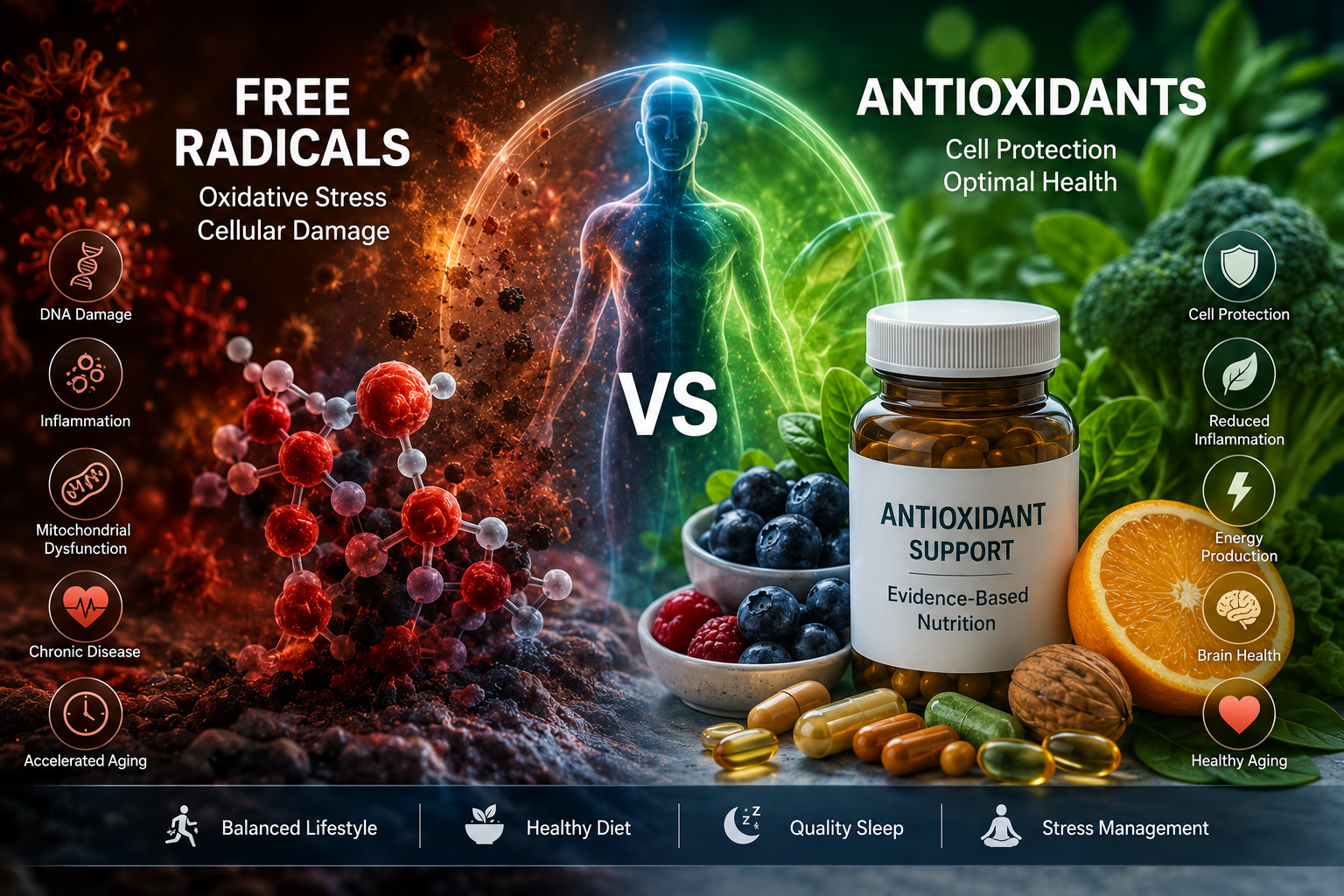

What Science Really Says About Cellular Aging, Disease Prevention and Evidence-Based Supplementation
Introduction
Every second, billions of chemical reactions take place inside the human body. These reactions generate energy, support immune function, repair tissues, and sustain life. As a natural consequence of these metabolic processes, our cells continuously produce free radicals—highly reactive molecules capable of interacting with DNA, proteins, lipids, and other cellular structures.
For decades, free radicals were portrayed as the primary villains behind aging and chronic disease. Today, however, modern biomedical research paints a far more nuanced picture.
Free radicals are not inherently harmful. In fact, they are essential for immune defense, cellular communication, wound healing, and adaptation to physical exercise. Problems arise only when their production exceeds the body’s antioxidant defenses, leading to a condition known as oxidative stress.
Oxidative stress has been associated with cardiovascular disease, diabetes, neurodegenerative disorders, age-related eye diseases, chronic inflammation, metabolic dysfunction, and biological aging. Consequently, antioxidants—whether obtained through diet or supplementation—have become an area of intense scientific interest.
This evidence-based guide explores how oxidative stress develops, how the body naturally protects itself, and what current research says about antioxidant supplements from A to Z.
⚡ What Are Free Radicals?

Free radicals are unstable molecules containing one or more unpaired electrons.
Because electrons naturally seek stability, these molecules readily react with nearby structures, potentially altering cellular components.
The most important reactive molecules include:
- Reactive Oxygen Species (ROS)
- Reactive Nitrogen Species (RNS)
Although often viewed negatively, these molecules are indispensable for normal physiology.
🧬 Why Does the Body Produce Free Radicals?
Free radicals are continuously generated during normal metabolism.
Major physiological sources include:
- ATP production inside mitochondria
- Immune cell activity against microorganisms
- Cellular signaling pathways
- Tissue repair
- Physical exercise
- Inflammatory responses
Without these processes, human survival would not be possible.
🛡️ The Essential Roles of Free Radicals
Scientific evidence demonstrates several beneficial functions.
Immune Defense
White blood cells deliberately generate reactive oxygen species to destroy bacteria, viruses, fungi, and parasites.
Cellular Communication

Reactive molecules act as signaling messengers, regulating:
- Cell growth
- Apoptosis (programmed cell death)
- Gene expression
- Tissue repair
Exercise Adaptation
During exercise, temporary increases in ROS stimulate:
- Mitochondrial biogenesis
- Improved antioxidant enzyme production
- Better metabolic efficiency
This is one reason why excessive antioxidant supplementation immediately before or after training may blunt some exercise adaptations in certain contexts.
⚠️ What Is Oxidative Stress?
Oxidative stress occurs when free radical production exceeds the body’s antioxidant capacity.
This imbalance can damage:
- 🧬 DNA
- 🧪 Proteins
- 🧱 Cell membranes (lipid peroxidation)
- ⚡ Mitochondria
Persistent oxidative stress is associated with accelerated biological aging and numerous chronic diseases.
🚬 What Increases Oxidative Stress?
Several lifestyle and environmental factors contribute to excessive oxidative stress.
Major contributors include:
- Smoking
- Excessive alcohol intake
- Air pollution
- Ultraviolet radiation
- Poor diet
- Obesity
- Diabetes
- Chronic psychological stress
- Sleep deprivation
- Physical inactivity
- Chronic inflammation
Reducing these factors is often more impactful than relying solely on supplements.
❤️ Diseases Associated with Oxidative Stress
Research suggests oxidative stress contributes to the development or progression of:
- Cardiovascular disease
- Hypertension
- Type 2 diabetes
- Metabolic syndrome
- Alzheimer’s disease
- Parkinson’s disease
- Age-related macular degeneration
- Cataracts
- Chronic kidney disease
- Sarcopenia
- Osteoarthritis
- Non-alcoholic fatty liver disease
Oxidative stress should be viewed as one contributing mechanism among many, rather than the sole cause of these conditions.
🛡️ The Body’s Natural Antioxidant Defense System
Long before supplements existed, the human body evolved sophisticated antioxidant systems.
These include:
- Glutathione
- Superoxide dismutase (SOD)
- Catalase
- Glutathione peroxidase
- Thioredoxin
- Peroxiredoxins
Nutrition and healthy lifestyle habits help support these endogenous defenses.
🥗 Food First: Nature’s Antioxidant Network
Whole foods provide hundreds of bioactive compounds that work together.
Examples include:
- Vitamin C
- Vitamin E
- Carotenoids
- Polyphenols
- Flavonoids
- Anthocyanins
- Selenium
- Zinc
Because these compounds interact synergistically, diets rich in fruits, vegetables, legumes, whole grains, nuts, seeds, and fish consistently outperform isolated supplements for overall health.
💊 Antioxidant Supplements from A to Z
🅰️ Vitamin A
Supports normal vision, immune function, and epithelial health.
Evidence: Moderate.
🍊 Vitamin C
A water-soluble antioxidant involved in collagen synthesis, immune function, and regeneration of vitamin E.
Evidence: Strong for deficiency correction and general health; inconsistent for chronic disease prevention in healthy adults.
🌻 Vitamin E
Protects cell membranes from lipid oxidation.
Evidence: Strong biological rationale, but routine high-dose supplementation has not consistently improved long-term clinical outcomes.
🧬 Coenzyme Q10 (CoQ10)
Supports mitochondrial ATP production and functions as a lipid-soluble antioxidant.
Evidence supports benefits in selected situations such as certain forms of heart failure and statin-associated muscle symptoms.
Evidence: Strong for specific indications.
🫐 Anthocyanins
Natural pigments found in berries.
Potential benefits include vascular support, retinal protection, and anti-inflammatory effects.
Evidence: Moderate.
🟠 Astaxanthin
A marine carotenoid with potent antioxidant activity.
Research suggests benefits for skin, eye health, and exercise recovery, although more high-quality clinical trials are needed.
Evidence: Moderate.
🌿 Curcumin
Derived from turmeric.
May help regulate inflammatory pathways and oxidative stress.
Bioavailability varies substantially between formulations.
Evidence: Moderate.
🍇 Resveratrol
A polyphenol found in grapes and berries.
Laboratory findings are promising, but consistent clinical benefits in humans remain uncertain.
Evidence: Limited to moderate.
🧪 Alpha-Lipoic Acid
Functions in mitochondrial energy metabolism and can regenerate other antioxidants.
Evidence supports use in some patients with diabetic neuropathy.
Evidence: Moderate.
🧪 N-Acetylcysteine (NAC)
Acts as a precursor to glutathione.
Used clinically in acetaminophen poisoning and investigated in several other conditions.
Evidence: Strong for approved medical indications.
🧬 Glutathione
The body’s principal intracellular antioxidant.
Oral supplementation shows variable absorption, while supporting endogenous production through healthy nutrition remains an important strategy.
Evidence: Emerging.
🌰 Selenium
Essential component of antioxidant enzymes.
Both deficiency and excess may be harmful.
Evidence: Moderate.
🥜 Zinc
Supports antioxidant enzymes, immune function, and retinal health.
Included in the AREDS2 formulation for selected patients with age-related macular degeneration.
Evidence: Strong in specific clinical contexts.
🐟 Omega-3 Fatty Acids
Support membrane integrity and inflammation regulation.
Most consistent evidence relates to cardiovascular health and triglyceride reduction in appropriate patients.
Evidence: Moderate to strong depending on the indication.
⚠️ Can Too Many Antioxidants Be Harmful?
Yes.
More is not always better.
Clinical trials have shown that excessive antioxidant supplementation may:
- Interfere with exercise adaptations.
- Interact with medications.
- Increase the risk of adverse effects in specific populations.
- Fail to provide benefits despite strong laboratory findings.
Supplementation should therefore be individualized and evidence-based.
🧠 Lifestyle Matters More Than Supplements
The strongest evidence supports:
- 🥗 Mediterranean-style eating patterns.
- 🏃 Regular physical activity.
- 😴 High-quality sleep.
- 🚭 Smoking cessation.
- ⚖️ Healthy body weight.
- ☀️ Protection from excessive UV exposure.
- 🧘 Stress management.
These interventions improve the body’s own antioxidant defenses and reduce excessive oxidative stress.
📌 Key Takeaways
- Free radicals are essential for life and normal physiology.
- Oxidative stress results from an imbalance between free radicals and antioxidant defenses.
- Whole-food dietary patterns consistently outperform isolated supplements for overall health.
- Certain supplements have strong evidence in specific medical conditions but are not universal solutions.
- Healthy lifestyle habits remain the cornerstone of reducing oxidative stress and promoting healthy aging.
🏁 Conclusion
Free radicals are neither heroes nor villains—they are an essential part of human biology. Every day, our bodies produce reactive molecules that help fight infections, repair tissues, regulate cellular communication, and adapt to physical activity.
The challenge begins when oxidative stress overwhelms the body’s natural antioxidant defenses. Over time, this imbalance may contribute to cellular aging and increase the risk of chronic diseases such as cardiovascular disease, type 2 diabetes, neurodegenerative disorders, age-related macular degeneration, and metabolic dysfunction.
Current scientific evidence consistently shows that the most effective strategy is not to eliminate free radicals, but to maintain a healthy balance between oxidant production and antioxidant defenses.
A diet rich in colorful fruits and vegetables, regular physical activity, restorative sleep, smoking cessation, stress management, and proper control of metabolic health remain the cornerstones of reducing excessive oxidative stress.
Evidence-based supplementation may also play an important role in selected situations, including nutritional deficiencies or specific medical conditions where clinical trials have demonstrated benefit. However, supplements should complement—not replace—a healthy lifestyle.
As research continues to evolve, understanding oxidative stress through an evidence-based perspective empowers individuals to make informed decisions that support longevity, healthy aging, and overall well-being.
👨⚕️ About the Author
Matheus Lucas Araújo Sousa, PharmD
Licensed Pharmacist | Evidence-Based Health Content Creator | Founder of Strategic Healths
Matheus Lucas Araújo Sousa is a pharmacist dedicated to translating complex scientific research into practical, reliable, and accessible health information. Through Strategic Healths, he produces evidence-based educational content focused on nutrition, dietary supplements, disease prevention, healthy aging, metabolic health, and lifestyle medicine.
His mission is to help readers make informed healthcare decisions based on high-quality scientific evidence while promoting long-term wellness and disease prevention.
🔗 Related Evidence-Based Articles
If you enjoyed this article, you may also like:
- 👁️ Age-Related Macular Degeneration (AMD): Early Signs, Best Nutrients and What Science Really Says
- 🧬 The Science of Healthy Aging: Evidence-Based Strategies to Slow Aging Naturally
- 🐟 Omega-3 Benefits: What Science Really Says About Heart, Brain, and Longevity
- 🧬 Coenzyme Q10 (CoQ10): Benefits, Uses, Dosage, Side Effects, and What Science Really Says
- 🧴 Collagen Supplements: Do They Really Work for Skin, Hair and Joints?
- 🌱 Berberine: Benefits, Dosage, Side Effects and What Science Really Says
- 💪 Creatine: Benefits Beyond Muscle Growth According to Current Evidence
- 🌙 Melatonin: Benefits, Safety, Dosage and What Science Really Says
- 🔥 Insulin Resistance: Early Signs, Diagnosis and Natural Ways to Improve Metabolic Health
- 💇 Hair Loss Explained: Causes, Best Supplements and What Science Really Says
- 🧠 Brain Health and Cognitive Longevity
- 🧂 Is Unrefined Salt Healthier? What Science Really Says About Sea Salt, Himalayan Salt and Celtic Salt
- 🦠 Gut Microbiome: Why Your Gut Health Influences Your Entire Body
- 👨⚕️ Testosterone: Science-Based Strategies to Support Healthy Levels Naturally
Leave a Reply