By Matheus Lucas Araújo Sousa, Pharmacist
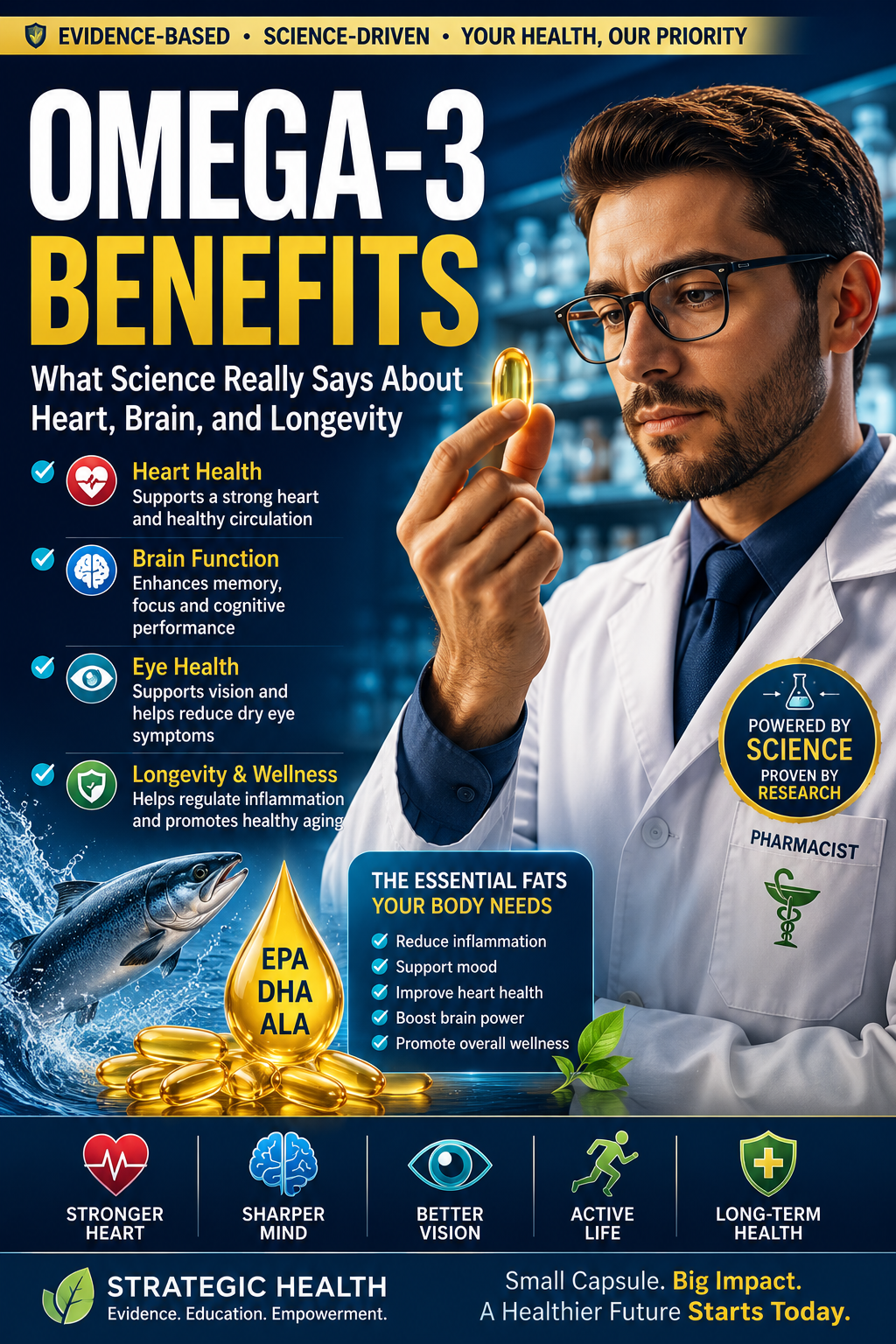
🫀 Omega-3 Benefits: What Science Really Says About Heart, Brain, and Longevity
Evidence-Based Guide to EPA, DHA, and ALA

Introduction
Omega-3 fatty acids are among the most extensively studied nutrients in modern medicine. Over the past several decades, thousands of scientific publications have investigated their effects on cardiovascular health, brain function, vision, inflammation, pregnancy, aging, and overall well-being.
Despite their popularity, many misconceptions remain regarding who should take omega-3 supplements, which form is most effective, and what benefits are actually supported by high-quality scientific evidence.
This comprehensive guide reviews current knowledge based on recommendations from major international organizations and findings from randomized clinical trials and systematic reviews.
What Is Omega-3?
Omega-3 refers to a family of polyunsaturated fatty acids that play essential roles in human physiology.
Unlike some nutrients, the body cannot efficiently produce sufficient amounts of omega-3 fatty acids, making dietary intake particularly important.
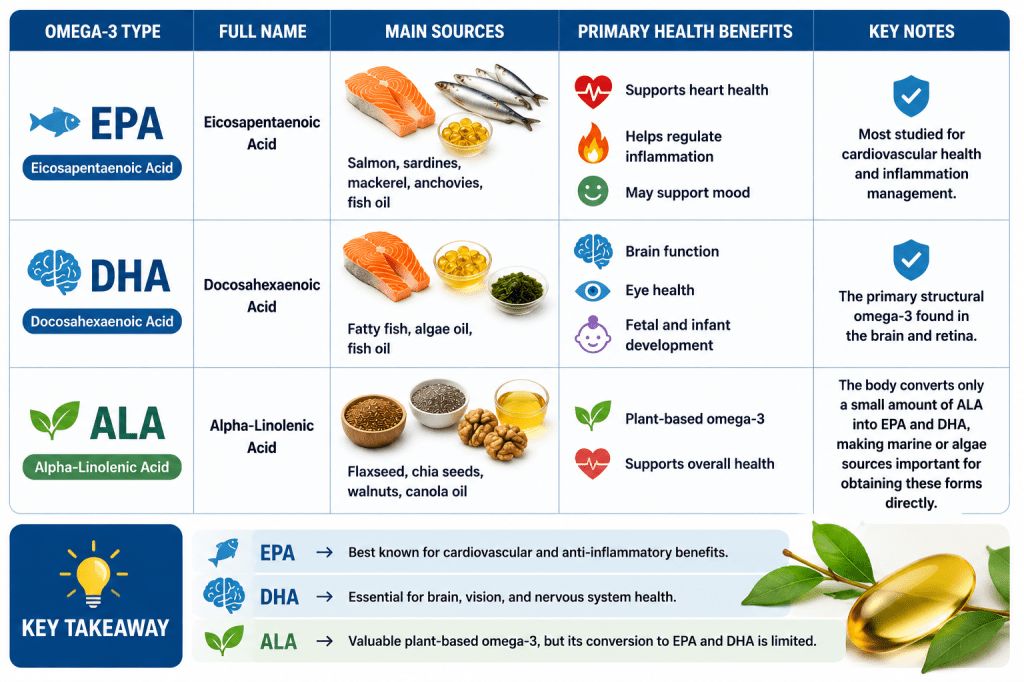
The three primary forms are:
Brain Function 🧠
The human brain is composed of nearly 60% fat by dry weight, making dietary fatty acids essential for normal neurological function. Among these, docosahexaenoic acid (DHA) is the most abundant omega-3 fatty acid in the brain and serves as a major structural component of neuronal membranes.
Because the brain cannot produce sufficient DHA independently, obtaining adequate amounts through diet or supplementation is important throughout life.
Memory and Cognitive Performance
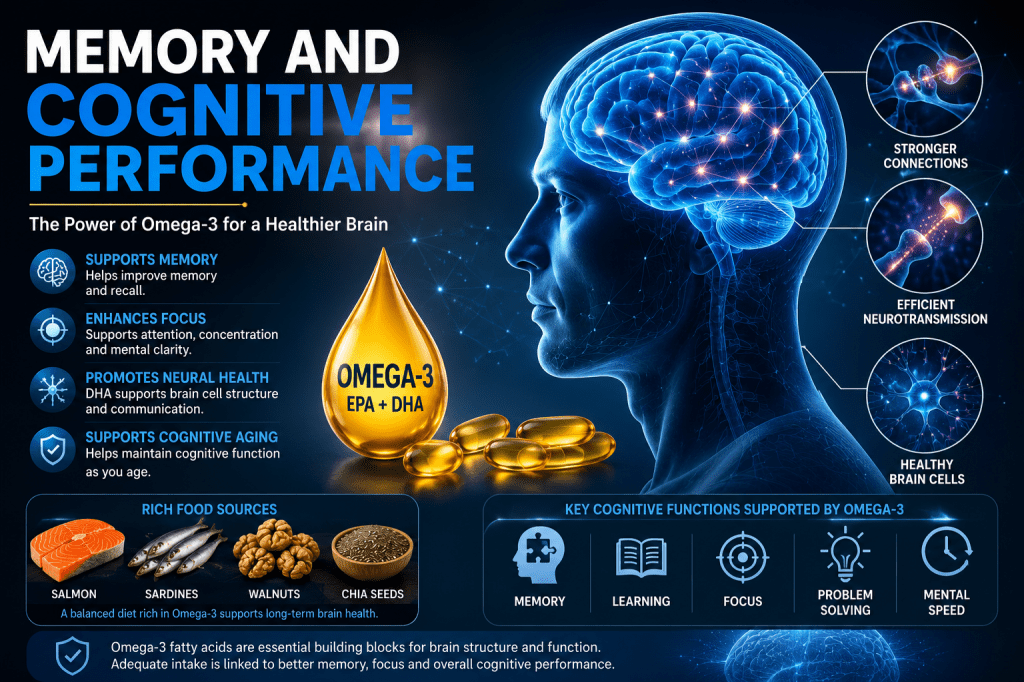
Healthy neurons communicate through specialized junctions called synapses. DHA helps maintain membrane fluidity, supporting efficient nerve signal transmission and synaptic plasticity—processes involved in learning and memory.
Several observational studies have associated higher omega-3 intake with better cognitive performance, although intervention trials have produced mixed results. Current evidence suggests that maintaining adequate omega-3 status contributes to overall brain health, particularly when combined with regular physical activity, quality sleep, and a balanced diet.
Potential cognitive benefits include:
- 🧠 Improved memory performance
- ⚡ Enhanced learning capacity
- 🎯 Better concentration
- 📚 Support for executive function
- 👴 Healthy cognitive aging
Mental Health
Researchers have also explored the relationship between omega-3 fatty acids and mental health.
EPA, in particular, has attracted attention because of its potential role in regulating inflammatory pathways that may influence mood disorders.
Although omega-3 supplements are not considered a primary treatment for depression or anxiety, some clinical studies suggest that EPA-rich formulations may provide additional benefit alongside standard medical care for selected patients.
Importantly, individuals experiencing symptoms of depression or anxiety should seek evaluation from qualified healthcare professionals rather than relying solely on supplements.
Healthy Brain Aging
As life expectancy increases, preserving cognitive function has become a major public health goal.
Age-related changes in the brain involve oxidative stress, chronic inflammation, and gradual alterations in neuronal communication.
Because DHA contributes to neuronal membrane integrity, researchers continue to investigate whether long-term omega-3 intake may help support healthy brain aging. While results remain mixed, maintaining adequate dietary intake aligns with current nutritional recommendations for overall health.
Eye Health 👁️
The retina contains one of the highest concentrations of DHA in the entire body.
This omega-3 fatty acid plays a critical structural role in photoreceptor cells responsible for converting light into visual signals.
Adequate DHA intake supports normal retinal function throughout life.
Dry Eye Syndrome

Dry eye disease affects millions of adults worldwide, especially older individuals and people who spend long hours using digital devices.
Some studies suggest omega-3 supplementation may improve certain symptoms of dry eye by supporting tear film stability and reducing ocular surface inflammation. However, clinical findings have been inconsistent, and professional organizations note that benefits may vary between individuals.
Age-Related Macular Health
Researchers have also investigated whether diets rich in omega-3 fatty acids may support long-term retinal health.
Regular consumption of fatty fish has been associated in observational research with healthier aging of the retina, although supplementation has not consistently demonstrated the same effects in clinical trials.
For this reason, obtaining omega-3 through a balanced diet remains an important recommendation.
Omega-3 and Inflammation 🔥
Inflammation is a normal biological response that helps protect the body against infection and injury.
Problems arise when low-grade inflammation persists for months or years.
Chronic inflammation has been linked to numerous conditions, including:
- Cardiovascular disease
- Type 2 diabetes
- Obesity
- Rheumatoid arthritis
- Non-alcoholic fatty liver disease
- Certain neurodegenerative disorders
Unlike many anti-inflammatory medications, omega-3 fatty acids do not simply suppress inflammation.
Instead, EPA and DHA are converted into specialized pro-resolving mediators—including resolvins, protectins, and maresins—that help regulate and conclude the inflammatory response in a controlled manner.
This emerging area of research has become one of the most exciting fields in nutritional science.
Exercise Recovery
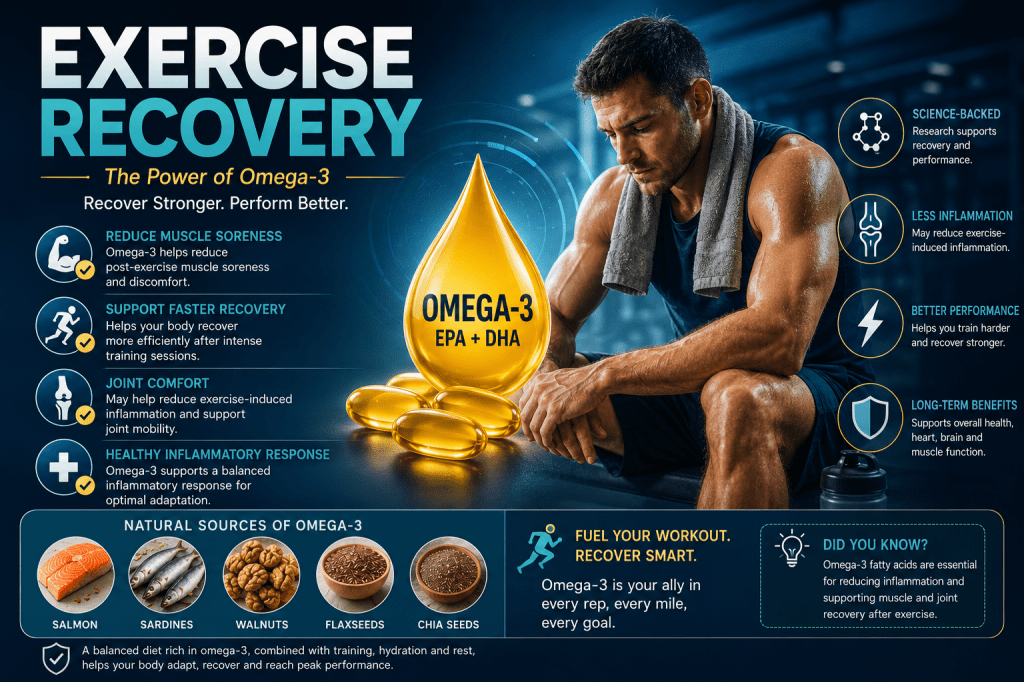
Athletes and physically active individuals often experience temporary inflammation following intense exercise.
Some studies suggest omega-3 supplementation may:
- 💪 Reduce post-exercise muscle soreness
- ⚡ Support recovery
- 🦵 Improve joint comfort
- 🔬 Help regulate exercise-induced inflammation
However, benefits depend on dosage, duration, training status, and overall nutrition.
Healthy Aging & Longevity 🌿
Healthy aging is about more than simply extending lifespan—it also involves maintaining independence, mobility, cognition, and quality of life.
Because omega-3 fatty acids influence multiple biological systems, they have become an important focus of longevity research.
Potential areas of benefit include:
- ❤️ Cardiovascular health
- 🧠 Brain function
- 🦴 Healthy aging of muscles and joints
- 🔥 Balanced inflammatory responses
- 🛡️ Cellular resilience
Current evidence suggests that individuals who regularly consume fish as part of a healthy dietary pattern often experience better long-term health outcomes than those who rarely consume seafood.
Nevertheless, longevity depends on numerous lifestyle factors, including physical activity, sleep, smoking status, weight management, and overall dietary quality.
Omega-3 should therefore be viewed as one component of a comprehensive healthy lifestyle rather than a standalone solution.
Natural Food Sources 🐟
Nutrition experts consistently recommend obtaining omega-3 primarily through food whenever possible.
Fatty fish remain the richest natural sources of EPA and DHA.
Best Sources of EPA and DHA
- 🐟 Salmon
- 🐟 Sardines
- 🐟 Mackerel
- 🐟 Herring
- 🐟 Anchovies
- 🦪 Oysters
Most dietary guidelines recommend consuming at least two servings of fatty fish per week for healthy adults, unless individual medical circumstances require different advice.
Best Plant Sources of ALA
People following vegetarian or vegan dietary patterns can obtain ALA from several plant foods, including:
- 🌱 Flaxseed
- 🌱 Chia seeds
- 🌱 Walnuts
- 🌱 Hemp seeds
- 🌱 Canola oil
- 🌱 Soybean oil
Because conversion of ALA into EPA and DHA is limited, algae-based omega-3 supplements may be an appropriate alternative for individuals who avoid seafood.
Supplementation 💊
Although food should remain the primary source of omega-3, supplementation may be appropriate for certain individuals under professional guidance.
People who may benefit include:
- Individuals who rarely consume fish
- Adults with elevated triglyceride levels
- Older adults with low dietary intake
- Pregnant or breastfeeding women (particularly for DHA)
- People following vegetarian or vegan diets (using algae-derived products)
When selecting a supplement, pay attention to the actual EPA and DHA content, not simply the total amount of fish oil listed on the front label.
High-quality products should also be independently tested for purity, oxidation, and contaminants such as mercury, dioxins, and PCBs.
Recommended Dosages 💊
Omega-3 requirements vary according to age, health status, dietary habits, and specific medical conditions. There is no universal dose appropriate for everyone.
For healthy adults, most international organizations recommend consuming omega-3 primarily through a balanced diet that includes fatty fish at least twice per week. Individuals who do not regularly consume seafood may consider supplementation under the guidance of a healthcare professional.
General evidence-based guidance includes:
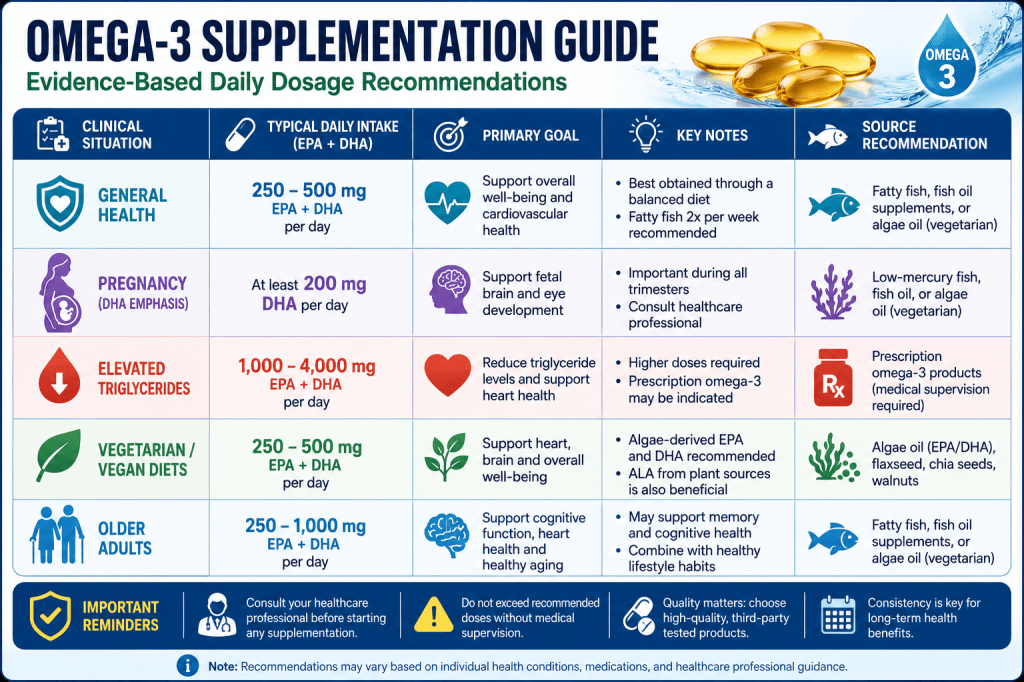
*Recommendations differ among organizations and individual medical circumstances. Prescription omega-3 products should only be used under professional supervision.
Safety and Side Effects ⚠️
Omega-3 supplements are generally well tolerated when used appropriately.
The most frequently reported side effects include:
- Mild fishy aftertaste
- Gastrointestinal discomfort
- Burping
- Mild nausea
These effects can often be reduced by taking supplements with meals or choosing high-quality, enteric-coated products.
Large doses should not be taken without medical advice, particularly in individuals receiving anticoagulants or antiplatelet medications. Current evidence suggests that commonly recommended doses are generally safe, but treatment decisions should always be individualized.
Individuals should consult a healthcare professional before beginning supplementation if they:
- Use blood-thinning medication
- Are scheduled for surgery
- Are pregnant or breastfeeding
- Have chronic medical conditions requiring ongoing treatment
Choosing a High-Quality Omega-3 Supplement
Not all omega-3 supplements are manufactured to the same quality standards.
When comparing products, consider the following:
✅ Amount of EPA and DHA per serving (not just total fish oil)
✅ Third-party quality testing
✅ Purity and contaminant testing
✅ Low oxidation values
✅ Transparent labeling
✅ Good Manufacturing Practices (GMP)
A higher concentration of EPA and DHA often means fewer capsules are required to achieve the desired intake.
Practical Tips for Daily Intake
Small lifestyle changes can help increase omega-3 intake naturally.
Practical strategies include:
- Eat fatty fish twice weekly.
- Add flaxseed or chia seeds to breakfast.
- Include walnuts as part of healthy snacks.
- Read supplement labels carefully.
- Store fish oil away from excessive heat and light.
- Maintain a balanced diet rich in vegetables, fruits, whole grains, and lean proteins.
Remember that omega-3 works best as part of an overall healthy lifestyle rather than as an isolated intervention.
What Does the Science Say? 📚
Current scientific evidence supports the importance of omega-3 fatty acids as part of a healthy dietary pattern.
Research consistently demonstrates benefits in several areas:
- Reduction of elevated triglyceride levels.
- Essential structural role of DHA in the brain and retina.
- Support for normal cardiovascular function.
- Contribution to healthy inflammatory regulation.
- Importance during pregnancy and early childhood development.
At the same time, it is important to recognize the limits of current evidence. Omega-3 supplements are not a cure for cardiovascular disease, dementia, depression, or other chronic conditions. Their effectiveness depends on factors such as the individual’s health status, dietary pattern, dose, formulation, and the outcomes being evaluated.
For most people, the strongest evidence supports obtaining omega-3 through regular consumption of fatty fish and other nutrient-rich foods. Supplementation may be appropriate in selected situations, particularly when dietary intake is insufficient or when recommended by a qualified healthcare professional.
Key Takeaways 💡
✔ EPA is particularly associated with cardiovascular health and inflammatory regulation.
✔ DHA is essential for normal brain development, cognitive function, and retinal health.
✔ ALA is a valuable plant-derived omega-3, but its conversion to EPA and DHA is limited.
✔ Fatty fish remain the richest natural dietary source of EPA and DHA.
✔ Omega-3 supplements should complement—not replace—a healthy diet and lifestyle.
✔ Choosing high-quality products and following professional guidance helps maximize safety and effectiveness.
Conclusion
Omega-3 fatty acids remain among the most extensively studied nutrients in modern nutrition and preventive medicine. Their importance extends well beyond cardiovascular health, contributing to normal brain function, retinal integrity, inflammatory regulation, and healthy development throughout the lifespan.
The current body of scientific evidence supports the inclusion of omega-3-rich foods—particularly fatty fish—as part of a balanced dietary pattern. While supplementation may be beneficial for some individuals, it should be considered in the context of personal health needs, existing medical conditions, and guidance from qualified healthcare professionals.
Ultimately, no single nutrient determines long-term health. Regular physical activity, restorative sleep, avoidance of tobacco, stress management, and a nutrient-dense diet remain the foundations of healthy aging. Omega-3 is best viewed as one valuable component of this broader lifestyle approach.
Making informed, evidence-based nutritional choices today may contribute to better health, resilience, and quality of life in the years ahead.
About the Author
Matheus Lucas Araújo Sousa, RPh
Pharmacist | Clinical Content Creator | Founder of Strategic Health
Matheus Lucas Araújo Sousa is a licensed pharmacist dedicated to translating scientific evidence into clear, practical, and trustworthy health information. Through Strategic Health, he develops evidence-based educational content designed to help readers make informed decisions about nutrition, supplementation, disease prevention, and overall well-being.
His mission is to bridge the gap between pharmaceutical science and everyday healthcare by delivering accessible articles grounded in current clinical research and international guidelines.
Medical Disclaimer
This article is intended for educational and informational purposes only. It should not be interpreted as medical advice, diagnosis, or treatment.
Always consult a qualified physician, pharmacist, or other licensed healthcare professional before starting any dietary supplement or making significant changes to your healthcare routine, particularly if you have an existing medical condition, are pregnant or breastfeeding, or are taking prescription medications.
Scientific References
- American Heart Association. Fish and Omega-3 Fatty Acids. Updated guidance.
- National Institutes of Health. Office of Dietary Supplements. Omega-3 Fatty Acids Fact Sheet for Health Professionals.
- European Food Safety Authority (EFSA). Dietary Reference Values for Fats.
- World Health Organization. Healthy Diet Fact Sheet.
- Dietary Guidelines for Americans 2025–2030.
- Harvard T.H. Chan School of Public Health. The Nutrition Source: Omega-3 Fats.
- Calder PC. Omega-3 fatty acids and inflammatory processes. Nutrients.
- Abdelhamid AS, et al. Omega-3 fatty acids for the primary and secondary prevention of cardiovascular disease. Cochrane Database of Systematic Reviews.
- Siscovick DS, et al. Omega-3 Polyunsaturated Fatty Acid Supplementation and Cardiovascular Disease. Circulation.
- Bhatt DL, et al. Cardiovascular Risk Reduction with Icosapent Ethyl. New England Journal of Medicine.
- GBD Risk Factors Collaborators. The Lancet.
- Mozaffarian D, Wu JHY. Omega-3 fatty acids and cardiovascular disease. Journal of the American College of Cardiology.
- Swanson D, Block R, Mousa SA. Omega-3 fatty acids: evidence update. Advances in Nutrition.
- International Society for the Study of Fatty Acids and Lipids (ISSFAL). Official recommendations.
- Recent peer-reviewed systematic reviews and meta-analyses on omega-3 supplementation, cognition, ocular health, and inflammation.
Last scientific review: July 2026.
 saudeestrategicaart