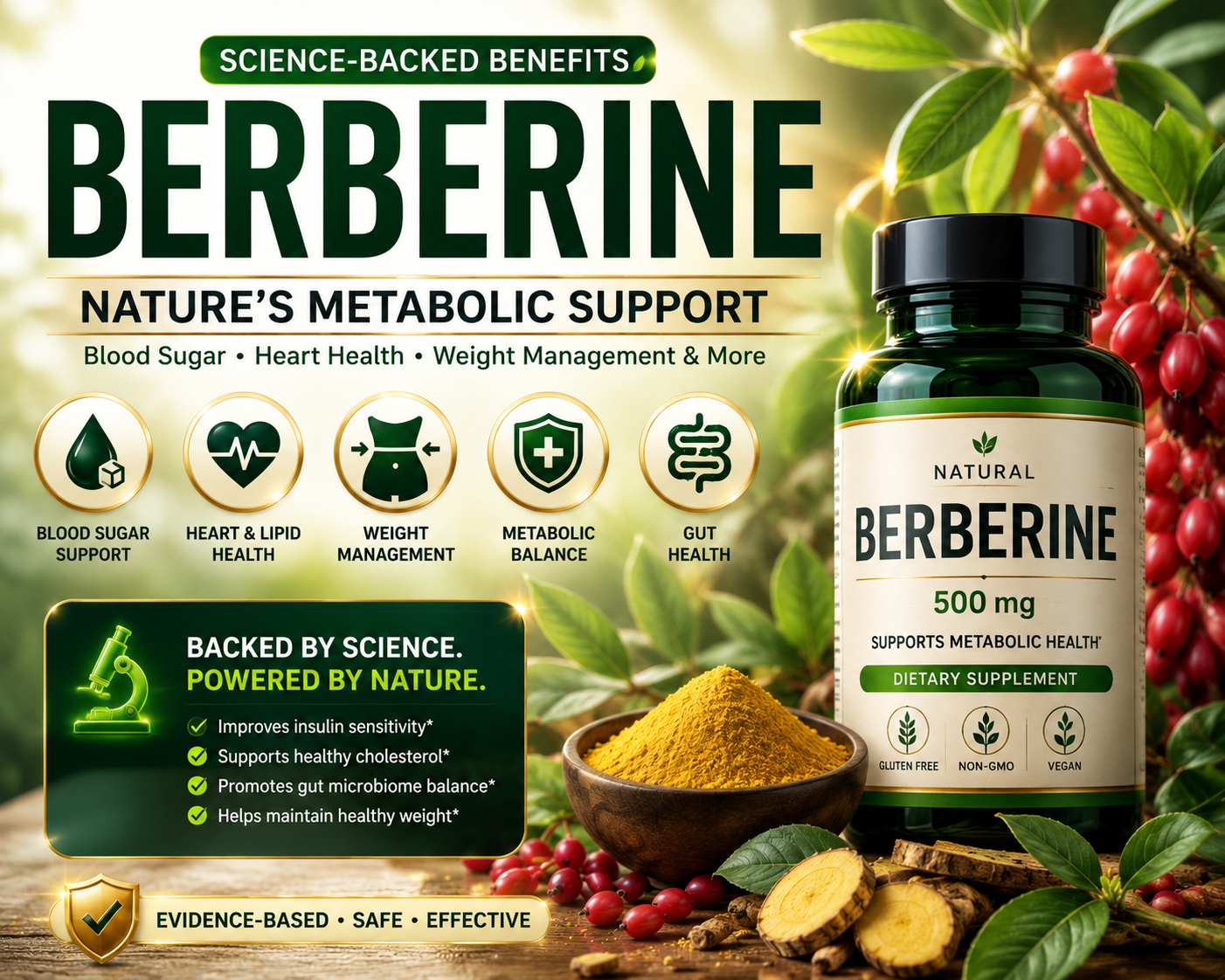
The Complete Evidence-Based Guide to One of the Most Studied Natural Supplements for Metabolic Health
Author: Matheus Lucas Araújo Sousa, PharmD
Category: Evidence-Based Supplements • Metabolic Health • Healthy Longevity
🌿 Introduction
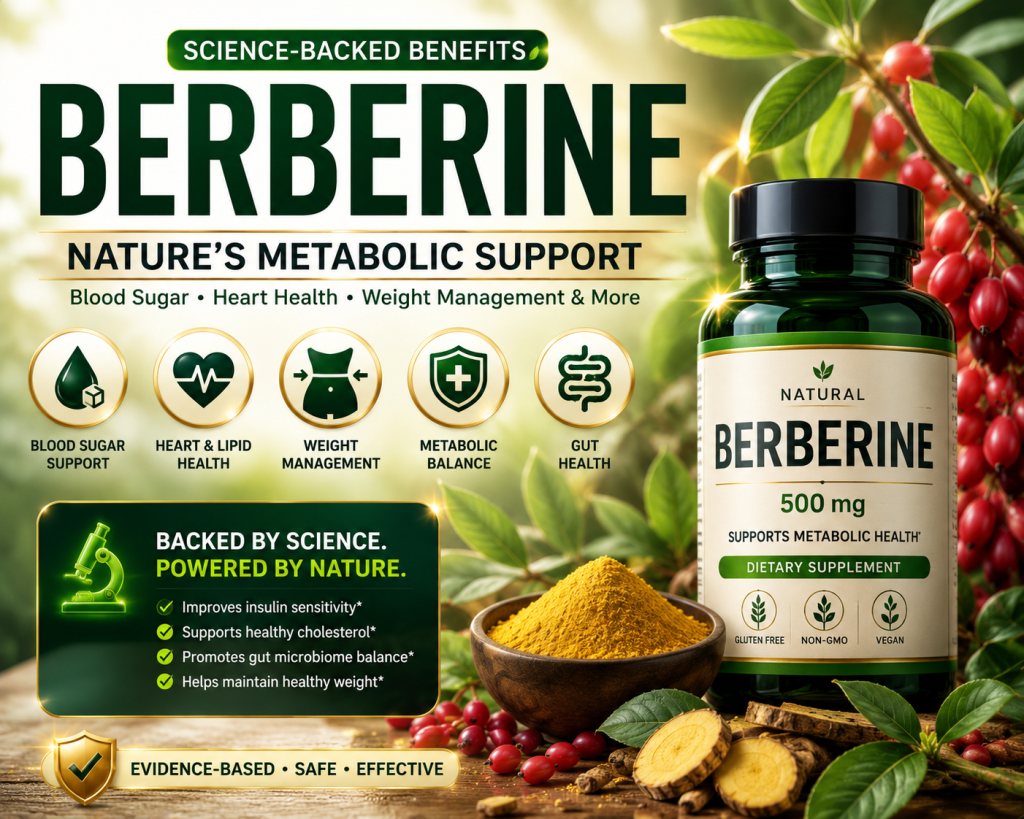
Berberine has become one of the most discussed natural supplements in recent years. Often referred to as “nature’s metabolic support compound,” it has attracted significant scientific interest for its potential role in supporting blood glucose regulation, lipid metabolism, cardiovascular health, and weight management.
Unlike many supplements promoted through marketing alone, berberine has been evaluated in numerous clinical studies. While it is not a substitute for prescription medications or a healthy lifestyle, research suggests it may be beneficial in selected individuals when used appropriately under healthcare supervision.
This comprehensive guide reviews what berberine is, how it works, its potential benefits, recommended dosage, safety considerations, and what current scientific evidence actually shows.
🌱 What Is Berberine?
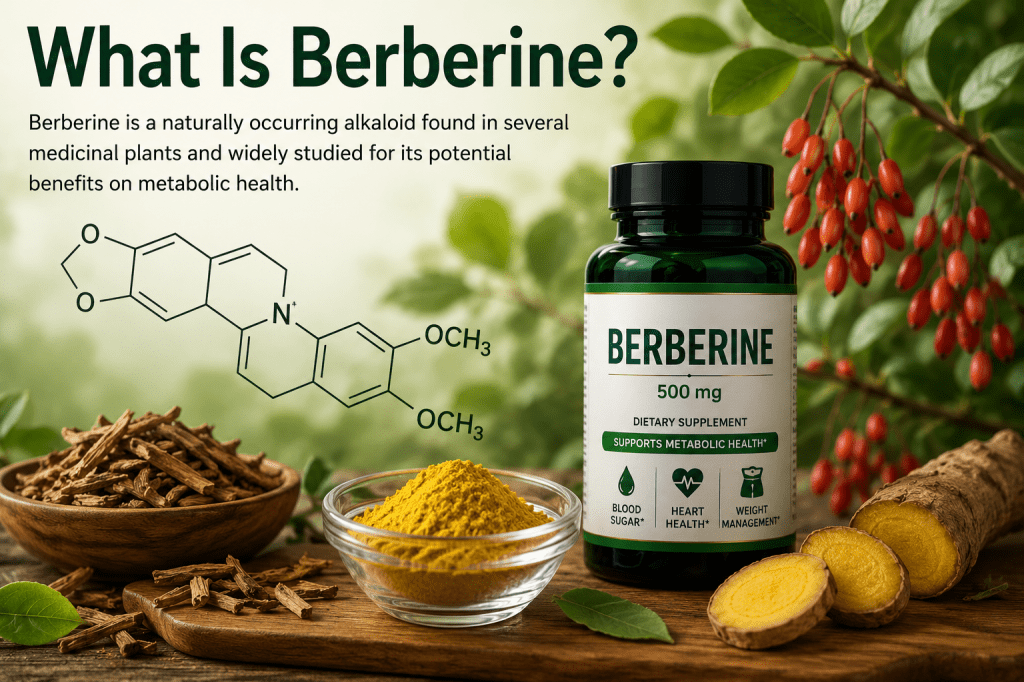
Berberine is a naturally occurring alkaloid found in several medicinal plants, including:
- 🌿 Berberis aristata
- 🌿 Berberis vulgaris
- 🌿 Goldenseal (Hydrastis canadensis)
- 🌿 Oregon grape (Mahonia aquifolium)
- 🌿 Chinese goldthread (Coptis chinensis)
Traditionally used in Asian herbal medicine, berberine is now widely studied for its metabolic and cardiovascular effects.
⚙️ How Does Berberine Work?
One of berberine’s primary mechanisms is activation of AMP-activated protein kinase (AMPK), often called the body’s “metabolic master switch.”
AMPK helps regulate:
- ⚡ Cellular energy production
- 🍬 Glucose metabolism
- 🩸 Insulin sensitivity
- 🔥 Fat metabolism
- ❤️ Cardiovascular function
- 🧬 Mitochondrial activity
Through these mechanisms, berberine may improve several markers of metabolic health.
⭐ Evidence-Based Benefits
🩸 1. Blood Sugar Support
This is the most extensively researched application of berberine.
Clinical studies suggest it may:
✅ Improve insulin sensitivity
✅ Reduce fasting blood glucose
✅ Lower HbA1c
✅ Improve glucose utilization
Berberine should not replace prescribed diabetes medications unless directed by a healthcare professional.
⚖️ 2. Weight Management
When combined with:
🥗 Healthy nutrition
🏃 Regular exercise
😴 Adequate sleep
berberine may support modest reductions in body weight and waist circumference.
❤️ 3. Heart Health
Research suggests berberine may help:
✔ Lower LDL cholesterol
✔ Reduce triglycerides
✔ Improve endothelial function
✔ Support cardiovascular risk reduction
These effects appear to be greatest when combined with lifestyle interventions.
🧬 4. Healthy Lipid Metabolism
Several studies have reported improvements in:
- Total cholesterol
- LDL cholesterol
- Triglycerides
Some evidence also suggests a modest increase in HDL cholesterol.
🦠 5. Gut Microbiome
Emerging research indicates that berberine may influence the gut microbiota by altering bacterial composition and promoting a healthier metabolic environment.
More long-term studies are needed to clarify these effects.
🫀 6. Healthy Longevity
By supporting:
- Reduced chronic inflammation
- Improved insulin sensitivity
- Better metabolic flexibility
- Healthier lipid metabolism
berberine may contribute indirectly to healthy aging and increased healthspan.
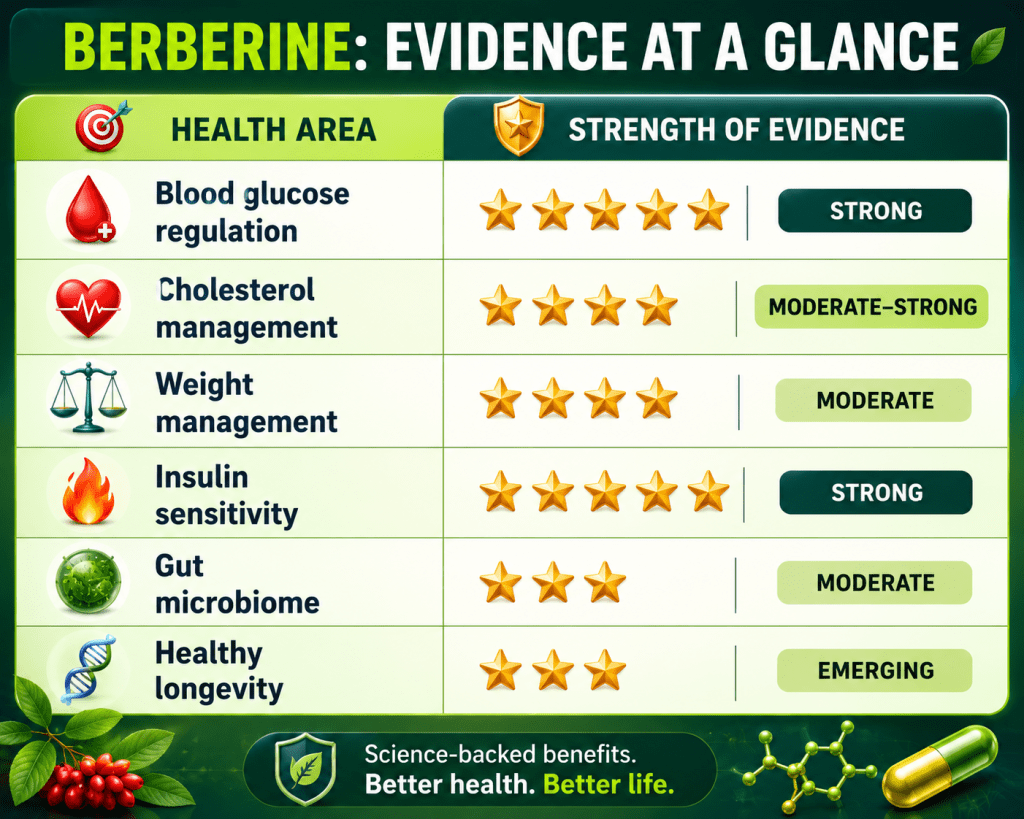
📊 Summary of Current Evidence
💊 Typical Dosage
Most clinical studies have used:
✅ 500 mg
taken
2–3 times daily with meals
Total daily dose:
1,000–1,500 mg/day
Dosage should always be individualized.
⚠️ Possible Side Effects
Most people tolerate berberine well.
Common side effects may include:
- Mild nausea
- Constipation
- Diarrhea
- Abdominal discomfort
- Bloating
These symptoms often improve after the first few days.
🚫 Who Should Avoid Berberine?
Berberine is generally not recommended for:
❌ Pregnancy
❌ Breastfeeding
❌ Newborns and infants
People taking medications for diabetes, blood pressure, or anticoagulation should consult a healthcare professional due to the potential for interactions.
🔄 Drug Interactions
Berberine may interact with:
- 💉 Diabetes medications
- ❤️ Blood pressure medications
- 🩸 Anticoagulants
- 💊 Some antibiotics
- 💊 Drugs metabolized by CYP3A4 and P-glycoprotein
Professional guidance is recommended before combining berberine with prescription therapies.
🍽️ Lifestyle Still Comes First
No supplement replaces healthy habits.
For the best outcomes, combine berberine with:
🥗 Mediterranean-style eating
🏃 Regular physical activity
😴 7–9 hours of quality sleep
💧 Adequate hydration
🚭 Avoiding tobacco
🧘 Stress management
❓ Frequently Asked Questions (FAQ)
Is berberine a natural alternative to diabetes medication?
No. Although some studies have shown improvements in blood glucose markers, it should not be considered a replacement for prescribed medications without medical supervision.
How long does it take to work?
Improvements in metabolic markers have generally been observed after 8–12 weeks in clinical studies, though individual responses vary.
Can berberine help with weight loss?
It may support modest weight reduction when combined with a healthy diet and regular exercise. It is not a standalone weight-loss solution.
Is it safe for long-term use?
Current evidence suggests good short- to medium-term tolerability in many adults, but long-term safety data remain limited.
✅ Key Takeaways
✔ Berberine is among the most extensively studied natural compounds for metabolic health.
✔ The strongest evidence supports improvements in blood glucose regulation, insulin sensitivity, and lipid metabolism.
✔ It should be viewed as an adjunct to—not a substitute for—a healthy lifestyle and appropriate medical care.
✔ Individuals with chronic conditions or those taking prescription medications should seek professional advice before using berberine.
🏁 Conclusion
Berberine is one of the most promising plant-derived compounds investigated for metabolic health. Current research indicates potential benefits for blood glucose control, cholesterol management, insulin sensitivity, and weight management when used alongside healthy lifestyle practices.
As with any supplement, its use should be individualized and based on scientific evidence rather than marketing claims. Maintaining a balanced diet, regular physical activity, restorative sleep, and preventive healthcare remains the cornerstone of long-term health and healthy longevity.
📚 Scientific References
- American Diabetes Association. Standards of Care in Diabetes.
- National Center for Complementary and Integrative Health (NCCIH). Berberine Overview.
- International Diabetes Federation. Global Diabetes Atlas.
- Cicero AFG, Baggioni A. Berberine and metabolic health: a systematic review.
- Yin J, et al. Effects of Berberine on Glucose Metabolism. Metabolism.
- Wei W, et al. Berberine in lipid metabolism. Pharmacological Research.
- European Society of Cardiology. Guidelines on Cardiovascular Disease Prevention.
- World Health Organization. Noncommunicable Diseases Fact Sheets.
👨⚕️ About the Author
Matheus Lucas Araújo Sousa, PharmD
Pharmacist | Evidence-Based Health Content Creator
Dedicated to translating high-quality scientific evidence into practical, accessible information that empowers readers to make informed decisions about nutrition, supplementation, and healthy longevity.
 saudeestrategicaart