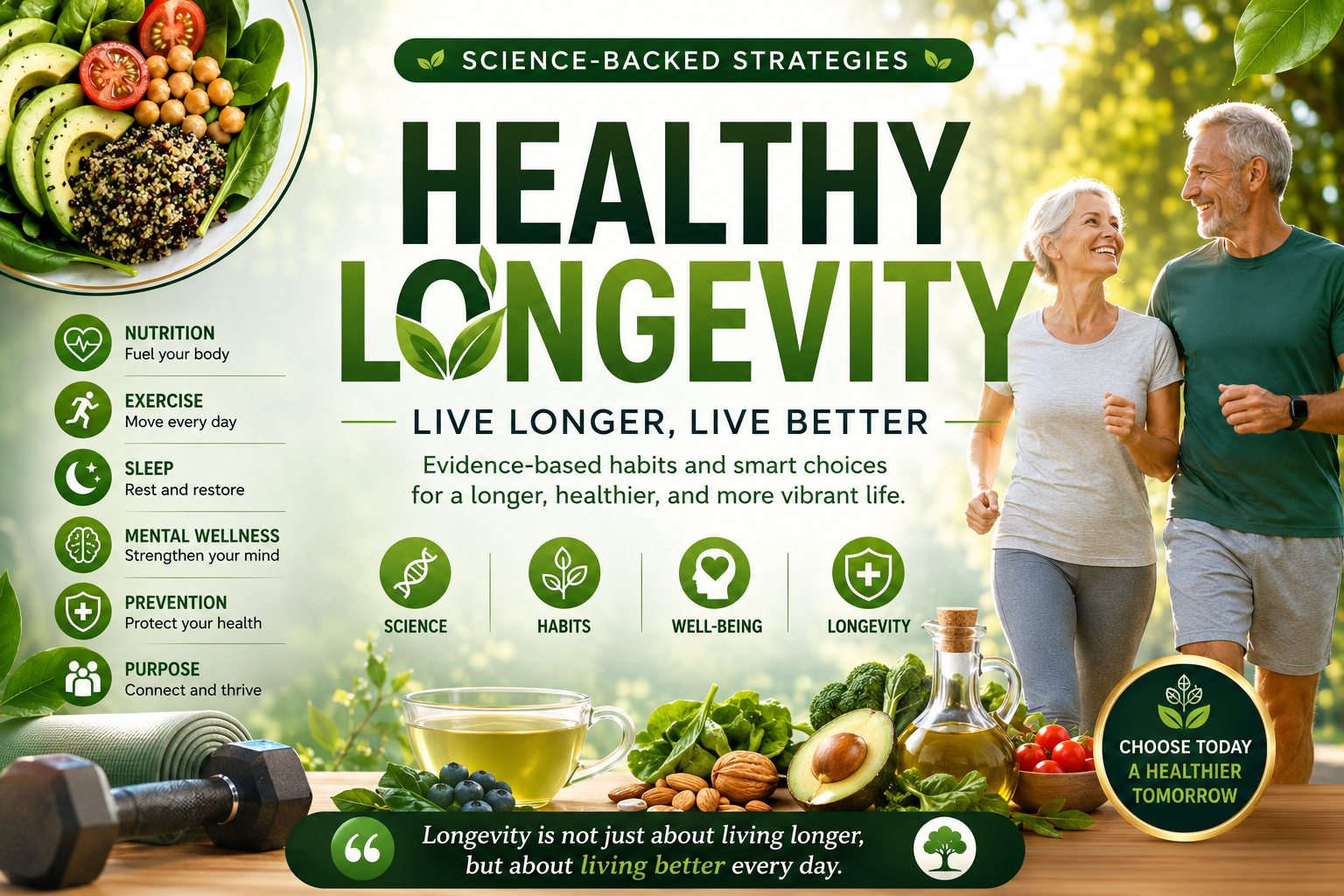
The Complete Evidence-Based Guide to Increasing Healthspan
Author: Matheus Lucas Araújo Sousa, PharmD
Category: Healthy Aging • Preventive Medicine • Evidence-Based Nutrition

Introduction
Living longer is no longer the primary objective of modern medicine. The new goal is healthy longevity—adding healthy years to life rather than simply increasing lifespan.
Over the past two decades, research has shown that many of the biological processes associated with aging are influenced by daily habits. Nutrition, physical activity, sleep quality, stress management, preventive healthcare, and selected evidence-based supplements all contribute to preserving physical and cognitive function over time.
The concept of healthspan has become central to longevity research. Healthspan refers to the years of life spent free from major chronic disease and disability, allowing individuals to remain active, independent, and mentally sharp.
This comprehensive guide reviews the current scientific evidence on healthy longevity and provides practical strategies that can be incorporated into daily life.
What Is Healthy Longevity?
Healthy longevity is the ability to maintain optimal physical, cognitive, emotional, and social well-being throughout aging.
Unlike lifespan, which measures total years lived, healthy longevity emphasizes maintaining quality of life for as long as possible.
The objective is not simply reaching 90 or 100 years of age, but remaining healthy enough to enjoy those years.
Lifespan vs. Healthspan

Why Do We Age?
Scientists have identified several biological mechanisms that contribute to aging.
These include:
- Oxidative stress
- Chronic low-grade inflammation (inflammaging)
- DNA damage accumulation
- Mitochondrial dysfunction
- Cellular senescence
- Loss of muscle mass
- Hormonal changes
- Reduced autophagy
- Gut microbiome imbalance
These mechanisms increase the risk of cardiovascular disease, type 2 diabetes, osteoporosis, cancer, cognitive decline, and frailty.
The Six Pillars of Healthy Longevity
🥗 1. Nutrition
Nutrition remains one of the strongest predictors of healthy aging.
Large population studies consistently associate dietary patterns such as the Mediterranean diet with reduced mortality and lower risk of chronic disease.
Foods associated with longevity
✅ Vegetables
✅ Fruits
✅ Legumes
✅ Whole grains
✅ Extra virgin olive oil
✅ Fish
✅ Nuts
✅ Seeds
Foods to limit
❌ Ultra-processed foods
❌ Sugary beverages
❌ Excessive sodium
❌ Refined carbohydrates
❌ Processed meats
🏃 2. Regular Physical Activity
Exercise is one of the most powerful “anti-aging medicines.”
Benefits include:
- Improved cardiovascular function
- Better insulin sensitivity
- Increased muscle mass
- Stronger bones
- Better balance
- Reduced inflammation
- Improved mood
- Lower mortality
Weekly recommendation
✔ 150–300 minutes of moderate aerobic exercise
PLUS
✔ Resistance training at least twice weekly
PLUS
✔ Flexibility and balance exercises.
😴 3. High-Quality Sleep
Sleep is essential for healthy aging.
During sleep, the body performs numerous restorative processes:
- Memory consolidation
- Hormonal regulation
- Immune recovery
- Cellular repair
- Brain waste clearance
Adults generally benefit from 7–9 hours of quality sleep per night.
🧠 4. Mental Health
Mental well-being influences nearly every aspect of healthy aging.
Healthy habits include:
- Meditation
- Reading
- Lifelong learning
- Stress management
- Gratitude
- Social interaction
- Spending time in nature
These practices are associated with lower rates of depression, anxiety, and cognitive decline.
❤️ 5. Preventive Healthcare
Preventing disease is generally more effective than treating advanced illness.
Routine preventive care includes:
- Blood pressure monitoring
- Cholesterol evaluation
- Diabetes screening
- Cancer screening
- Vaccination
- Dental care
- Vision examinations
Early detection significantly improves health outcomes.
🌳 6. Purpose and Social Connection
One of the most overlooked aspects of longevity is maintaining meaningful relationships and a sense of purpose.
Research suggests that social isolation is associated with increased mortality, while strong social networks promote resilience, emotional well-being, and healthier aging.
Evidence-Based Supplements
Supplements should support—not replace—a healthy lifestyle.
Some of the most studied include:

Lifestyle Habits That Promote Longevity
Scientific evidence consistently supports the following habits:
- 🚭 Avoid smoking
- 🍷 Limit alcohol intake
- 🚶 Stay physically active
- 🥦 Eat a balanced diet
- 😴 Sleep adequately
- ⚖ Maintain a healthy weight
- 💧 Stay hydrated
- 🧘 Manage stress
- ❤️ Monitor cardiovascular risk factors
- 👩⚕ Attend regular medical check-ups
Common Myths About Longevity
❌ Myth 1: There is a “miracle” longevity supplement.
Reality: No supplement replaces healthy lifestyle habits.
❌ Myth 2: Aging is determined only by genetics.
Reality: Lifestyle and environmental factors significantly influence healthy aging.
❌ Myth 3: It is too late to improve health after age 60.
Reality: Research shows meaningful benefits from adopting healthier habits at virtually any age.
Practical Daily Checklist
✅ Eat vegetables at every meal
✅ Consume adequate protein
✅ Walk daily
✅ Perform resistance exercise
✅ Sleep 7–9 hours
✅ Stay socially connected
✅ Practice stress reduction
✅ Schedule preventive healthcare appointments
Frequently Asked Questions (FAQ)
Can healthy habits really increase lifespan?
Healthy lifestyle patterns are consistently associated with lower mortality and more years lived in good health, although no intervention can guarantee a specific lifespan.
Which diet has the strongest evidence?
Mediterranean-style dietary patterns have among the strongest evidence for supporting cardiovascular health and healthy aging.
Are supplements necessary?
Not always. They may be beneficial in specific situations, such as documented nutrient deficiencies or particular clinical conditions, but they are not a substitute for a balanced diet and healthy lifestyle.
What is the best exercise for longevity?
A combination of aerobic exercise, resistance training, flexibility work, and balance exercises provides the broadest health benefits.
Conclusion
Healthy longevity is built through consistent daily choices rather than a single intervention. Nutritious eating, regular physical activity, restorative sleep, preventive healthcare, emotional well-being, and meaningful social connections work together to preserve health and independence over time.
While aging is a natural biological process, current evidence indicates that many age-related diseases can be delayed or mitigated. Investing in evidence-based habits today may increase not only how long we live, but also how well we live.
Scientific References
- World Health Organization. World Report on Ageing and Health. Geneva: WHO.
- National Institute on Aging. Healthy Aging Research.
- American Heart Association. Life’s Essential 8.
- American College of Sports Medicine. ACSM Guidelines for Exercise Testing and Prescription.
- European Society of Cardiology. Guidelines on Cardiovascular Disease Prevention.
- International Society of Sports Nutrition. Position Stands on Creatine, Protein, and Sports Nutrition.
- Willett WC, et al. Mediterranean diet and health outcomes. New England Journal of Medicine.
- Longo VD, Mattson MP. Fasting: Molecular Mechanisms and Clinical Applications. Cell Metabolism.
- López-Otín C, et al. The Hallmarks of Aging. Cell.
- Fontana L, Partridge L. Promoting Health and Longevity through Diet. Cell.
About the Author
Matheus Lucas Araújo Sousa, PharmD
Pharmacist | Evidence-Based Health Content Creator
Dedicated to translating high-quality scientific evidence into practical, accessible health information for readers seeking to improve their quality of life, prevent disease, and support healthy aging.
Leave a Reply