Understanding Insulin Resistance: Causes, Early Signs and Risk Factors
Evidence-Based Health Series | Strategic Health

🩺 Introduction
Insulin resistance has become one of the most significant public health concerns of the 21st century. According to international health organizations, hundreds of millions of adults worldwide are living with insulin resistance, prediabetes or type 2 diabetes—many without knowing it.
Long before blood sugar reaches diabetic levels, insulin resistance may silently damage metabolism, increase inflammation, promote weight gain and elevate the risk of cardiovascular disease.
The encouraging news is that insulin resistance often develops gradually, providing an important opportunity for early detection and intervention. Scientific evidence consistently shows that lifestyle changes—including healthy nutrition, physical activity, sleep optimization and weight management—can substantially improve insulin sensitivity.
This comprehensive guide explains the science behind insulin resistance, the warning signs to recognize, how it develops and why early prevention matters.
🧬 What Is Insulin?
Insulin is a hormone produced by specialized beta cells located in the pancreas.
Its primary role is to regulate blood glucose levels by allowing glucose to enter muscle, fat and liver cells, where it can be used as energy or stored for future use.
Without insulin, glucose remains in the bloodstream instead of entering cells, leading to elevated blood sugar levels.
Think of insulin as a biological key.
🔑 Insulin unlocks the cell.
⚡ Glucose enters.
💪 Cells produce energy.
When insulin functions efficiently, blood sugar remains within a healthy range.
⚙️ How Does Insulin Normally Work?
Every time we eat carbohydrates, the digestive system breaks them down into glucose.
The sequence is remarkably coordinated.
🍽️ Meal Consumed
⬇️
🍞 Carbohydrates Digested
⬇️
🩸 Blood Glucose Rises
⬇️
🧬 Pancreas Detects Glucose
⬇️
💉 Insulin Released
⬇️
🚪 Cells Open Their Glucose Transport Channels
⬇️
⚡ Energy Production (ATP)
⬇️
🩸 Blood Sugar Returns to Normal
This elegant system operates continuously throughout the day.
⚠️ What Is Insulin Resistance?
Insulin resistance occurs when the body’s cells become less responsive to insulin.
The pancreas initially compensates by producing larger amounts of insulin.
For some time, blood glucose may remain within the normal range because insulin production increases.
Eventually, however, the pancreas struggles to keep up with demand.
This process can progress through several stages:
🧬 Normal Metabolism
⬇️
⚠️ Insulin Resistance
⬇️
📈 Hyperinsulinemia (High Insulin Levels)
⬇️
🩸 Prediabetes
⬇️
🩺 Type 2 Diabetes
Because this progression often takes years, insulin resistance frequently develops without obvious symptoms.
🔥 Why Does Insulin Resistance Develop?
Researchers now understand that insulin resistance is influenced by genetics, lifestyle and environmental factors.
The most important contributors include:
⚖️ Excess body fat—particularly visceral fat
🥤 High intake of sugary beverages
🍟 Ultra-processed foods
🍞 Refined carbohydrates
🛋️ Sedentary lifestyle
😴 Chronic sleep deprivation
😫 Persistent stress
🚬 Smoking
🧬 Genetic predisposition
👴 Aging
Rather than a single cause, insulin resistance usually results from multiple factors interacting over time.
🧈 The Role of Visceral Fat
Not all body fat behaves the same way.
Subcutaneous fat lies beneath the skin.
Visceral fat accumulates around internal organs.
Visceral fat is metabolically active and releases inflammatory molecules that interfere with insulin signaling.
This explains why abdominal obesity is more strongly associated with insulin resistance than body weight alone.
Common indicators include:
📏 Increased waist circumference
📈 Elevated triglycerides
⬇️ Low HDL cholesterol
🩸 Mildly elevated fasting glucose
🧪 What Happens Inside the Cell?
Normally:
✅ Insulin binds to its receptor.
⬇️
✅ Cellular signaling activates.
⬇️
✅ GLUT4 transporters move to the cell surface.
⬇️
✅ Glucose enters the cell.
During insulin resistance:
❌ Insulin signaling becomes impaired.
⬇️
❌ Fewer GLUT4 transporters reach the membrane.
⬇️
❌ Glucose remains in the bloodstream.
⬇️
🩸 Blood sugar increases.
The pancreas responds by producing even more insulin.
🌎 How Common Is Insulin Resistance?
Insulin resistance is increasingly common worldwide.
It is closely linked to:
⚖️ Obesity
🧬 Metabolic Syndrome
🩺 Prediabetes
🫀 Cardiovascular disease
🧈 Non-alcoholic fatty liver disease
👩 Polycystic Ovary Syndrome (PCOS)
Because insulin resistance often develops silently, many individuals are unaware they have it until routine laboratory testing reveals abnormalities.
🚨 Early Signs and Symptoms
Many people experience no symptoms during the early stages.
When symptoms occur, they may include:
😴 Fatigue after meals
🍰 Frequent sugar cravings
🥱 Daytime sleepiness
🍽️ Increased appetite
⚖️ Difficulty losing weight
📏 Increasing waist circumference
🟤 Darkened skin folds (Acanthosis Nigricans)
💧 Increased thirst
🚽 Frequent urination (later stages)
🩸 Elevated triglycerides
⬇️ Low HDL cholesterol
It is important to remember that these symptoms are not specific to insulin resistance, but they should prompt further medical evaluation.
👥 Who Is Most at Risk?
Certain individuals have a higher likelihood of developing insulin resistance.
Lifestyle Factors
🍟 Poor dietary habits
🥤 Sugary beverages
🛋️ Physical inactivity
😴 Inadequate sleep
😫 Chronic stress
🚬 Smoking
🍺 Excess alcohol
Medical Conditions
⚖️ Obesity
🧈 Visceral obesity
🧬 Metabolic Syndrome
🩺 Prediabetes
👩 Polycystic Ovary Syndrome
🫀 Hypertension
🧈 Fatty liver disease
Family History
👨👩👧 Type 2 diabetes
👨👩👦 Obesity
❤️ Cardiovascular disease
Genetics increase susceptibility, but lifestyle remains the strongest modifiable factor.
📊 Table – Major Risk Factors for Insulin Resistance

💡 Why Early Detection Matters
Insulin resistance develops years before diabetes.
Identifying it early offers an opportunity to:
✅ Prevent Type 2 Diabetes
❤️ Lower cardiovascular risk
⚖️ Improve weight management
🔥 Reduce chronic inflammation
🧠 Support cognitive health
🫀 Improve metabolic function
The earlier intervention begins, the greater the likelihood of restoring healthy insulin sensitivity.
🔑 Key Takeaways
✔ Insulin is essential for regulating blood sugar.
✔ Insulin resistance occurs when cells respond poorly to insulin.
✔ The pancreas compensates by producing more insulin.
✔ The condition often progresses silently for years.
✔ Visceral fat, poor diet and physical inactivity are major contributors.
✔ Early lifestyle interventions can significantly improve metabolic health.
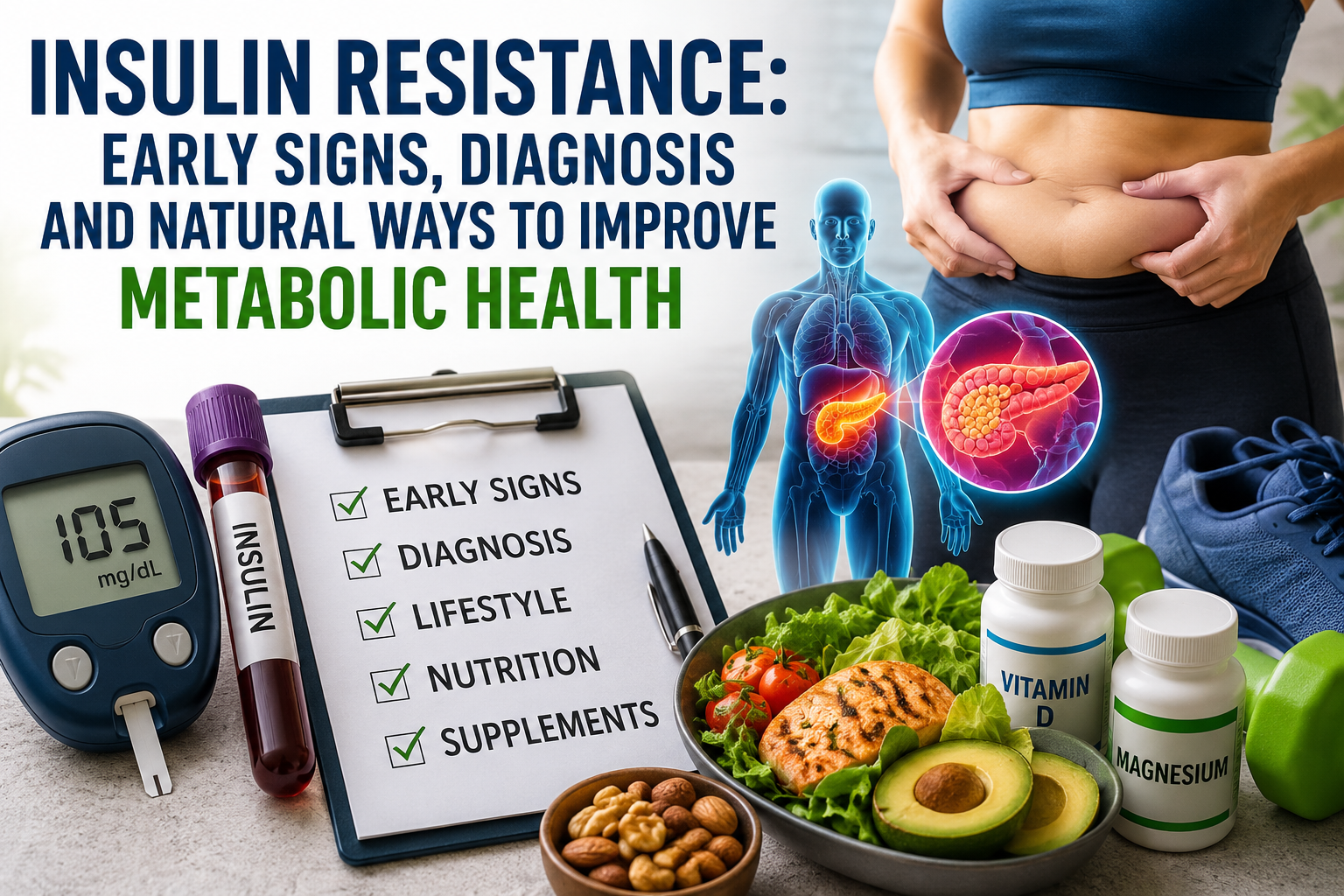
🔥 Insulin Resistance: Early Signs, Diagnosis and Natural Ways to Improve Metabolic Health
Diagnosis, Nutrition, Exercise and Evidence-Based Lifestyle Strategies
Evidence-Based Health Series | Strategic Health
🩺 How Is Insulin Resistance Diagnosed?
Insulin resistance often develops years before Type 2 Diabetes, making early detection essential. Although there is no single diagnostic test that definitively confirms insulin resistance, healthcare professionals combine laboratory findings, physical examination and medical history.
A comprehensive evaluation allows early intervention before irreversible pancreatic damage occurs.
🩸 Laboratory Tests Commonly Used
The following laboratory tests help assess glucose metabolism and insulin sensitivity.

📈 Understanding the HOMA-IR Index
Researchers frequently estimate insulin resistance using the Homeostatic Model Assessment of Insulin Resistance (HOMA-IR).
The calculation combines fasting glucose and fasting insulin.
Although widely used in research and clinical practice, HOMA-IR should always be interpreted alongside the patient’s clinical history and other laboratory findings.
⚖️ Insulin Resistance vs Prediabetes vs Type 2 Diabetes
These conditions represent different stages of metabolic dysfunction.
🟢 Healthy Metabolism
✔ Normal insulin sensitivity
✔ Normal blood glucose
✔ Healthy pancreatic function
⬇️
🟡 Insulin Resistance
⚠ Cells respond poorly to insulin
⚠ Insulin production increases
⚠ Blood glucose often remains normal
⬇️
🟠 Prediabetes
📈 Blood glucose begins to rise
⚠ Higher cardiovascular risk
⚠ Increased progression toward diabetes
⬇️
🔴 Type 2 Diabetes
❌ Persistent hyperglycemia
❌ Progressive pancreatic dysfunction
❌ Increased risk of complications
🧈 Why Visceral Fat Is So Dangerous
Visceral fat is not simply stored energy.
It behaves as an active endocrine organ, producing inflammatory cytokines and hormones that interfere with insulin signaling.
Scientific studies have shown that excessive visceral fat contributes to:
🔥 Chronic inflammation
🫀 Cardiovascular disease
🧬 Metabolic Syndrome
🩸 Elevated triglycerides
⬇️ HDL cholesterol
🧈 Fatty liver disease
This is why reducing abdominal fat is often associated with improved insulin sensitivity.
🔥 Chronic Inflammation and Insulin Resistance
Persistent low-grade inflammation is one of the hallmarks of insulin resistance.
Inflammatory molecules released from visceral fat impair insulin signaling pathways.
Over time this creates a vicious cycle:
⚖️ Weight Gain
⬇️
🧈 More Visceral Fat
⬇️
🔥 More Inflammation
⬇️
⚠ Greater Insulin Resistance
⬇️
📈 Higher Blood Sugar
Breaking this cycle through healthy lifestyle interventions is one of the primary goals of treatment.
🦠 The Gut Microbiome Connection
The gut microbiome plays a crucial role in metabolic health.
A diverse and balanced microbiota supports:
🛡 Intestinal barrier integrity
🔥 Reduced inflammation
🥗 Better nutrient metabolism
🧬 Improved immune regulation
Conversely, dysbiosis has been associated with obesity, metabolic syndrome and insulin resistance.
This relationship reinforces the importance of consuming fiber-rich foods and maintaining overall digestive health.
🥗 Nutrition: The Cornerstone of Treatment
Nutrition remains the most powerful lifestyle intervention for improving insulin sensitivity.
Rather than focusing on restrictive diets, current evidence supports sustainable eating patterns rich in minimally processed foods.
✅ Foods That May Improve Insulin Sensitivity
🥬 Leafy green vegetables
🥦 Broccoli
🥒 Cucumbers
🥑 Avocados
🫒 Extra-virgin olive oil
🐟 Salmon
🐟 Sardines
🥜 Almonds
🌰 Walnuts
🫘 Beans
🌾 Oats
🍓 Berries
🥚 Eggs
🍗 Lean poultry
🍄 Mushrooms
These foods provide fiber, healthy fats, antioxidants and high-quality protein.
🚫 Foods to Limit
Evidence consistently associates excessive intake of ultra-processed foods with poorer metabolic health.
Limit:
🍟 Fast food
🍕 Highly processed meals
🍩 Pastries
🥤 Sugar-sweetened beverages
🍬 Candy
🍪 Packaged snacks
🍞 Refined bread
🍰 Desserts with added sugars
Reducing these foods may help improve insulin sensitivity over time.
🌍 The Mediterranean Diet
The Mediterranean dietary pattern is among the most extensively studied eating patterns for metabolic health.
It emphasizes:
🥗 Vegetables
🍅 Fruits
🌾 Whole grains
🫘 Legumes
🐟 Fish
🫒 Olive oil
🥜 Nuts
Scientific evidence associates this dietary pattern with:
❤️ Better cardiovascular health
🩸 Improved glycemic control
⚖️ Weight management
🔥 Lower inflammation
❤️ DASH Diet
The DASH (Dietary Approaches to Stop Hypertension) diet also supports insulin sensitivity.
Its principles include:
🥦 High vegetable intake
🍎 Fruits
🥛 Low-fat dairy
🌾 Whole grains
🍗 Lean protein
🧂 Reduced sodium intake
DASH is particularly beneficial for individuals with hypertension and metabolic syndrome.
🌾 Why Fiber Matters
Dietary fiber slows carbohydrate absorption and supports beneficial gut bacteria.
High-fiber foods include:
🫘 Lentils
🥣 Oats
🍏 Apples
🍐 Pears
🥦 Vegetables
🌰 Seeds
Daily fiber intake is associated with:
✔ Better blood glucose control
✔ Increased satiety
✔ Improved microbiome diversity
✔ Lower cardiovascular risk
🏋️ Exercise: One of the Most Effective Treatments
Physical activity improves insulin sensitivity through several mechanisms independent of weight loss.
Benefits include:
💪 Increased glucose uptake by muscles
❤️ Improved cardiovascular fitness
⚖️ Better body composition
🔥 Reduced inflammation
🩸 Lower blood glucose
Best Types of Exercise
🚶 Walking
🏃 Running
🚴 Cycling
🏊 Swimming
🏋️ Resistance Training
🧘 Yoga
Current recommendations generally include:
✅ At least 150 minutes of moderate-intensity aerobic activity per week
PLUS
🏋️ Muscle-strengthening exercises on two or more days weekly.
😴 Sleep and Insulin Sensitivity
Sleep is a powerful regulator of metabolism.
Short sleep duration has been associated with:
🍰 Increased cravings
📈 Higher cortisol levels
⚖️ Weight gain
🩸 Elevated blood glucose
Healthy adults should generally aim for 7–9 hours of quality sleep per night.
😫 Stress Management
Chronic stress increases cortisol production.
Excess cortisol may contribute to:
🍬 Increased appetite
⚖️ Weight gain
🔥 Inflammation
⚠ Worsening insulin resistance
Helpful strategies include:
🧘 Meditation
🚶 Walking
🌳 Time in nature
📖 Reading
🎵 Relaxing music
👨👩👧 Social support
💧 Hydration Matters
Water plays an important role in metabolic function.
Replacing sugary beverages with water is a simple strategy that may reduce excess calorie intake and support overall health.
🧠 Key Takeaways
✔ Insulin resistance should be identified as early as possible.
✔ Diagnosis combines clinical evaluation and laboratory testing.
✔ Mediterranean and DASH dietary patterns are supported by strong scientific evidence.
✔ High-fiber foods promote better metabolic health.
✔ Exercise is one of the most effective ways to improve insulin sensitivity.
✔ Sleep quality and stress management are essential components of treatment.
🔥 Insulin Resistance: Early Signs, Diagnosis and Natural Ways to Improve Metabolic Health
Evidence-Based Supplements, Myths, 30-Day Action Plan and Conclusion
Evidence-Based Health Series | Strategic Health
💊 Can Supplements Improve Insulin Resistance?
Lifestyle modification remains the foundation of treatment for insulin resistance. However, certain supplements have been investigated for their potential to support glucose metabolism and insulin sensitivity.
While some show promising evidence, no supplement should be considered a substitute for a balanced diet, regular physical activity, weight management or medical care.
Below are the supplements with the strongest scientific evidence currently available.
🌿 Berberine
⭐ Level of Evidence: High
Berberine is a plant-derived alkaloid extracted from several medicinal plants.
It has attracted significant scientific interest because its metabolic effects resemble some mechanisms involved in improving insulin sensitivity.
Potential Benefits
✅ Improves insulin sensitivity
🩸 May reduce fasting glucose
📉 May lower HbA1c
⚖️ May support weight management
❤️ May improve triglycerides
Important Considerations
⚠️ Berberine may interact with medications, including drugs used to treat diabetes. It should be used under the guidance of a qualified healthcare professional.
☀️ Vitamin D
⭐ Level of Evidence: Moderate
Vitamin D deficiency has been associated with impaired glucose metabolism in observational studies.
Supplementation is recommended primarily for individuals with confirmed deficiency.
Potential benefits include:
🦴 Bone health
🛡️ Immune function
🧬 Muscle function
🩸 Possible support for insulin sensitivity in deficient individuals
Routine supplementation in people with normal vitamin D levels has not consistently shown improvements in insulin resistance.
🧂 Magnesium
⭐ Level of Evidence: Moderate to High
Magnesium participates in hundreds of enzymatic reactions, including those involved in glucose metabolism.
Low magnesium status has been associated with:
⚠️ Insulin resistance
🩺 Type 2 diabetes
🫀 Hypertension
Supplementation may be beneficial in people with inadequate magnesium intake or deficiency.
Food sources remain the preferred approach whenever possible.
🥬 Spinach
🥜 Almonds
🌰 Pumpkin seeds
🫘 Beans
🐟 Omega-3 Fatty Acids
⭐ Level of Evidence: Moderate
Omega-3 fatty acids are well established for cardiovascular health.
Current evidence suggests they may:
❤️ Improve cardiovascular risk factors
🔥 Reduce inflammation
🩸 Improve triglyceride levels
Their direct effect on insulin resistance appears modest and varies across studies.
🦠 Probiotics
⭐ Level of Evidence: Emerging
The gut microbiome plays an increasingly recognized role in metabolic health.
Some probiotic strains have shown potential to:
🛡️ Improve gut barrier integrity
🔥 Reduce inflammation
🧬 Support metabolic regulation
Results remain strain-specific, and more high-quality studies are needed.
🌾 Psyllium
⭐ Level of Evidence: Moderate
Psyllium is a soluble fiber that slows glucose absorption.
Potential benefits include:
📉 Lower post-meal glucose spikes
❤️ Improved cholesterol
🍽️ Increased satiety
⚖️ Weight management support
Adequate hydration is important when consuming psyllium.
🌿 Cinnamon
⭐ Level of Evidence: Limited to Moderate
Cinnamon has been investigated for its potential effects on glucose metabolism.
Some studies report small improvements in fasting blood glucose, while others show little or no benefit.
Current evidence does not support replacing evidence-based medical treatment with cinnamon supplementation.
📊 Summary of Evidence-Based Supplements

❌ Myths vs ✅ Facts
❌ Myth
“Only overweight people develop insulin resistance.”
✅ Fact
People with normal body weight may also develop insulin resistance, especially if they have excess visceral fat, poor dietary habits, or a genetic predisposition.
❌ Myth
“Taking supplements alone will reverse insulin resistance.”
✅ Fact
Lifestyle changes remain the cornerstone of treatment.
❌ Myth
“If blood glucose is normal, insulin resistance is impossible.”
✅ Fact
Blood glucose may remain normal for years while insulin levels are elevated.
❌ Myth
“Carbohydrates must be completely eliminated.”
✅ Fact
Whole grains, legumes, fruits and vegetables can be part of a healthy eating pattern.
❌ Myth
“Exercise only works if weight loss occurs.”
✅ Fact
Exercise improves insulin sensitivity even without significant weight loss.
📅 30-Day Metabolic Health Challenge
Week 1
💧 Drink more water
🚶 Walk 30 minutes daily
🥦 Add vegetables to every lunch
😴 Sleep at least 7 hours
Week 2
🍓 Replace sugary snacks with fruit
🥜 Include healthy fats
🚫 Eliminate sugary beverages
🏋️ Begin resistance training twice weekly
Week 3
🥗 Prepare meals at home
📵 Reduce evening screen time
🧘 Practice stress management
📏 Measure waist circumference
Week 4
🏃 Maintain regular physical activity
🥬 Increase dietary fiber
📖 Review healthy habits
🎯 Set long-term goals
🌍 Long-Term Prevention
Healthy metabolic aging depends on consistent daily habits rather than quick solutions.
The strongest scientific evidence supports:
🥗 Balanced nutrition
🏋️ Regular exercise
😴 Adequate sleep
⚖️ Healthy body weight
🚭 Avoiding smoking
🍷 Limiting alcohol intake
🩺 Regular medical check-ups
🧠 Final Thoughts
Insulin resistance is one of the earliest warning signs of metabolic dysfunction, but it is also one of the most modifiable.
With early detection and evidence-based lifestyle changes, many individuals can improve insulin sensitivity, reduce cardiometabolic risk and delay—or even prevent—the progression to Type 2 diabetes.
Rather than searching for a single “miracle solution,” lasting success comes from combining healthy nutrition, regular physical activity, restorative sleep and informed healthcare decisions.
Every healthy choice made today is an investment in your future health.
⚠️ Medical Disclaimer
This article is intended for educational purposes only and should not replace professional medical advice, diagnosis or treatment. Individuals with diabetes, prediabetes or other metabolic disorders should consult a qualified healthcare professional before making significant changes to their diet, exercise routine or supplement use.
📚 Scientific References
- American Diabetes Association (ADA). Standards of Care in Diabetes – 2026.
- National Institute of Diabetes and Digestive and Kidney Diseases (NIDDK). Insulin Resistance & Prediabetes.
- World Health Organization (WHO). Diabetes Fact Sheet.
- European Association for the Study of Diabetes (EASD). Clinical Practice Recommendations.
- National Institutes of Health (NIH) – Office of Dietary Supplements. Magnesium Fact Sheet.
- National Institutes of Health (NIH) – Office of Dietary Supplements. Vitamin D Fact Sheet.
- American Heart Association (AHA). Prevention of Cardiovascular Disease.
- International Diabetes Federation (IDF). Diabetes Atlas.
👨⚕️ About the Author
Matheus Lucas Araújo Sousa, RPh
Pharmacist | Founder of Strategic Health
Matheus Lucas Araújo Sousa is a pharmacist dedicated to translating complex medical and pharmaceutical research into practical, evidence-based health information. Through Strategic Health, he provides reliable educational content on nutrition, supplements, metabolic health, preventive medicine and healthy aging, helping readers make informed decisions based on current scientific evidence.
✅ End of Article
Estimated reading time: 15–18 minutes
SEO Focus Keywords: insulin resistance, insulin sensitivity, prediabetes, blood sugar, metabolic syndrome, insulin resistance symptoms, natural ways to improve insulin resistance, insulin resistance treatment, glucose metabolism, metabolic health
Leave a Reply