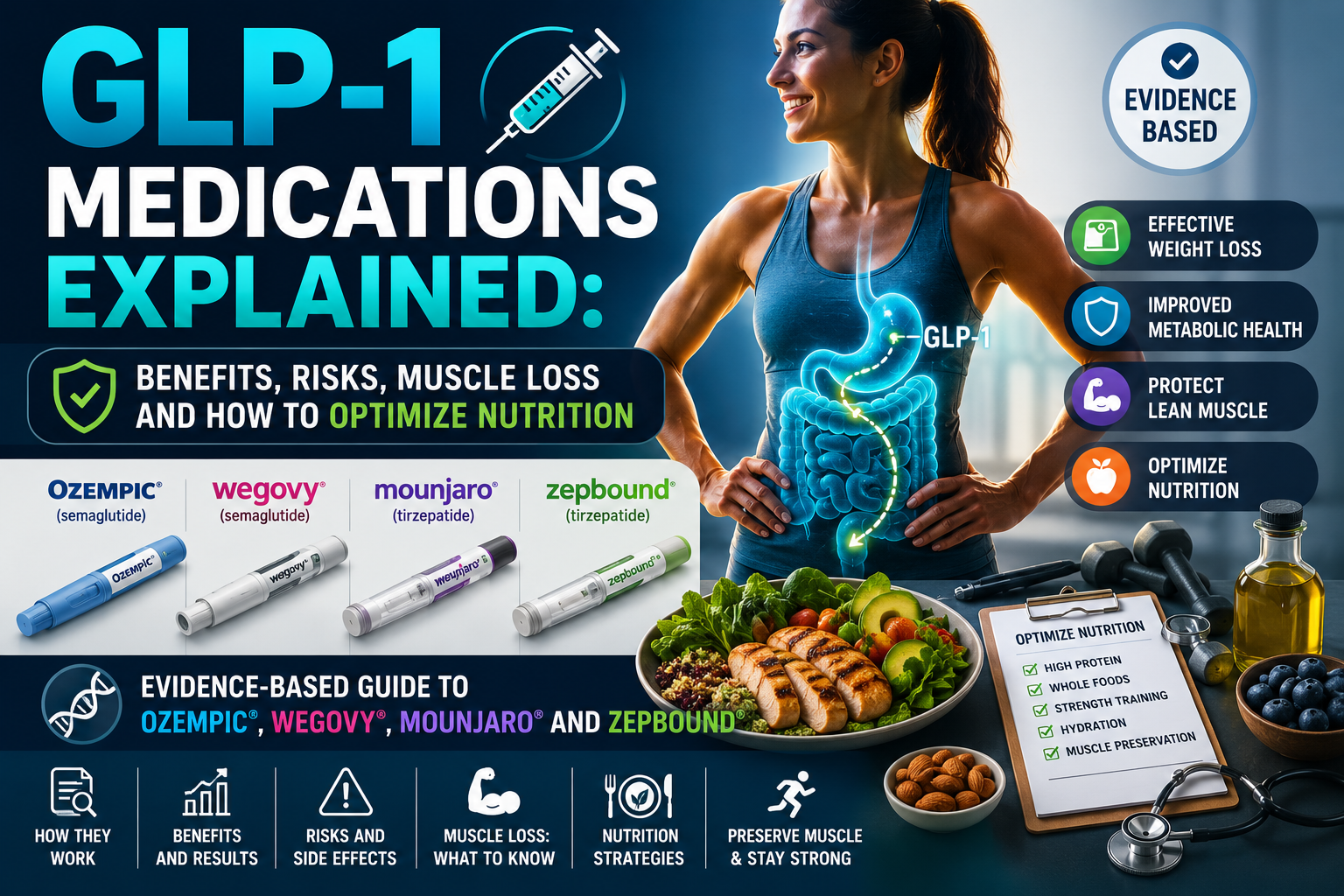
Evidence-Based Guide to Ozempic®, Wegovy®, Mounjaro® and Zepbound®
Estimated Reading Time: 18–22 minutes

🌍 Why Is Everyone Talking About GLP-1 Medications?
Over the past few years, GLP-1 receptor agonists have transformed the treatment of obesity and type 2 diabetes.
Originally developed to improve blood glucose control, these medications are now recognized for their remarkable effects on weight loss, cardiovascular health, and metabolic disease prevention.
Drugs such as Ozempic®, Wegovy®, Mounjaro®, and Zepbound® have become some of the most discussed therapies worldwide.
However, alongside their benefits, many patients have questions about muscle loss, nutritional deficiencies, long-term safety, and the best lifestyle strategies to maximize results.
This evidence-based guide explains what current science says.
🧬 What Is GLP-1?
GLP-1 (Glucagon-Like Peptide-1) is a natural hormone produced in the intestine after meals.
It plays a key role in regulating appetite, blood sugar, and digestion.
Main physiological effects
🍽️ Reduces appetite
🧠 Increases satiety
🩸 Stimulates insulin secretion (when blood glucose is elevated)
⬇️ Reduces glucagon release
🐢 Slows gastric emptying
⚖️ Promotes weight loss
❤️ Supports cardiovascular health
🔬 How Do GLP-1 Medications Work?
These medications mimic the effects of the body’s natural GLP-1 hormone.
Simplified mechanism

💉 The Most Common GLP-1 Medications

📈 Proven Benefits
Clinical trials have consistently demonstrated:
✅ Significant weight loss
🩸 Improved blood glucose control
❤️ Lower cardiovascular risk
🩺 Reduced blood pressure
🔥 Reduced visceral fat
🧬 Improved insulin resistance
😊 Better quality of life
👥 Who May Benefit?
Current guidelines generally recommend GLP-1 medications for:
⚖️ Adults with obesity (BMI ≥30 kg/m²)
⚠️ Adults with overweight (BMI ≥27 kg/m²) plus weight-related conditions
🩸 Type 2 diabetes
❤️ High cardiovascular risk
Treatment decisions should always be individualized and supervised by a qualified healthcare professional.
⚠️ Common Side Effects
Most adverse effects occur during dose escalation.
Common effects include:
🤢 Nausea
🤮 Vomiting
💨 Bloating
💩 Constipation
💧 Dehydration
🍽️ Reduced appetite
These symptoms often improve over time.
🚨 Less Common but Important Risks
Although uncommon, potential serious risks include:
⚠️ Gallbladder disease
⚠️ Pancreatitis
⚠️ Severe dehydration
⚠️ Loss of lean body mass
⚠️ Nutritional deficiencies due to reduced food intake
Regular follow-up is important to monitor benefits and potential adverse effects.
🩺 GLP-1 Medications: The Science Behind Weight Loss and Metabolic Health
Evidence-Based Guide for Patients and Healthcare Professionals
💪 Can GLP-1 Medications Cause Muscle Loss?
One of the most common concerns is whether rapid weight loss leads to loss of muscle mass.
The answer is yes—but this is not inevitable.
Whenever body weight decreases rapidly, the body usually loses:
- 🟢 Fat mass (desired)
- 🟡 Water
- 🔴 Lean body mass (muscle)
Clinical trials show that most of the weight lost with GLP-1 receptor agonists comes from body fat, especially visceral fat. However, preserving muscle requires an appropriate lifestyle.
🧬 How to Preserve Muscle During Weight Loss
Evidence consistently supports four essential strategies.
🍗 1. Consume Adequate Protein
Aim for:
✅ 1.2–1.6 g of protein/kg/day
Excellent protein sources include:
- 🥚 Eggs
- 🐟 Fish
- 🍗 Chicken breast
- 🥩 Lean beef
- 🧀 Greek yogurt
- 🌱 Tofu
- 🫘 Beans and lentils
🏋️ 2. Perform Resistance Training
Strength training is the most effective way to preserve lean body mass.
Recommended:
- 🏋️ 2–4 sessions/week
- 💪 Progressive overload
- 🦵 Whole-body exercises
- ⏱️ 30–60 minutes/session
🚶 3. Stay Physically Active
In addition to resistance exercise:
- 🚶 Walking
- 🚴 Cycling
- 🏊 Swimming
- 🧘 Mobility exercises
Regular movement improves insulin sensitivity and cardiovascular health.
😴 4. Prioritize Sleep
Poor sleep may increase:
- 🍔 Hunger
- 📈 Cortisol
- 🩸 Blood glucose
- ⚖️ Weight regain
Adults should aim for:
⭐ 7–9 hours/night
🥗 Nutrition During GLP-1 Therapy
Because appetite decreases, every meal becomes more important.
Choose nutrient-dense foods instead of calorie-dense foods.
Recommended Plate
🥩 Lean Protein → 30–40%
🥦 Vegetables → 40–50%
🌾 Whole grains → 15–20%
🥑 Healthy fats → Small portions
🍽️ Example One-Day Meal Plan
🌅 Breakfast
🥚 Scrambled eggs
🥣 Oatmeal
🫐 Blueberries
☕ Unsweetened coffee or tea
☀️ Lunch
🍗 Grilled chicken
🥦 Broccoli
🥗 Mixed salad
🍚 Brown rice
🌇 Snack
🥜 Mixed nuts
🧀 Greek yogurt
🍓 Strawberries
🌙 Dinner
🐟 Baked salmon
🥬 Green vegetables
🥔 Sweet potato
💊 Supplements That May Support Metabolic Health
Supplements should never replace lifestyle modification or prescribed medication, but some have supportive evidence.

⚠️ Common Side Effects
Most adverse effects are gastrointestinal and tend to improve over time.
Common
🤢 Nausea
🤮 Vomiting
💨 Bloating
💩 Constipation
💧 Mild dehydration
Less Common
🪨 Gallbladder disease
🩺 Pancreatitis (rare)
⚡ Hypoglycemia (mainly when combined with insulin or sulfonylureas)
Patients should seek medical attention if severe abdominal pain, persistent vomiting, or signs of dehydration occur.
🚫 Common Myths vs. Scientific Evidence
❌ Myth: GLP-1 medications melt fat without effort.
✅ Fact: The greatest benefits occur when medication is combined with healthy eating, resistance exercise, and regular physical activity.
❌ Myth: Everyone should take GLP-1 medications.
✅ Fact: These medications are indicated only for specific clinical situations and should be prescribed by qualified healthcare professionals.
❌ Myth: Weight never returns after stopping treatment.
✅ Fact: Weight regain is common if healthy lifestyle habits are not maintained.
❌ Myth: GLP-1 medications are cosmetic drugs.
✅ Fact: They are evidence-based therapies developed to treat chronic metabolic diseases, including obesity and type 2 diabetes.
🔜 Part 3
The final section will include:
- ❤️ Long-term cardiovascular benefits
- 🧠 Effects on the brain and appetite regulation
- 📊 Latest clinical trials (STEP, SURMOUNT, SELECT)
- 👨⚕️ Practical clinical recommendations
- ✅ Final conclusion
- 📚 Scientific references (ADA, AACE, EASO, Obesity Society, NEJM, The Lancet)
- ✍️ Standardized author section for your Strategic Health blog.
❤️ Beyond Weight Loss: The Cardiometabolic Benefits of GLP-1 Medications
Although GLP-1 receptor agonists became widely known for promoting weight loss, their benefits extend far beyond reductions on the scale.
Large randomized clinical trials have demonstrated meaningful improvements in overall metabolic health, cardiovascular risk, and quality of life.
Among the most important long-term benefits are:
- ❤️ Reduced risk of major cardiovascular events
- 🩸 Improved long-term glycemic control
- ⚖️ Sustained body weight reduction
- 🧈 Significant decrease in visceral fat
- 🫀 Lower blood pressure
- 🩺 Improved lipid profile
- 🔥 Reduced systemic inflammation
- 🧠 Better satiety regulation
- 🩹 Lower risk of progression to type 2 diabetes in high-risk individuals
- 😊 Improved physical function and quality of life
📊 What Do the Largest Clinical Trials Show?
🧪 STEP Program (Semaglutide)
The STEP clinical trials demonstrated that semaglutide, when combined with lifestyle modification, produced average weight reductions of approximately 15% of initial body weight, with marked improvements in metabolic risk factors.
Key Findings
✅ Significant visceral fat reduction
✅ Better HbA1c levels
✅ Improved blood pressure
✅ Reduced waist circumference
🧪 SURMOUNT Program (Tirzepatide)
Tirzepatide has shown some of the greatest weight-loss results observed with pharmacological therapy.
Some participants achieved reductions exceeding 20% of their initial body weight, approaching outcomes previously seen mainly after bariatric surgery.
Additional improvements included:
- ❤️ Better cardiometabolic profile
- 🩸 Improved insulin sensitivity
- 📉 Reduced liver fat
- ⚖️ Greater waist circumference reduction
❤️ SELECT Trial
The SELECT trial represented a major milestone.
In adults with overweight or obesity and established cardiovascular disease—but without diabetes—semaglutide significantly reduced the incidence of major cardiovascular events.
These findings reinforce that obesity treatment is not only about aesthetics but also about reducing cardiovascular morbidity and mortality.
👨⚕️ Who May Benefit From GLP-1 Therapy?
Current international guidelines generally recommend considering GLP-1 receptor agonists for adults with:
✅ Obesity (BMI ≥30 kg/m²)
or
✅ Overweight (BMI ≥27 kg/m²) with obesity-related conditions such as:
- Type 2 diabetes
- Hypertension
- Dyslipidemia
- Obstructive sleep apnea
- Cardiovascular disease
- Metabolic syndrome
Treatment should always be individualized and supervised by a qualified healthcare professional.
⚠️ When Are GLP-1 Medications Not Appropriate?
These medications may not be suitable for everyone.
Extra caution—or avoidance—is recommended in selected situations, including:
- 🚫 Personal or family history of medullary thyroid carcinoma
- 🚫 Multiple endocrine neoplasia type 2 (MEN2)
- 🚫 Previous severe hypersensitivity to the medication
- 🚫 Certain cases of pancreatitis (clinical judgment required)
- 🚫 Pregnancy or breastfeeding unless specifically advised by a physician
A complete medical assessment is essential before initiating therapy.
🧠 The Future of Obesity Treatment
The field of obesity medicine is evolving rapidly.
Researchers are developing next-generation therapies targeting multiple hormonal pathways, including:
🧬 Triple incretin agonists
🧬 Combination GLP-1/GIP therapies
🧬 Personalized obesity treatment based on genetics and metabolic phenotype
Future treatment strategies are expected to become increasingly individualized, maximizing effectiveness while minimizing adverse effects.
📝 Practical Take-Home Messages
⭐ GLP-1 medications are powerful tools—not miracle cures.
⭐ Sustainable success depends on combining medication with:
- 🥗 Healthy nutrition
- 🏋️ Resistance exercise
- 🚶 Daily physical activity
- 😴 Adequate sleep
- 🧠 Long-term behavior change
When integrated into a comprehensive treatment plan, these therapies can substantially improve metabolic health and reduce long-term disease risk.
✅ Conclusion
GLP-1 receptor agonists have transformed the management of obesity and type 2 diabetes by addressing the biological mechanisms that regulate appetite, satiety, and glucose metabolism.
Current evidence demonstrates consistent benefits in body weight reduction, glycemic control, visceral fat loss, and cardiovascular risk reduction. However, the greatest and most durable outcomes occur when pharmacological therapy is combined with healthy lifestyle habits and ongoing medical follow-up.
For healthcare professionals, these medications represent an important advancement in evidence-based metabolic care. For patients, they provide a valuable opportunity to improve long-term health when used responsibly and under professional supervision.
📚 Scientific References
- American Diabetes Association (ADA). Standards of Care in Diabetes – 2026.
- American Association of Clinical Endocrinology (AACE). Clinical Practice Guidelines for Obesity.
- European Association for the Study of Obesity (EASO). Obesity Management Guidelines.
- Wilding JPH, et al. Once-Weekly Semaglutide in Adults with Overweight or Obesity. New England Journal of Medicine.
- Jastreboff AM, et al. Tirzepatide Once Weekly for the Treatment of Obesity. New England Journal of Medicine.
- Lincoff AM, et al. Semaglutide and Cardiovascular Outcomes in Obesity without Diabetes (SELECT Trial). New England Journal of Medicine.
- The Obesity Society. Evidence-Based Recommendations for Adult Obesity Management.
- World Health Organization (WHO). Obesity and Overweight Factsheets.
👨⚕️ About the Author
Matheus Lucas Araújo Sousa, PharmD
💊 Pharmacist | Clinical Content Creator | Founder of Strategic Health
Dedicated to translating complex medical and pharmaceutical evidence into clear, practical, and reliable health information. The mission of Strategic Health is to help readers make informed decisions through evidence-based content focused on disease prevention, metabolic health, nutrition, supplementation, and longevity.
🌐 Strategic Health
Evidence-Based Health • Clinical Pharmacy • Nutrition • Preventive Medicine
⚠️ Medical Disclaimer
This article is intended for educational purposes only and should not replace individualized medical advice, diagnosis, or treatment. Always consult a qualified healthcare professional before starting, stopping, or changing any medication, supplement, or health-related intervention.
🔗 Related Evidence-Based Articles
If you found this guide helpful, you may also enjoy these evidence-based articles:
- 🔥 Insulin Resistance: Early Signs, Diagnosis and Natural Ways to Improve Metabolic Health
- 🌱 Berberine: Benefits, Dosage, Side Effects and What Science Really Says
- 🐟 Omega-3 Benefits: What Science Really Says About Heart, Brain and Longevity
- 🧬 The Science of Healthy Aging: Evidence-Based Strategies to Slow Aging Naturally
- 🔥 Chronic Inflammation: Silent Damage and Evidence-Based Ways to Reduce It
- 🧬 Free Radicals vs. Antioxidants: The Complete Evidence-Based Guide to Oxidative Stress and A–Z Supplements
- 💪 Creatine: Benefits Beyond Muscle Growth According to Current Evidence
- 🦠 Gut Microbiome: Why Your Gut Health Influences Your Entire Body
- 🌙 Melatonin: Benefits, Safety, Dosage and What Science Really Says
- 🧬 Coenzyme Q10 (CoQ10): Benefits, Uses, Dosage, Side Effects and What Science Really Says
- 💊 Magnesium: Health Benefits, Best Forms and What Science Really Says
- 👁️ Age-Related Macular Degeneration (AMD): Early Signs, Best Nutrients and What Science Really Says
- 💇 Hair Loss Explained: Causes, Best Supplements and What Science Really Says
- 🧂 Is Unrefined Salt Healthier? What Science Really Says About Sea Salt, Himalayan Salt and Celtic Salt
- 🧴 Collagen Supplements: Do They Really Work for Skin, Hair and Joints?
Leave a Reply