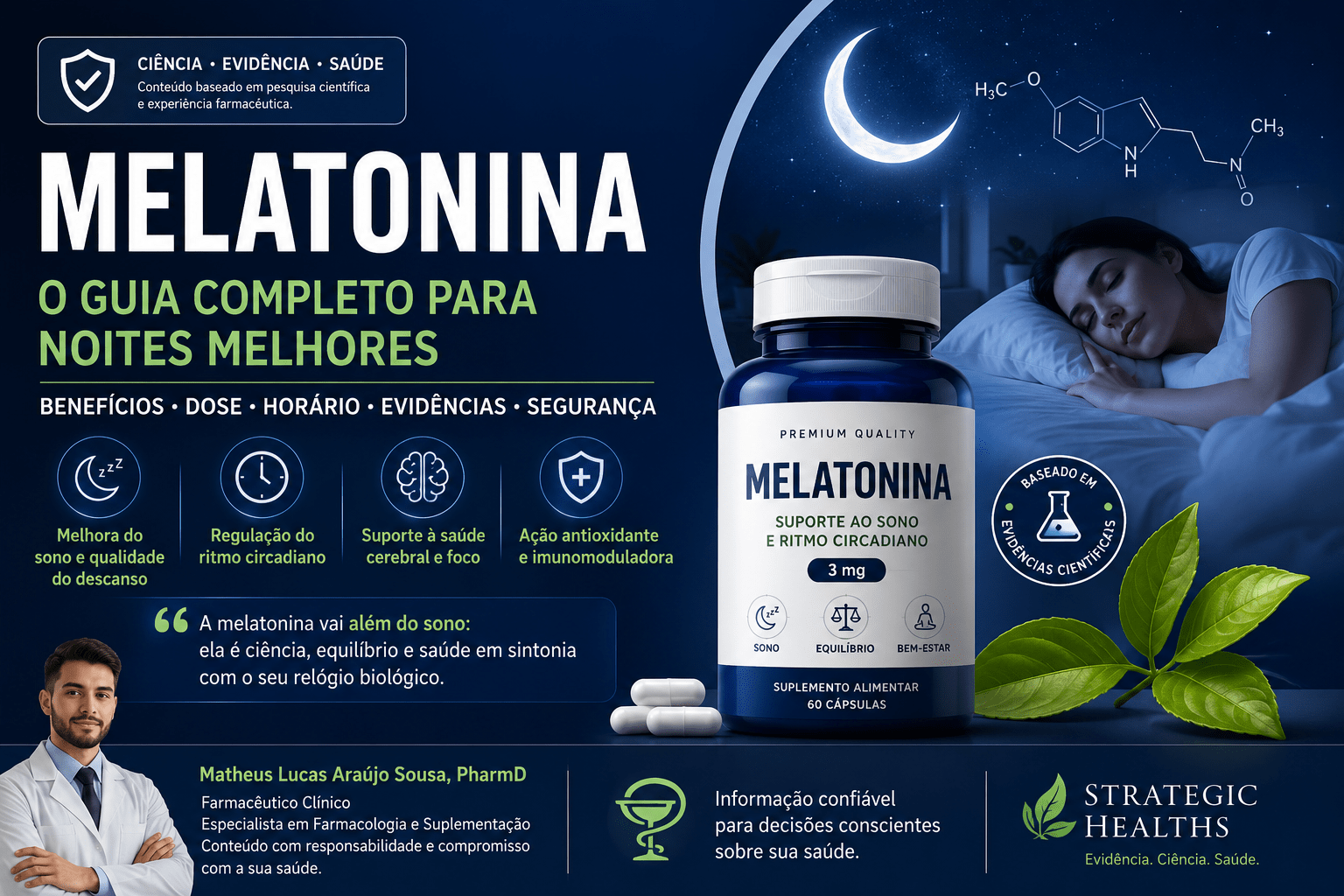
Can melatonin improve sleep, reduce jet lag, and help regulate the body’s biological clock? Here’s what current scientific evidence reveals.
Introduction
Sleep is one of the most important pillars of human health. Adequate sleep supports immune function, cognitive performance, metabolic regulation, cardiovascular health, and emotional well-being. However, millions of people worldwide experience sleep disturbances, insomnia, shift-work sleep disorder, or circadian rhythm disruptions.
Melatonin has become one of the most widely used supplements for improving sleep quality. Unlike traditional sedative medications, melatonin is a hormone naturally produced by the pineal gland that primarily helps regulate the body’s internal biological clock.
Although melatonin is often viewed as a simple “sleep aid,” scientific research indicates that its benefits depend on factors such as timing, dosage, age, light exposure, and the underlying cause of sleep disruption.
This evidence-based review examines the physiology of melatonin, its clinical applications, recommended dosages, safety considerations, and current scientific evidence.
🌙 What Is Melatonin?
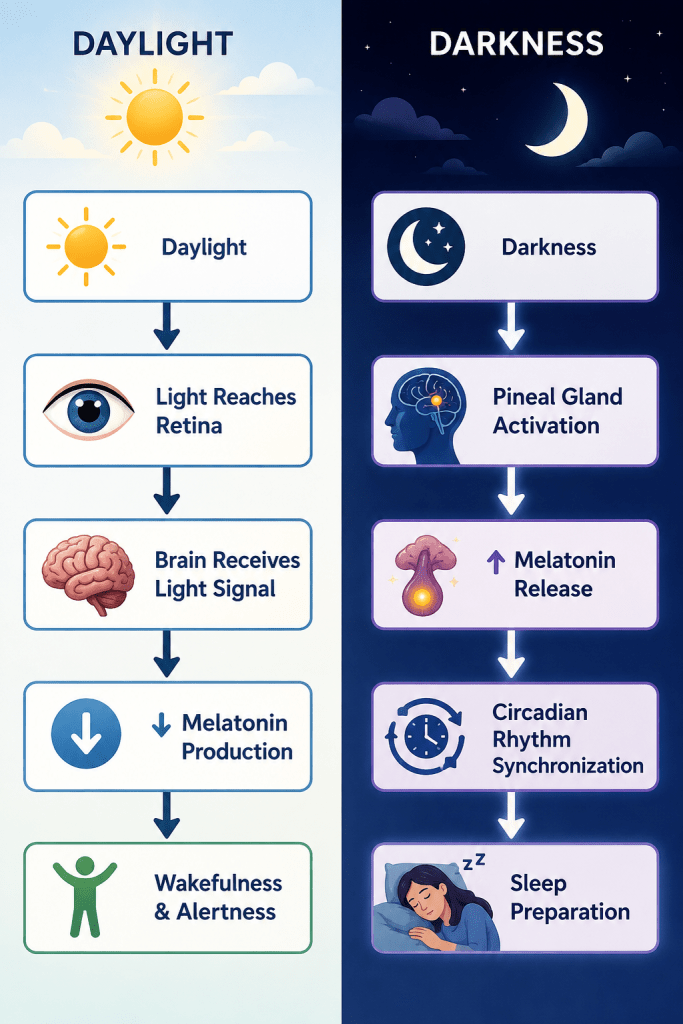
Melatonin is a hormone synthesized mainly by the pineal gland in response to darkness.
Its primary function is not to induce sleep directly, but rather to signal to the brain that it is nighttime, promoting synchronization of the circadian rhythm.
Melatonin secretion normally:
- 🌅 Begins increasing after sunset.
- 🌃 Peaks during the middle of the night.
- ☀️ Declines before sunrise.
Artificial light, especially blue light emitted by smartphones, tablets, and computers, can suppress natural melatonin production.
🧠 How Does Melatonin Work?
Melatonin binds primarily to MT1 and MT2 receptors located in the brain.
Its main physiological actions include:
- 🌙 Regulation of the sleep-wake cycle.
- ⏰ Synchronization of circadian rhythms.
- 💤 Reduction in sleep onset latency.
- 🧬 Antioxidant activity.
- 🛡️ Protection against oxidative stress.
- 🧠 Possible neuroprotective effects.
Unlike sedative medications, melatonin generally facilitates the body’s natural sleep processes rather than causing sedation.
🌍 Who May Benefit from Melatonin?
Clinical evidence supports melatonin use in selected situations such as:
- 😴 Delayed sleep onset.
- ✈️ Jet lag after long-distance travel.
- 🌙 Circadian rhythm sleep disorders.
- 👴 Older adults with reduced endogenous melatonin production.
- 👨⚕️ Shift workers with disrupted sleep schedules (in appropriate clinical contexts).
Benefits vary according to the underlying condition, and melatonin is not equally effective for all forms of insomnia.
📊 Circadian Rhythm Flowchart
⭐ Evidence-Based Benefits
😴 1. Sleep Onset
The strongest evidence indicates that melatonin can reduce the time required to fall asleep, particularly in people with delayed sleep phase or circadian rhythm disorders.
✈️ 2. Jet Lag
Melatonin is one of the best-studied interventions for reducing jet lag symptoms after crossing multiple time zones.
Clinical trials suggest benefits including:
- Faster adaptation to new time zones.
- Reduced daytime fatigue.
- Improved nighttime sleep.
- Better overall travel recovery.
👴 3. Older Adults
Natural melatonin production tends to decline with age.
Supplementation may improve:
- Sleep latency.
- Sleep efficiency.
- Total sleep time.
- Subjective sleep quality in selected older adults.
🌙 4. Melatonin and Insomnia
Melatonin is among the most studied supplements for sleep disorders. However, its effectiveness depends on the underlying cause of insomnia.
The strongest evidence supports its use in individuals with:
- 🌙 Delayed Sleep Phase Syndrome
- 👴 Age-related decline in melatonin production
- ✈️ Jet lag
- 🌍 Circadian rhythm sleep disorders
For chronic insomnia associated with anxiety, depression, chronic pain, or poor sleep hygiene, melatonin alone is generally not sufficient and should be considered only as part of a comprehensive treatment plan.
Clinical studies suggest melatonin may:
- Reduce sleep onset latency.
- Improve subjective sleep quality.
- Slightly increase total sleep time.
- Improve sleep efficiency in selected populations.
👨⚕️ 5. Shift Work and Circadian Rhythm Disorders
Shift workers often experience misalignment between their biological clock and work schedules.
When appropriately timed, melatonin supplementation may help:
- 🌙 Promote daytime sleep after night shifts.
- 😴 Improve sleep duration.
- ⚡ Reduce fatigue.
- ⏰ Facilitate circadian rhythm adaptation.
Benefits are greatest when combined with:
- Light exposure management.
- Consistent sleep schedules.
- Healthy sleep hygiene practices.
✈️ 6. Melatonin and Jet Lag
Jet lag occurs when rapid travel across time zones disrupts the body’s internal clock.
Melatonin has demonstrated benefit in:
- Faster adaptation to destination time.
- Reduced daytime sleepiness.
- Improved nighttime sleep.
- Better overall travel recovery.
Taking melatonin close to the target bedtime at the destination may improve effectiveness.
💊 Immediate-Release vs. Extended-Release Melatonin
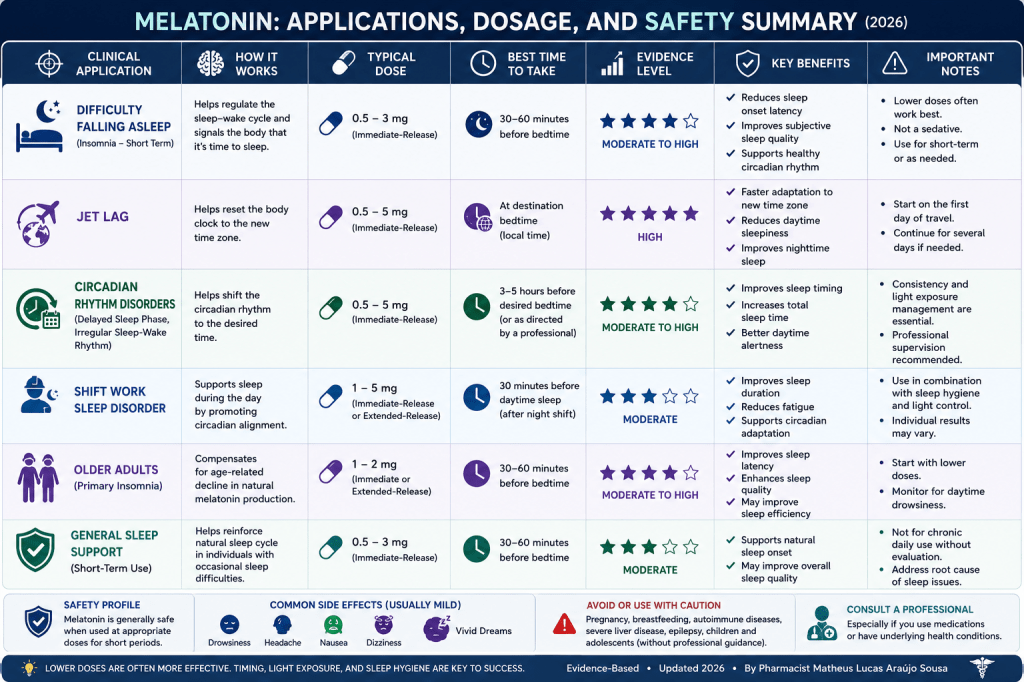
The most appropriate formulation depends on the patient’s sleep complaint and should be selected with professional guidance.
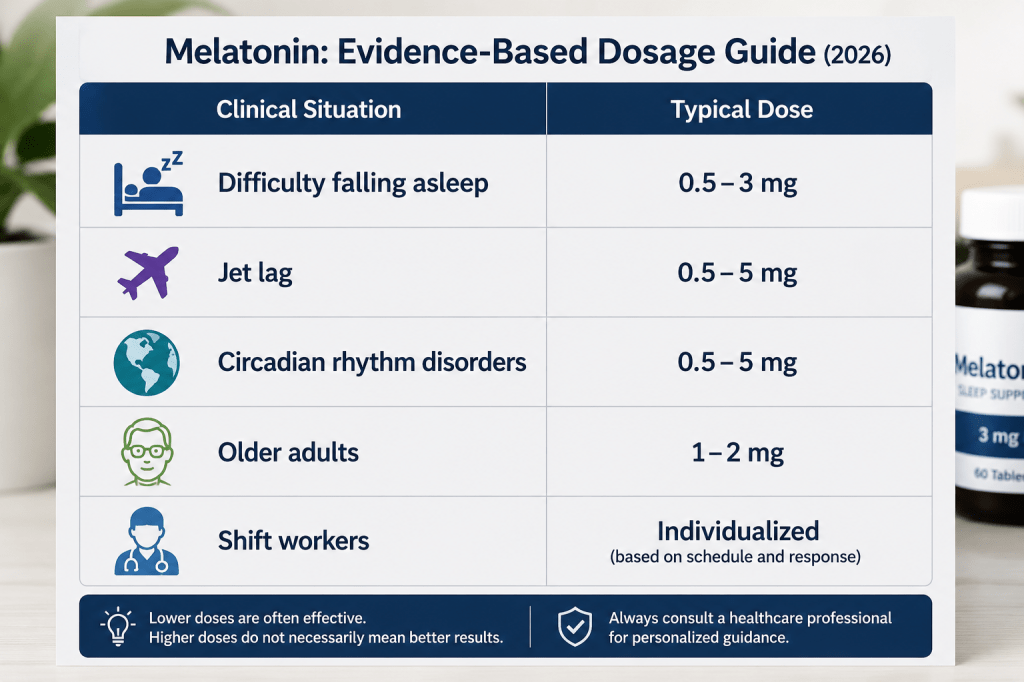
💊 Evidence-Based Dosages
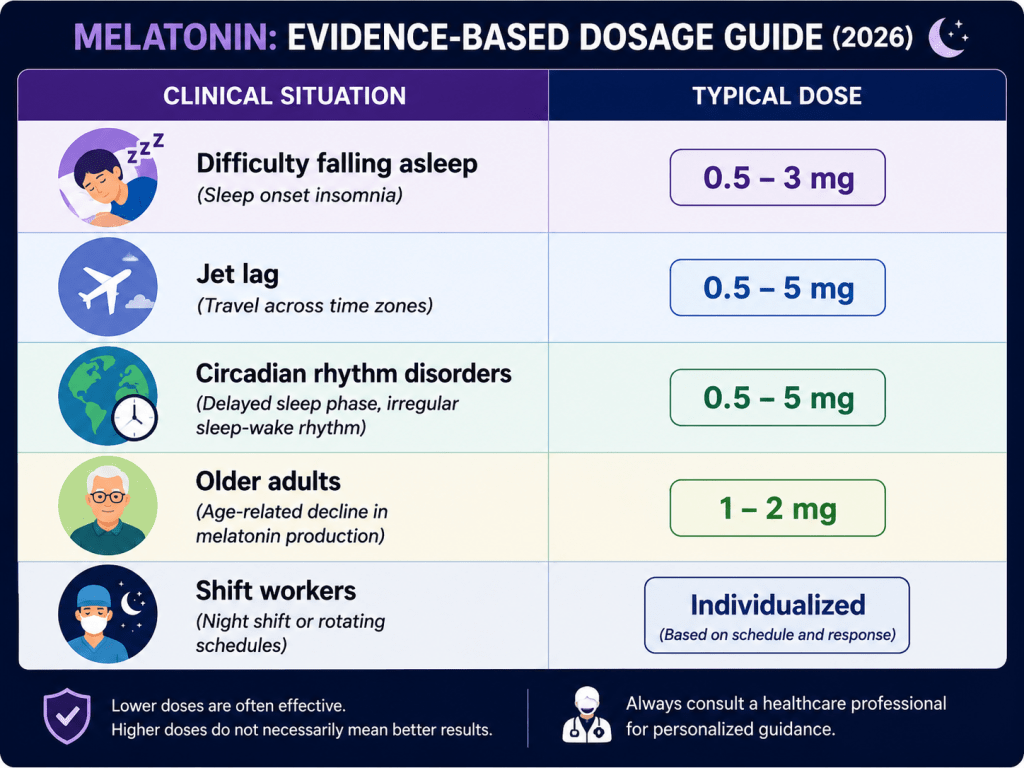
Current evidence suggests that lower doses are often sufficient, and increasing the dose does not necessarily improve outcomes.
⚠️ Safety Profile
Melatonin is generally well tolerated when used at appropriate doses for short-term treatment.
Possible adverse effects
- 😴 Daytime drowsiness
- 🤕 Headache
- 🤢 Nausea
- 😵 Dizziness
- 🌙 Vivid dreams
These effects are usually mild and resolve after dose adjustment or discontinuation.
💊 Drug Interactions
Melatonin may interact with several medications.
Examples include:
- Anticoagulants
- Sedatives
- Hypnotics
- Antidepressants
- Antihypertensives
- Immunosuppressants
- Antidiabetic medications
Patients using prescription medicines should seek guidance from a healthcare professional before starting supplementation.
🚫 Contraindications and Precautions
Melatonin should be used cautiously or avoided in:
- 🤰 Pregnancy
- 🤱 Breastfeeding
- Autoimmune diseases
- Severe liver disease
- Individuals with epilepsy (unless medically supervised)
- Children and adolescents without professional guidance
📊 Summary Table
👨⚕️ Pharmacist’s Clinical Perspective
Melatonin is a valuable tool for managing circadian rhythm disorders and specific sleep-related conditions. Nevertheless, it should not be viewed as a universal treatment for insomnia.
Optimal results depend on correct timing, individualized dosing, appropriate formulation, and addressing lifestyle factors such as light exposure, caffeine intake, and sleep hygiene.
When used responsibly and under professional guidance, melatonin has a favorable safety profile and may significantly improve sleep quality in selected populations.
🛡️ Safety, Contraindications, and Possible Side Effects
Although melatonin is considered one of the safest dietary supplements available, it should still be used responsibly. Since it directly influences the body’s biological clock, inappropriate use may reduce its effectiveness or cause unwanted effects.
✅ Common Mild Side Effects
- 😴 Morning drowsiness
- 🤕 Mild headache
- 😵 Dizziness
- 🤢 Nausea
- 😴 Vivid dreams
- 😪 Excessive sleepiness (higher doses)
Most adverse effects are temporary and often related to excessive doses.
⚠️ Who Should Be Cautious?
Melatonin supplementation should be discussed with a healthcare professional in the following situations:
👶 Children (unless medically indicated)
🤰 Pregnancy
🤱 Breastfeeding
🧠 Neurological disorders
🫀 Autoimmune diseases
🩸 Bleeding disorders
💊 Use of anticoagulants
💊 Immunosuppressants
💊 Sedatives
💊 Antidepressants
💊 Drug Interactions
Melatonin may interact with several medications.
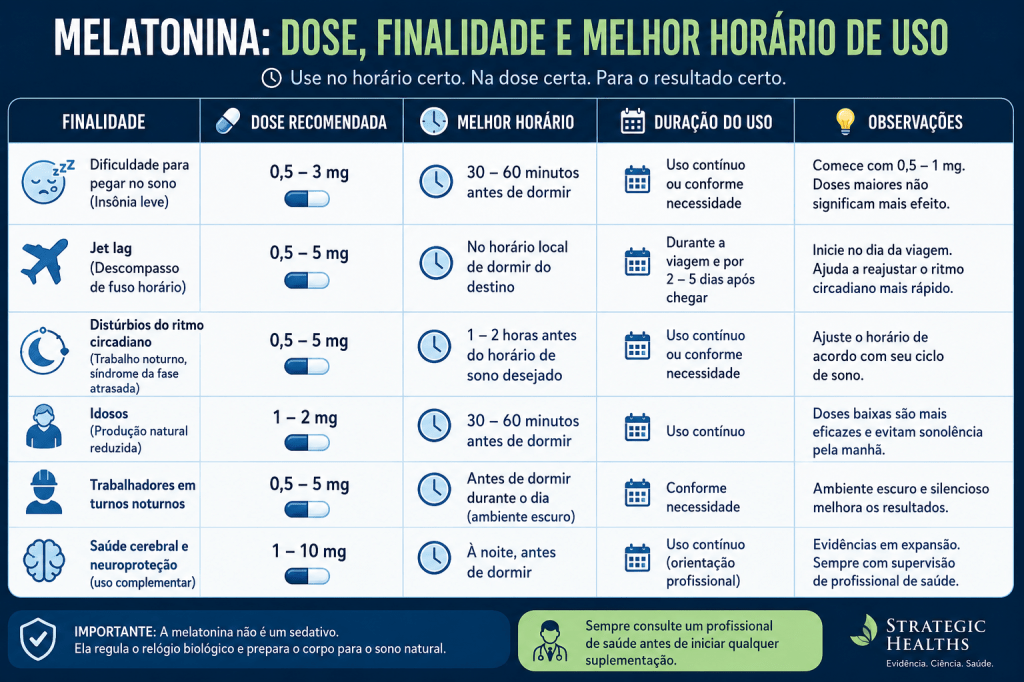
Professional guidance is recommended whenever melatonin is combined with prescription medications.
🔬 What Does Current Scientific Evidence Say?
Over the last two decades, melatonin has become one of the most extensively researched sleep supplements.
Current evidence supports benefits for:
✅ Sleep onset insomnia
✅ Jet lag
✅ Circadian rhythm disorders
✅ Shift workers
✅ Older adults with decreased endogenous melatonin
Emerging evidence also suggests potential roles in:
- Oxidative stress reduction
- Neuroprotection
- Cardiovascular health
- Immune modulation
- Healthy aging
However, these applications continue to be investigated, and stronger clinical evidence is still needed before routine therapeutic recommendations.
🌍 Lifestyle Habits That Naturally Increase Melatonin
Supplementation is only one component of healthy sleep.
Natural strategies include:
🌅 Morning sunlight exposure
📵 Avoiding blue light before bedtime
🌙 Keeping the bedroom dark
🌡️ Maintaining a cool room temperature
☕ Limiting caffeine in the evening
🍷 Avoiding alcohol close to bedtime
🛏️ Maintaining consistent sleep schedules
🏃 Regular physical activity
🥗 Balanced nutrition
😌 Stress management
Together, these habits enhance the body’s natural melatonin production and improve sleep quality.
⭐ Practical Take-Home Messages
✔️ Melatonin regulates circadian rhythm rather than acting as a traditional sleeping pill.
✔️ Lower doses are often as effective—or more effective—than higher doses.
✔️ Proper timing of administration is as important as dosage.
✔️ Good sleep hygiene significantly enhances melatonin effectiveness.
✔️ Scientific evidence strongly supports melatonin for selected sleep disorders.
✔️ Consultation with a healthcare professional is advisable before long-term supplementation.
🏆 Conclusion
Melatonin has become one of the most widely studied and utilized supplements for promoting healthy sleep and regulating the circadian rhythm. Scientific evidence consistently supports its effectiveness in improving sleep onset, managing jet lag, addressing circadian rhythm disorders, and assisting populations with reduced endogenous melatonin production, particularly older adults.
Beyond sleep regulation, melatonin exhibits promising antioxidant, anti-inflammatory, and neuroprotective properties, making it an area of growing interest in preventive medicine and healthy aging research. Nevertheless, these broader clinical applications require additional high-quality randomized controlled trials before definitive therapeutic recommendations can be established.
Optimal results are achieved when melatonin supplementation is combined with evidence-based lifestyle strategies, including appropriate light exposure, regular sleep schedules, physical activity, balanced nutrition, and reduced evening screen time.
When used appropriately and under professional guidance, melatonin represents a valuable component of an integrated approach to improving sleep quality and overall health.
📚 References
- American Academy of Sleep Medicine. Clinical Practice Guidelines for the Pharmacologic Treatment of Chronic Insomnia.
- National Center for Complementary and Integrative Health. Melatonin: What You Need To Know.
- European Sleep Research Society. Sleep Medicine Guidelines.
- National Institutes of Health. Office of Dietary Supplements.
- Cochrane. Systematic Reviews on Melatonin for Sleep Disorders.
- Sleep Foundation. Evidence-Based Sleep Resources.
- PubMed. Peer-reviewed clinical studies on melatonin.
👨⚕️ About the Author
Matheus Lucas Araújo Sousa, PharmD
Licensed Pharmacist | Scientific Health Content Creator
Dedicated to translating complex pharmaceutical and biomedical research into practical, evidence-based information that helps readers make informed decisions about health, nutrition, supplementation, and disease prevention.
🌐 Strategic Healths
Evidence-Based Health • Clinical Pharmacology • Nutrition • Preventive Medicine
📢 Medical Disclaimer
The information presented in this article is intended solely for educational purposes and should not replace professional medical advice, diagnosis, or treatment. Always consult a qualified physician or pharmacist before starting any supplement, especially if you have underlying medical conditions, are pregnant or breastfeeding, or take prescription medications.
 saudeestrategicaart