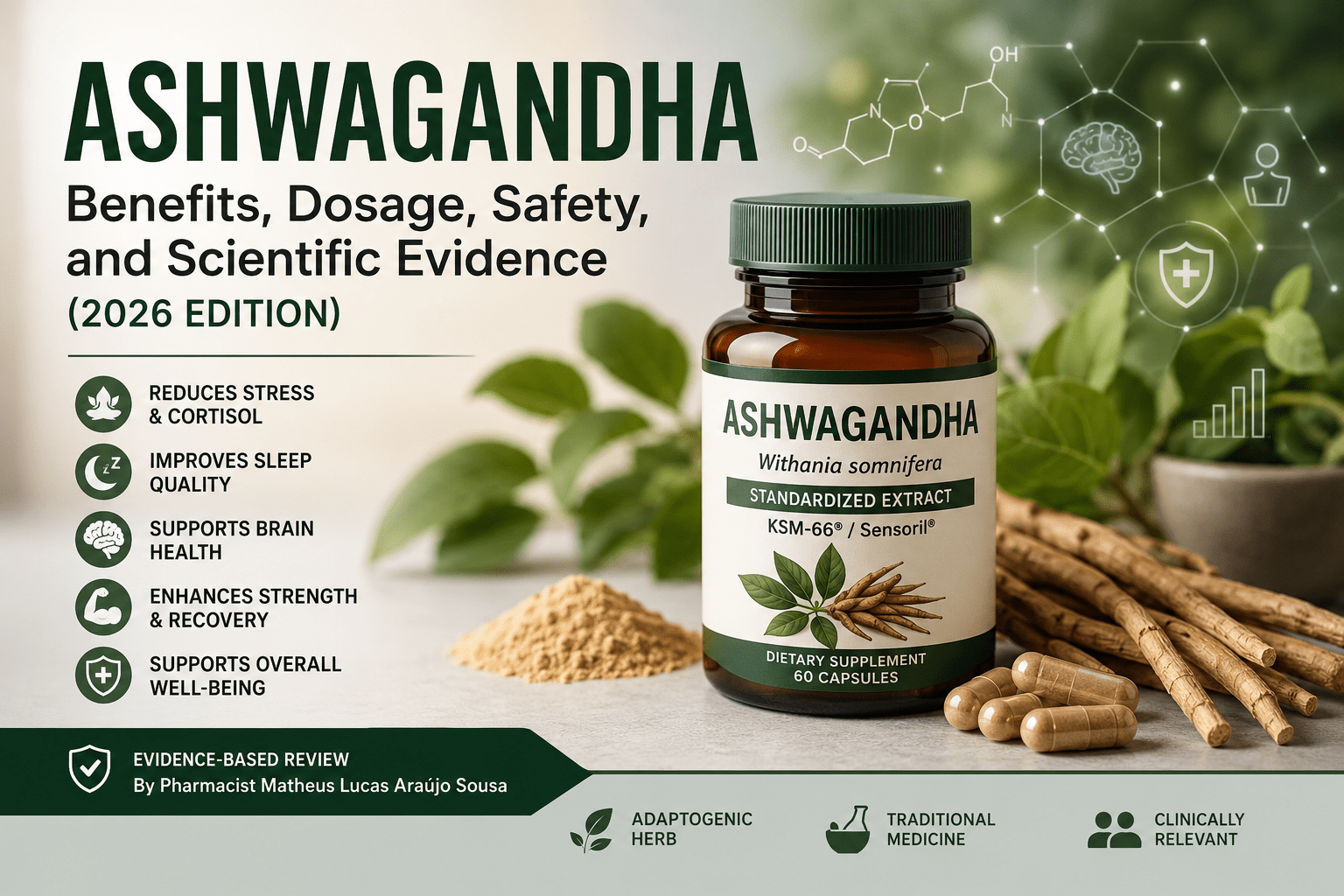
Can this ancient medicinal plant really help reduce stress, improve sleep, enhance physical performance, and support brain health? Here’s what modern science reveals.
Introduction
In recent years, Ashwagandha has become one of the fastest-growing dietary supplements worldwide. Once primarily used in traditional Ayurvedic medicine, it is now widely studied in modern clinical research for its potential effects on stress management, sleep quality, cognitive performance, muscle strength, and overall well-being.
Healthcare professionals, athletes, and individuals seeking natural approaches to health have increasingly incorporated Ashwagandha into daily routines. However, despite its popularity, many misconceptions remain regarding its effectiveness, proper dosage, safety profile, and possible drug interactions.
This comprehensive review examines the current scientific evidence surrounding Ashwagandha, highlighting both its potential benefits and its limitations. All information presented is based on peer-reviewed clinical studies and recommendations from reputable scientific organizations.
What Is Ashwagandha?
Ashwagandha (Withania somnifera) is a medicinal plant native to India, the Middle East, and parts of Africa. It has been used for over 3,000 years in traditional Ayurvedic medicine.
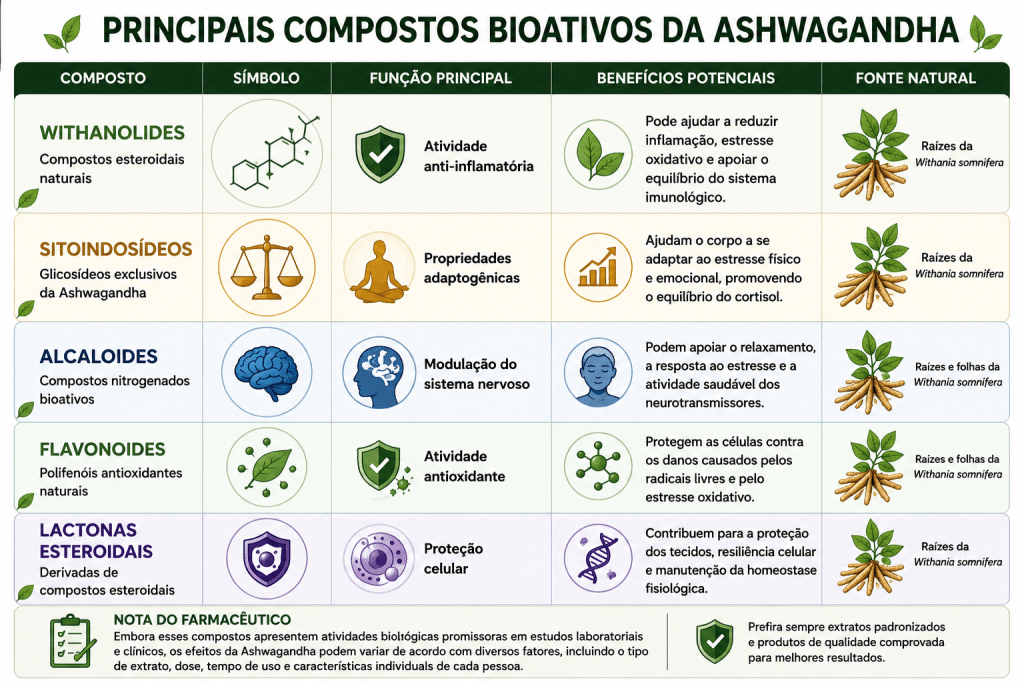
Its roots contain several biologically active compounds, including:
- 🌿 Withanolides
- 🌿 Alkaloids
- 🌿 Sitoindosides
- 🌿 Flavonoids
- 🌿 Steroidal lactones
Researchers believe these compounds are primarily responsible for the plant’s pharmacological effects.
How Does Ashwagandha Work?
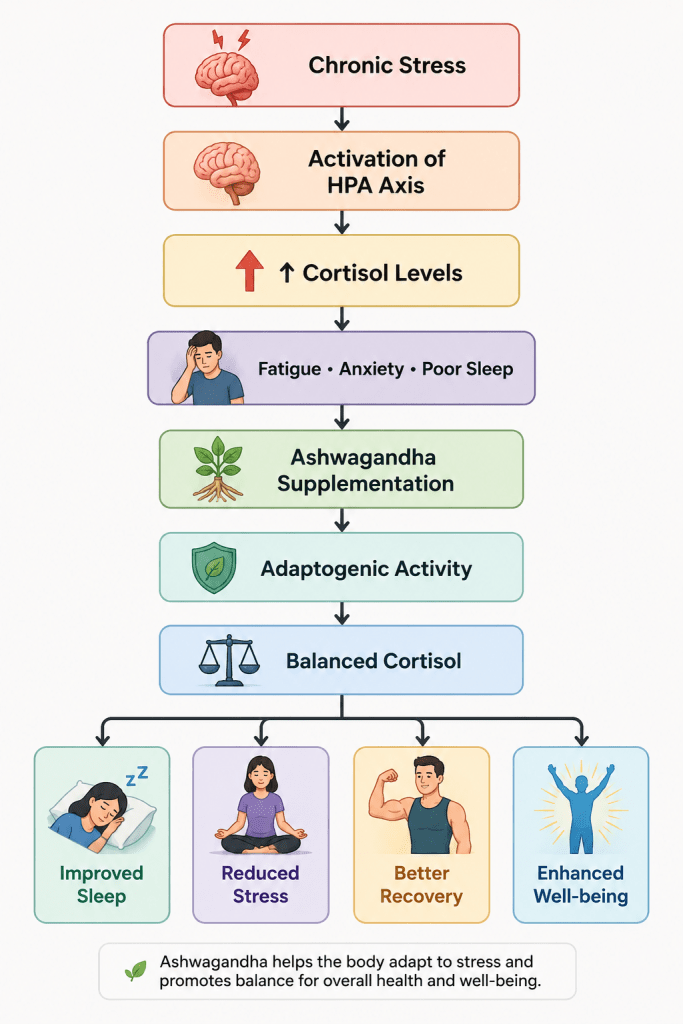
Unlike stimulants that temporarily increase energy levels, Ashwagandha acts mainly by helping the body regulate physiological responses to stress.
Current evidence suggests several mechanisms:
✔ Regulation of the hypothalamic-pituitary-adrenal (HPA) axis
✔ Reduction of excessive cortisol production
✔ Modulation of GABAergic neurotransmission
✔ Antioxidant activity
✔ Reduction of oxidative stress
✔ Anti-inflammatory effects
✔ Support for mitochondrial function
✔ Possible neuroprotective activity
Collectively, these mechanisms may contribute to improvements in resilience, sleep quality, recovery from exercise, and perceived well-being.
Dynamic Physiological Flowchart
Main Bioactive Compounds

Evidence-Based Health Benefits
1. Stress Reduction
The strongest evidence for Ashwagandha relates to chronic stress management.
Randomized controlled trials suggest that standardized extracts may reduce perceived stress scores and lower cortisol levels in some adults experiencing chronic stress. However, the magnitude of benefit varies across studies, and not all trials show the same effect.
Potential outcomes include:
- Reduced perceived stress
- Improved emotional resilience
- Better sleep quality
- Lower cortisol concentrations in some participants
- Improved quality of life
2. Anxiety Symptoms
Ashwagandha is not a replacement for evidence-based psychiatric treatment, but some clinical studies indicate it may help reduce mild to moderate anxiety symptoms as an adjunct under professional guidance.
Its potential effects may involve:
- GABA receptor modulation
- Cortisol regulation
- Reduced sympathetic nervous system activation
People with clinically significant anxiety should consult a healthcare professional before relying on supplements.
3. Sleep Quality
Several controlled studies have reported improvements in:
- Sleep onset latency
- Sleep efficiency
- Total sleep time
- Subjective sleep quality
Benefits appear more consistent among individuals experiencing stress-related sleep disturbances than in those without sleep complaints.
📌 Key Takeaways
- 🌿 Withanolides → Primary compounds responsible for many of Ashwagandha’s biological effects.
- ⚖️ Sitoindosides → Associated with the plant’s adaptogenic properties.
- 🧠 Alkaloids → May influence the central nervous system and promote relaxation.
- 🍃 Flavonoids → Help neutralize free radicals through antioxidant activity.
- 🧬 Steroidal Lactones → Support cellular health and protection against oxidative damage.
Pharmacist’s Note: Although these compounds demonstrate promising biological activities in laboratory and clinical research, the overall effects of Ashwagandha depend on factors such as the extract used (e.g., KSM-66® or Sensoril®), the standardized withanolide content, dosage, duration of supplementation, and individual patient characteristics. Therefore, efficacy may vary among different commercial products.
💪 4. Muscle Strength and Exercise Performance
Ashwagandha has gained considerable attention in sports nutrition due to its potential to improve physical performance and recovery. Several randomized controlled trials suggest that standardized extracts may enhance muscle strength and support exercise adaptations when combined with resistance training.
Proposed mechanisms include:
- 💪 Improved ATP availability through enhanced mitochondrial function
- 🛡️ Reduced exercise-induced oxidative stress
- 🔥 Lower inflammatory response after intense exercise
- ❤️ Improved cardiorespiratory efficiency
- ⚡ Faster recovery between training sessions
Clinical findings
Studies involving resistance-trained adults have reported:
- ✔ Increased maximal strength
- ✔ Improved muscular endurance
- ✔ Greater lean body mass gains when combined with structured training
- ✔ Reduced perception of fatigue
- ✔ Improved recovery after high-intensity exercise
Important: Ashwagandha is not an anabolic agent. The observed improvements are likely related to enhanced recovery, stress modulation, and improved adaptation to training rather than direct muscle growth.
🧠 5. Cognitive Function and Brain Health
Emerging evidence suggests Ashwagandha may support several aspects of cognitive performance, particularly in individuals experiencing chronic stress.
Potential benefits include:
- 🧠 Improved attention
- 📚 Better working memory
- 🎯 Enhanced executive function
- ⚡ Faster information processing
- 😌 Reduced mental fatigue
Researchers believe these effects are associated with reduced oxidative stress, modulation of cortisol, and possible neuroprotective properties of withanolides.
❤️ 6. Cardiometabolic Health
Several studies have explored Ashwagandha’s role in metabolic health.
Possible benefits include:
✔ Improved insulin sensitivity
✔ Reduction in fasting blood glucose in selected populations
✔ Improvement in lipid profile
✔ Reduction in inflammatory biomarkers
✔ Improved body composition when associated with healthy lifestyle habits
Current evidence is encouraging but remains insufficient to recommend Ashwagandha as a treatment for diabetes or cardiovascular disease.
👨⚕️ 7. Male Reproductive Health
Some clinical trials suggest potential improvements in:
- 🧬 Sperm concentration
- 🧬 Sperm motility
- 🧬 Semen volume
- 💪 Testosterone levels in selected individuals
- ❤️ Oxidative stress markers
However, these findings should be interpreted cautiously, as results vary between studies.
Ashwagandha should not be considered a treatment for infertility without medical evaluation.
🛡️ 8. Immune Function
Laboratory and clinical studies suggest Ashwagandha may help regulate immune responses rather than simply stimulating immunity.
Possible mechanisms:
- Regulation of cytokines
- Reduction of chronic low-grade inflammation
- Improved antioxidant defense
- Support of immune homeostasis
More high-quality clinical trials are needed before definitive recommendations can be made.
💊 Recommended Dosages
Clinical studies most commonly use standardized extracts rather than raw root powder.
❓ Frequently Asked Questions (FAQ)
1. How long does Ashwagandha take to work?
Clinical studies suggest that noticeable effects on stress and sleep typically appear after 2–8 weeks of consistent supplementation. Individual responses may vary depending on the extract, dosage, and baseline health status.
2. Is Ashwagandha safe for daily use?
For most healthy adults, standardized Ashwagandha extracts appear to be generally well tolerated when used at recommended doses for several weeks or months. Long-term safety data beyond this period remain limited, so prolonged use should ideally be discussed with a healthcare professional.
3. Can Ashwagandha increase testosterone?
Some clinical trials have reported modest increases in testosterone levels in specific populations, particularly men with infertility or those engaged in resistance training. Current evidence is insufficient to conclude that Ashwagandha consistently increases testosterone in all healthy men.
4. Does Ashwagandha help with anxiety?
Evidence suggests that Ashwagandha may reduce symptoms of mild to moderate stress and anxiety in some individuals. However, it should not replace psychological therapy or prescribed medications for anxiety disorders.
5. What is the best time to take Ashwagandha?
There is no universally ideal time. Many people take it:
- 🌙 In the evening to support sleep quality.
- ☀️ In the morning to help manage daytime stress.
The optimal timing depends on the individual’s goals and tolerance.
6. Can I take Ashwagandha with coffee?
Yes, most healthy adults can. There is no strong evidence that moderate caffeine intake interferes with Ashwagandha’s effectiveness, although personal tolerance varies.
7. Can Ashwagandha be combined with Creatine?
Current evidence does not indicate harmful interactions between Ashwagandha and creatine in healthy adults. In fact, some sports nutrition protocols combine both supplements alongside resistance training. More research is needed to determine whether the combination offers additional benefits beyond each supplement alone.
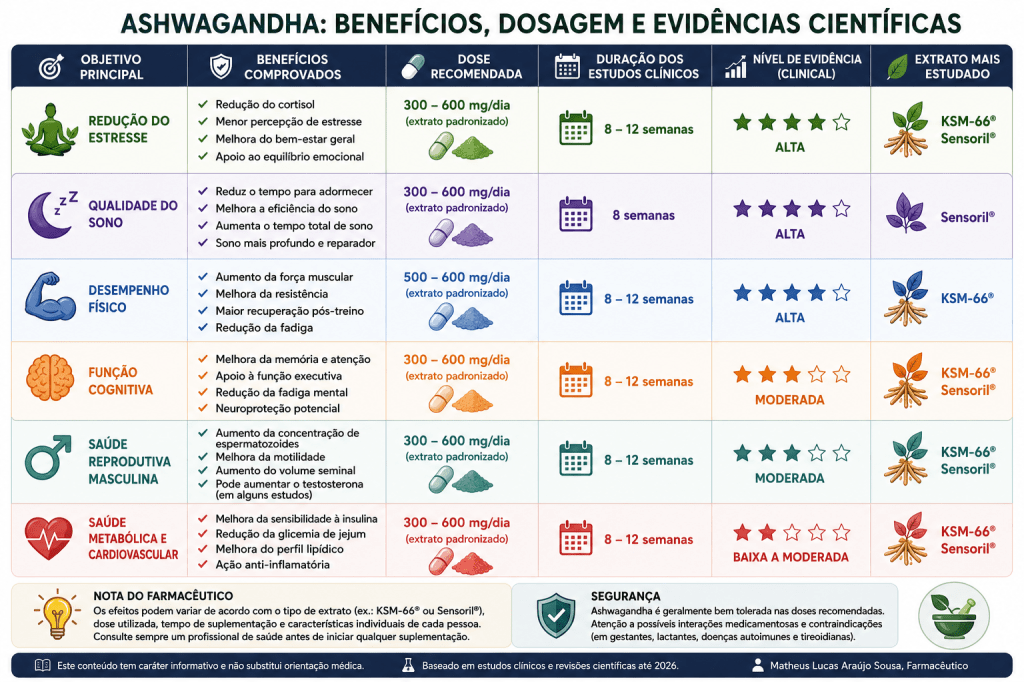
⭐ Key Takeaways
✅ One of the most extensively studied adaptogenic herbs.
✅ Strongest evidence supports stress reduction and improved sleep quality.
✅ May enhance exercise recovery and physical performance when combined with structured training.
✅ Standardized extracts such as KSM-66® and Sensoril® have the greatest amount of clinical evidence.
✅ Product quality, dosage, and extract standardization significantly influence effectiveness.
✅ Individuals with thyroid disorders, autoimmune diseases, pregnancy, breastfeeding, or those taking prescription medications should seek professional medical advice before supplementation.
👨⚕️ Pharmacist’s Perspective
Ashwagandha has become one of the most investigated herbal supplements in modern integrative medicine. While clinical evidence continues to expand, current data support its use primarily for stress management, sleep quality, and adaptation to physical and psychological stress.
As with any dietary supplement, it should not be considered a substitute for medical treatment or healthy lifestyle habits. Choosing standardized products with demonstrated quality and consulting healthcare professionals before supplementation remain essential for maximizing benefits and minimizing risks.
Evidence-based supplementation should always prioritize patient safety, scientific rigor, and individualized clinical decision-making.
✅ Conclusion
Ashwagandha represents a compelling example of how traditional herbal medicine and modern clinical research can converge. Scientific studies suggest that standardized Ashwagandha extracts may offer meaningful benefits for stress management, sleep quality, exercise recovery, and overall well-being in selected populations.
However, it is important to recognize that supplements are most effective when integrated into a broader strategy that includes balanced nutrition, regular physical activity, adequate sleep, and evidence-based medical care. Future large-scale clinical trials will further clarify the long-term efficacy and safety of Ashwagandha across diverse patient populations.
For healthcare professionals and informed consumers alike, the current evidence supports a cautious yet optimistic approach to its use, emphasizing standardized formulations, appropriate dosing, and individualized assessment.
📚 Selected Scientific References
- Bonilla DA, et al. Effects of Ashwagandha (Withania somnifera) on Physical Performance: Systematic Review and Bayesian Meta-analysis. Journal of Functional Morphology and Kinesiology. 2021.
- Lopresti AL, Smith SJ, Malvi H, Kodgule R. An Investigation into the Stress-Relieving and Pharmacological Actions of Ashwagandha. Medicine (Baltimore). 2019.
- National Institutes of Health. Office of Dietary Supplements. Ashwagandha Fact Sheet for Health Professionals.
- European Food Safety Authority. Scientific opinions and safety evaluations regarding botanical preparations.
- World Health Organization. WHO Global Report on Traditional and Complementary Medicine.
- Tandon N, Yadav SS. Safety and Clinical Effectiveness of Withania somnifera. Journal of Ethnopharmacology.
- Chandrasekhar K, Kapoor J, Anishetty S. A Prospective, Randomized Double-Blind Study of a High-Concentration Full-Spectrum Ashwagandha Root Extract in Reducing Stress and Anxiety.
👨⚕️ About the Author
Matheus Lucas Araújo Sousa, PharmD
Pharmacist dedicated to translating scientific evidence into practical, reliable, and accessible health information. His work focuses on evidence-based supplementation, clinical pharmacy, preventive healthcare, and patient education, helping readers make informed decisions grounded in high-quality research.
 saudeestrategicaart