By Matheus Lucas Araújo Sousa, PharmD
🦠 What Are Probiotics?
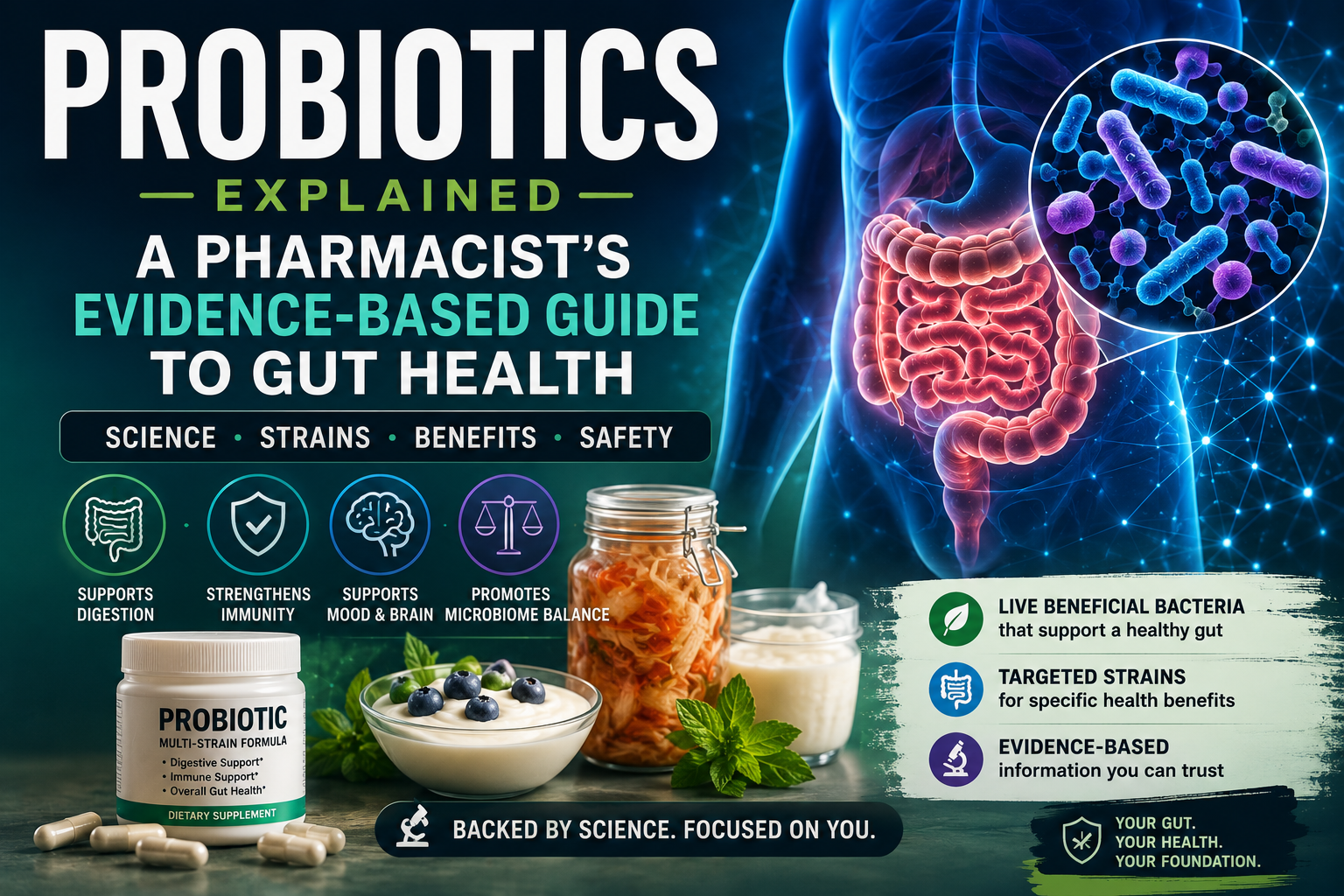
Probiotics are live microorganisms that may provide health benefits when consumed in adequate amounts. They are found in fermented foods, certain dairy products, and dietary supplements. According to the NIH, probiotics act mainly in the digestive tract, where they may influence the intestinal microbiota and digestive function.
In simple terms, probiotics are often called “good bacteria,” but the scientific explanation is more precise: their benefits depend on the specific strain, dose, product quality, and the health condition being targeted.
🧬 Why Gut Health Matters
Your gut is not just responsible for digestion. It is connected to several important systems in the body, including:
✅ Nutrient absorption
✅ Immune defense
✅ Inflammation regulation
✅ Metabolism
✅ Gut-brain communication
✅ Barrier protection against harmful microorganisms
The gut microbiome is highly individual and is influenced by diet, lifestyle, genetics, medications, environment, and age. Harvard’s Nutrition Source emphasizes that each person’s microbiome is different and shaped by daily habits.
⚙️ How Probiotics Work
Probiotics may support gut health through several mechanisms:
1. Supporting microbial balance
They may help maintain a healthier balance between beneficial and potentially harmful microorganisms.
2. Strengthening the intestinal barrier
A healthy gut barrier helps reduce unwanted substances from crossing into the bloodstream.
3. Producing beneficial compounds
Some bacteria produce short-chain fatty acids, such as acetate, propionate, and butyrate, which support intestinal cells.
4. Modulating immune responses
A large portion of immune activity is connected to the gut. Probiotics may influence immune signaling in specific contexts.
5. Competing with harmful microorganisms
Some probiotic strains may compete for space and nutrients, making it harder for harmful microbes to grow.
🔬 Most Common Probiotic Strains
Not all probiotics are the same. A product should ideally list the genus, species, and strain.
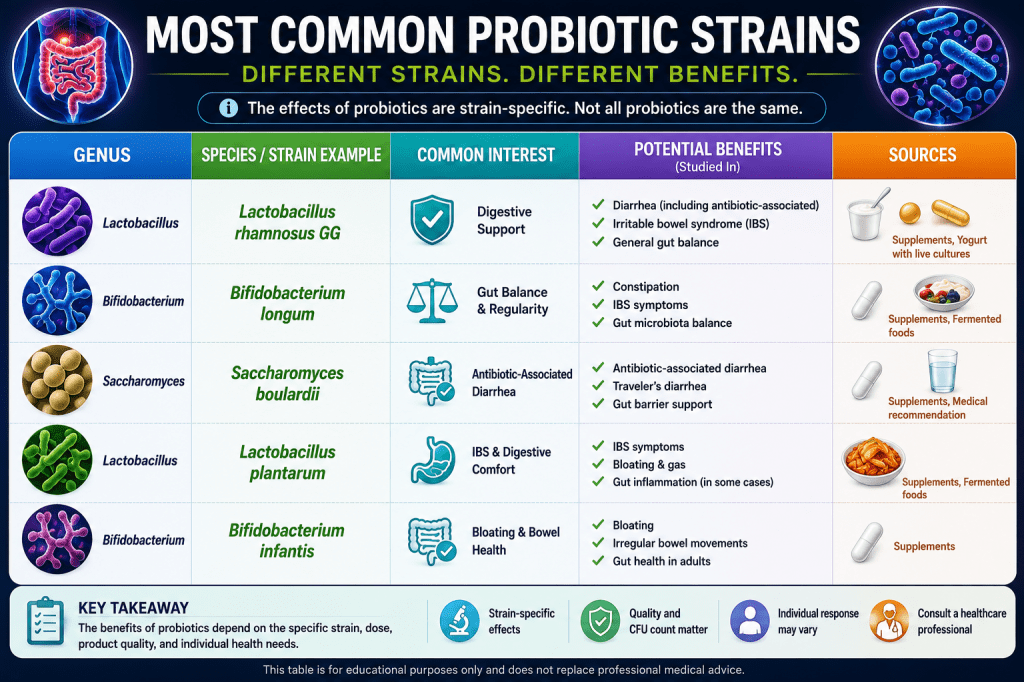
The World Gastroenterology Organisation states that probiotic effects are strain-specific, meaning results from one strain cannot automatically be applied to another.
🍽️ Probiotic Foods
Probiotics can be found in fermented foods, especially when they contain live and active cultures.
Examples include:
🥛 Yogurt with live cultures
🥛 Kefir
🥬 Kimchi
🥒 Sauerkraut
🍲 Miso
🌱 Tempeh
🧉 Kombucha
However, not every fermented food qualifies as a probiotic. To be considered probiotic, the microorganism should be alive, identified, present in adequate amounts, and associated with a health benefit.
💊 Probiotic Supplements
Probiotic supplements are usually sold as capsules, powders, liquids, gummies, or sachets.
When choosing a supplement, check:
✅ Strain identification
✅ CFU count through expiration date
✅ Storage instructions
✅ Third-party testing when available
✅ Clear purpose on the label
✅ Reputable manufacturer
CFU means colony-forming units, a measure of viable microorganisms. More CFUs are not always better. The correct dose depends on the strain and intended use.
🧠 Probiotics and the Gut-Brain Axis
The gut and brain communicate through the nervous system, immune system, hormones, and microbial metabolites. This is called the gut-brain axis.
Some studies investigate probiotics for mood, stress, and cognitive function, but the evidence is still developing. Probiotics should not be presented as a treatment for anxiety, depression, or neurological disease. They may be considered supportive tools in specific contexts, but lifestyle, sleep, diet, mental health care, and medical guidance remain essential.
🛡️ Probiotics and Immunity
The gut plays a major role in immune function. Probiotics may influence immune signaling, gut barrier integrity, and inflammatory responses.
However, this does not mean that every probiotic “boosts immunity.” A more accurate statement is that certain strains may help support normal immune function in specific circumstances.
⚠️ Are Probiotics Safe?
For most healthy adults, probiotics are generally well tolerated. Possible mild side effects include:
- Gas
- Bloating
- Mild digestive discomfort
- Temporary bowel habit changes
However, caution is needed for:
⚠️ Premature infants
⚠️ Severely immunocompromised individuals
⚠️ People with central venous catheters
⚠️ Critically ill patients
⚠️ People with serious chronic disease
NCCIH notes that severe infections have been reported in vulnerable populations, including premature infants, and the FDA has warned healthcare providers about this risk.
❓ FAQ
Do probiotics work for everyone?
No. Response varies from person to person and depends on the strain, dose, health condition, and baseline microbiome.
Should I take probiotics every day?
Some people may benefit from daily use, but not everyone needs a probiotic supplement. A fiber-rich diet is often the best foundation for gut health.
Are probiotics better than prebiotics?
Not necessarily. Prebiotics feed beneficial bacteria already present in the gut. Probiotics add specific microorganisms. Many people benefit more from improving dietary fiber intake first.
Can probiotics help after antibiotics?
Some strains have been studied for antibiotic-associated diarrhea, but the best choice depends on the individual and medication context. Professional guidance is recommended.
What is the best probiotic?
There is no single “best probiotic” for everyone. The best product depends on the strain, purpose, quality, and person using it.
✅ Key Takeaways
✔ Probiotics are live microorganisms with potential health benefits.
✔ Effects are strain-specific.
✔ Gut health depends strongly on diet, fiber, sleep, stress, and lifestyle.
✔ Probiotic supplements are not all equal.
✔ More CFUs do not always mean better results.
✔ Most healthy adults tolerate probiotics well.
✔ Vulnerable individuals should use probiotics only with medical guidance.
✅ Conclusion
Probiotics are one of the most popular categories in digestive health, but they should be understood with scientific precision. They are not magic pills, and they do not replace a healthy diet or medical care. Their benefits depend on the specific strain, the dose, the quality of the product, and the health goal.
From a pharmacist’s perspective, the most responsible approach is to view probiotics as targeted tools, not universal solutions. For many people, the first step toward better gut health should be a diverse, fiber-rich diet, adequate hydration, regular physical activity, quality sleep, and reduced ultra-processed food intake.
When used appropriately, probiotics may support digestive health, microbial balance, and specific gastrointestinal outcomes. But the best results come from combining evidence-based supplementation with long-term lifestyle habits.
👨⚕️ About the Author
Matheus Lucas Araújo Sousa, PharmD
Pharmacist dedicated to translating scientific evidence into practical, reliable, and easy-to-understand health information.
Through Strategic Health, the mission is to help readers make informed decisions about nutrition, supplementation, prevention, and long-term wellness.
⚠️ Medical Disclaimer
This article is for educational purposes only and does not replace medical advice, diagnosis, or treatment. Always consult a physician, pharmacist, or qualified healthcare professional before starting any supplement, especially if you have a medical condition, are pregnant, breastfeeding, immunocompromised, or taking medications.
📚 Scientific References
- National Institutes of Health. Office of Dietary Supplements. Probiotics Fact Sheet for Health Professionals.
- World Gastroenterology Organisation. Global Guidelines: Probiotics and Prebiotics.
- National Center for Complementary and Integrative Health. Probiotics: Usefulness and Safety.
- Hill C, et al. ISAPP consensus statement on the definition and scope of probiotics.
- Harvard T.H. Chan School of Public Health. The Nutrition Source: Probiotics.
 saudeestrategicaart