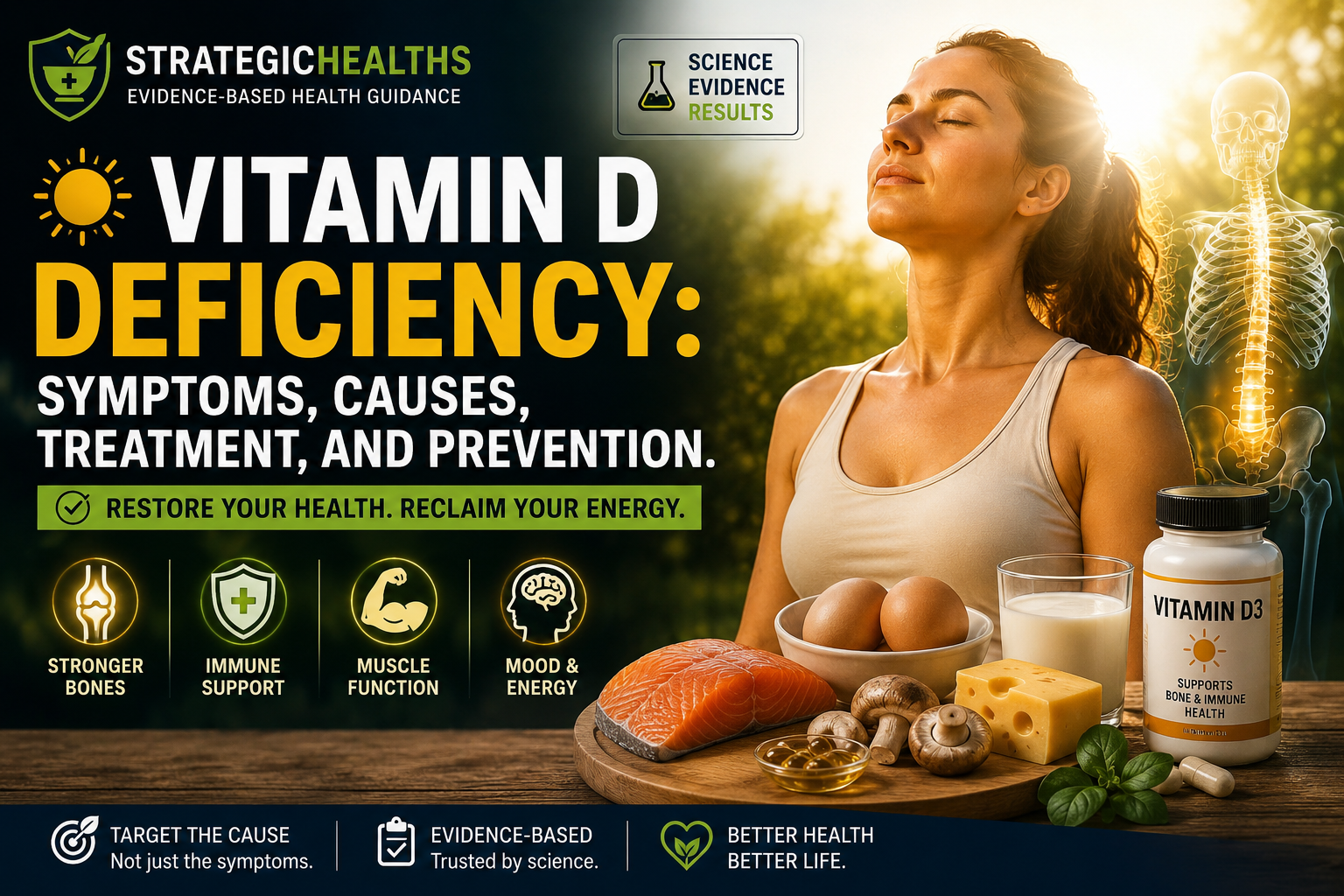

Category: Vitamins • Bone Health • Immune Health
Reading Time: 10 Minutes
Meta Title
Vitamin D Deficiency: Symptoms, Causes, Treatment & Prevention
Meta Description
Discover the symptoms, causes, diagnosis, and treatment of vitamin D deficiency. Learn what science says about vitamin D and how to maintain healthy levels.
Introduction
Vitamin D deficiency is one of the most common nutritional deficiencies worldwide, affecting children, adults, and older adults. Because vitamin D plays a crucial role in bone health, immune function, muscle strength, and overall well-being, low levels can lead to fatigue, bone pain, muscle weakness, and an increased risk of fractures. In this evidence-based guide, you’ll learn the symptoms, causes, diagnosis, treatment, prevention strategies, and the latest scientific recommendations.
📌 Quick Summary
- ✅ Vitamin D supports bone, muscle and immune health
- ✅ Deficiency is common worldwide
- ✅ Blood testing confirms diagnosis
- ✅ Sunlight and diet are important sources
- ✅ Supplements may be necessary for some people
- ✅ Excess supplementation can be harmful
📊 Vitamin D Deficiency at a Glance

🔬 Latest Scientific Evidence (2026)
Vitamin D remains one of the most extensively studied nutrients in medicine. While it is essential for maintaining bone health and preventing conditions such as rickets and osteomalacia, recent research shows that its benefits are most consistent in people with confirmed vitamin D deficiency rather than in healthy individuals with adequate levels.
🦴 Bone Health
Strong scientific evidence confirms that vitamin D plays a critical role in calcium and phosphorus absorption, helping maintain bone mineral density and reducing the risk of fractures when combined with adequate calcium intake in individuals at risk.
💪 Muscle Function and Falls
Vitamin D deficiency has been associated with muscle weakness, reduced physical performance, and an increased risk of falls, particularly in older adults. Correcting deficiency can improve muscle function in those with low vitamin D levels, although supplementation has not consistently shown additional benefits in individuals with sufficient levels.
🛡️ Immune System
Vitamin D contributes to normal immune function by regulating both innate and adaptive immune responses. Research suggests that maintaining adequate vitamin D status supports overall immune health, but routine high-dose supplementation has not been proven to prevent most infections in the general population.
❤️ Chronic Diseases
Observational studies have linked low vitamin D levels with cardiovascular disease, diabetes, autoimmune disorders, and certain cancers. However, large randomized clinical trials indicate that vitamin D supplementation alone does not consistently reduce the incidence of these conditions in people without deficiency.
💊 When Is Supplementation Recommended?
Current clinical guidelines recommend vitamin D supplementation primarily for:
- ✅ Individuals with laboratory-confirmed vitamin D deficiency
- ✅ Older adults at increased risk of fractures
- ✅ People with osteoporosis or osteomalacia
- ✅ Individuals with limited sun exposure
- ✅ Patients with malabsorption disorders or certain chronic diseases
- ✅ People taking medications that interfere with vitamin D metabolism
Routine supplementation for healthy adults with normal vitamin D levels should be individualized based on medical evaluation rather than used indiscriminately.
📖 Part 1 — Understanding Vitamin D Deficiency

☀️ What Is Vitamin D Deficiency?
Vitamin D deficiency occurs when the body does not have enough vitamin D to maintain normal physiological functions. Often referred to as the “sunshine vitamin,” vitamin D is produced in the skin after exposure to ultraviolet B (UVB) rays from sunlight and can also be obtained from certain foods and dietary supplements.
Unlike most vitamins, vitamin D acts as a hormone-like nutrient, influencing hundreds of genes and playing a central role in calcium and phosphorus metabolism, bone mineralization, muscle contraction, immune regulation, and many other biological processes.
When vitamin D levels fall below recommended values, the body absorbs less calcium from the intestine, forcing it to compensate by increasing parathyroid hormone (PTH) levels. Over time, this process can weaken bones, impair muscle function, and increase the risk of fractures and other health complications.
🌍 How Common Is Vitamin D Deficiency?
Vitamin D deficiency is one of the most common nutritional deficiencies worldwide. It affects people of all ages and is particularly prevalent in regions with limited sunlight, among older adults, individuals with darker skin, people with obesity, and those who spend little time outdoors.
Modern lifestyles—including indoor work, sunscreen use, and reduced outdoor activities—have contributed to the growing prevalence of vitamin D insufficiency, even in countries with abundant sunshine.
🧬 Why Is Vitamin D So Important?
Vitamin D is essential for maintaining several vital functions throughout the body, including:
- 🦴 Supporting calcium absorption and bone mineralization
- 💪 Maintaining muscle strength and physical performance
- 🛡️ Supporting normal immune function
- 🧠 Contributing to normal nervous system function
- ❤️ Supporting overall metabolic health
- 🩺 Helping prevent rickets in children and osteomalacia in adults
Maintaining adequate vitamin D levels is an important part of long-term health, especially for bone integrity, mobility, and healthy aging.
⚠️ What Happens When Vitamin D Levels Are Too Low?

Low vitamin D levels may develop gradually, and many individuals experience few or no symptoms during the early stages. As deficiency becomes more severe, common manifestations may include:
- Persistent fatigue
- Muscle weakness
- Bone pain
- Frequent falls in older adults
- Increased risk of fractures
- Reduced physical performance
- Mood changes in some individuals
Because these symptoms are nonspecific, laboratory testing is often required to confirm the diagnosis.
🔍 Why Early Detection Matters
Early identification of vitamin D deficiency allows timely intervention before complications develop. In many cases, correcting low vitamin D levels through appropriate sun exposure, dietary improvements, or supplementation—when clinically indicated—can help restore normal physiological function and reduce the risk of long-term skeletal complications.
Understanding how vitamin D works is the first step toward making informed decisions about prevention, diagnosis, and treatment based on the best available scientific evidence.
☀️ Vitamin D Deficiency: What You Need to Know
Vitamin D is one of the most important nutrients for maintaining overall health. Often called the “sunshine vitamin,” it plays a key role in bone strength, immune function, muscle performance, and many other physiological processes.
Despite its importance, vitamin D deficiency is common worldwide. Limited sun exposure, dietary habits, aging, and certain medical conditions can all contribute to low vitamin D levels.
In this article, you’ll learn how vitamin D works, the symptoms of deficiency, who is most at risk, and what current scientific evidence says about prevention and treatment.
🧬 What Is Vitamin D?
Vitamin D is a fat-soluble vitamin that functions similarly to a hormone. Unlike most vitamins, the human body can produce vitamin D when the skin is exposed to ultraviolet B (UVB) rays from sunlight.
It is also obtained from certain foods and dietary supplements.
Once produced or consumed, vitamin D undergoes activation in the liver and kidneys before becoming biologically active.
The active form of vitamin D helps regulate calcium and phosphorus levels, which are essential for healthy bones, muscles, and nerves.
💪 Why Is Vitamin D Important?
Vitamin D contributes to several essential body functions, including:
- 🦴 Supporting bone mineralization
- 💪 Maintaining muscle strength
- 🛡 Supporting immune function
- ❤️ Contributing to cardiovascular health
- 🧠 Supporting nervous system function
- 🦠 Helping regulate inflammatory responses
Without adequate vitamin D, the body cannot efficiently absorb calcium from food, increasing the risk of bone disorders over time.
📊 Vitamin D Functions

⚠️ Signs and Symptoms of Vitamin D Deficiency
Many people with low vitamin D levels experience no symptoms at first. As deficiency becomes more significant, symptoms may gradually develop.
Common signs include:
✅ Persistent fatigue
✅ Muscle weakness
✅ Bone pain
✅ Frequent infections
✅ Difficulty recovering after illness
✅ Mood changes
✅ Reduced physical performance
In children, severe vitamin D deficiency may contribute to rickets, while prolonged deficiency in adults can lead to osteomalacia.

🔬 How Common Is Vitamin D Deficiency?
Vitamin D deficiency affects millions of people worldwide.
Individuals living in northern regions, spending most of their time indoors, or using extensive sun protection may have a higher likelihood of inadequate vitamin D production.
Older adults are also more susceptible because the skin becomes less efficient at producing vitamin D with age.
🌞 How Does the Body Produce Vitamin D?
When ultraviolet B (UVB) rays from sunlight reach the skin, a natural chemical reaction begins that ultimately leads to vitamin D production.
Several factors influence this process, including:
- Latitude
- Season
- Time of day
- Skin pigmentation
- Age
- Clothing coverage
- Sunscreen use
- Air pollution
- Time spent outdoors
Because these factors vary greatly between individuals and locations, there is no single amount of sun exposure that is appropriate for everyone.
🥗 Dietary Sources of Vitamin D
Although sunlight is the primary source for most people, some foods naturally contain vitamin D or are fortified with it.

A balanced diet can contribute to vitamin D intake, although food alone may not be sufficient for everyone.
📌 Key Takeaways
✔ Vitamin D is essential for bone, muscle, and immune health.
✔ The body produces vitamin D primarily through sunlight exposure.
✔ Deficiency is common and may occur without noticeable symptoms.
✔ Diet can help, but may not provide enough vitamin D for all individuals.
✔ Evaluation by a healthcare professional may be appropriate when deficiency is suspected.
☀️ Part 2 – Diagnosis, Risk Groups, Treatment and Prevention
🩺 How Is Vitamin D Deficiency Diagnosed?
Vitamin D deficiency cannot be confirmed by symptoms alone. Many of its manifestations—such as fatigue, muscle weakness and bone pain—are nonspecific and may overlap with other medical conditions.
The diagnosis is based on:
✅ Medical history
- Limited sun exposure
- Use of sunscreen at all times
- Darker skin pigmentation
- Vegetarian or vegan diets with low vitamin D intake
- Obesity
- Older age
- Gastrointestinal disorders
- Chronic kidney or liver disease
✅ Physical examination
Although there are no unique physical findings, healthcare professionals may identify:
- Muscle weakness
- Difficulty standing from a chair
- Bone tenderness
- Reduced balance
- Signs of fractures or skeletal deformities in severe cases
🧪 Laboratory Tests
The best marker of vitamin D status is:
⭐ Serum 25-Hydroxyvitamin D (25(OH)D)
This reflects vitamin D obtained from both sunlight and diet.
General Interpretation

*Cutoffs vary slightly among scientific organizations and should always be interpreted in the context of the patient’s clinical condition.
Additional laboratory tests may include:
- Calcium
- Phosphorus
- Parathyroid hormone (PTH)
- Alkaline phosphatase
- Kidney function
- Magnesium (when clinically indicated)
👥 Who Is at Higher Risk?
Some populations are much more likely to develop vitamin D deficiency.
☀️ Lifestyle Factors
- Spending most of the day indoors
- Consistent use of high-SPF sunscreen
- Wearing clothing that covers nearly all skin
- Living in regions with long winters
- Air pollution reducing UVB exposure
👵 Older Adults
Aging reduces the skin’s ability to synthesize vitamin D.
In addition, older adults often experience:
- Less outdoor activity
- Lower dietary intake
- Reduced kidney activation of vitamin D
⚖️ People With Obesity
Vitamin D is fat-soluble.
A greater amount becomes stored in adipose tissue, reducing circulating concentrations available for physiological functions.
🌑 People With Darker Skin
Higher melanin levels reduce UVB penetration into the skin, requiring longer sun exposure to produce similar amounts of vitamin D.
🤰 Pregnancy and Breastfeeding
Requirements may increase during pregnancy.
Maternal deficiency has been associated with:
- Lower neonatal vitamin D levels
- Increased risk of maternal bone loss
- Possible adverse pregnancy outcomes in some studies
🧒 Infants
Breast milk naturally contains relatively small amounts of vitamin D.
Many pediatric guidelines recommend supplementation for exclusively breastfed infants.
🩺 Gastrointestinal Disorders
Conditions that impair fat absorption may reduce vitamin D absorption:
- Celiac disease
- Crohn’s disease
- Ulcerative colitis (selected patients)
- Short bowel syndrome
- Bariatric surgery
- Chronic pancreatitis
- Cystic fibrosis
⚠️ Possible Complications of Long-Term Deficiency
Untreated deficiency may contribute to:
🦴 Bone complications
- Osteomalacia
- Osteoporosis
- Increased fracture risk
- Bone pain
💪 Muscle complications
- Muscle weakness
- Falls
- Poor physical performance
👶 In children
- Rickets
- Growth impairment
- Skeletal deformities
💊 Evidence-Based Treatment
Treatment depends on:
- Baseline vitamin D level
- Age
- Body weight
- Presence of symptoms
- Underlying diseases
- Pregnancy status
- Individual risk factors
The most commonly used supplement is:
Vitamin D3 (Cholecalciferol)
Vitamin D3 generally raises serum 25(OH)D more effectively than vitamin D2 in many individuals.
Treatment usually involves:
✅ Correction phase
Higher doses prescribed by a healthcare professional for confirmed deficiency.
✅ Maintenance phase
Lower daily or weekly doses to maintain adequate vitamin D levels after correction.
Self-prescribing very high doses of vitamin D is not recommended, as excessive supplementation can lead to toxicity.
🚨 Can You Take Too Much Vitamin D?
Yes.
Although deficiency is common, excessive supplementation may cause vitamin D toxicity, usually due to prolonged intake of high-dose supplements rather than sun exposure.
Possible symptoms include:
- Nausea
- Vomiting
- Constipation
- Excessive thirst
- Frequent urination
- Kidney stones
- Hypercalcemia
- Confusion
- Cardiac rhythm disturbances (rare)
🌞 Evidence-Based Prevention
Most people can maintain healthy vitamin D levels through a combination of lifestyle measures.
Daily Strategies
☀️ Safe sunlight exposure (individualized)
🥩 Consume vitamin D-rich foods
🥛 Choose fortified foods when appropriate
🏃 Maintain regular physical activity
⚖️ Achieve a healthy body weight
🧪 Monitor vitamin D in individuals at high risk
💊 Use supplements only when clinically indicated.
📚 Key Takeaways
⭐ Vitamin D deficiency is common worldwide.
⭐ Blood testing is required for diagnosis.
⭐ Older adults, people with obesity, darker skin pigmentation and malabsorption disorders are at increased risk.
⭐ Vitamin D3 is the preferred treatment in most clinical situations.
⭐ Excessive supplementation can be harmful.
⭐ A balanced approach—including nutrition, safe sun exposure and individualized supplementation—is the most effective long-term strategy.
☀️ Part 3 – Frequently Asked Questions, Evidence Summary and Practical Recommendations
❓ Frequently Asked Questions (FAQ)
☀️ Can I get enough vitamin D from sunlight alone?
For many healthy individuals, regular sun exposure contributes significantly to vitamin D production. However, factors such as latitude, season, skin pigmentation, age, sunscreen use, clothing and time spent indoors can substantially reduce vitamin D synthesis.
Therefore, some people may still require dietary sources or supplementation.
🥛 Which foods are naturally rich in vitamin D?
Although relatively few foods naturally contain high amounts of vitamin D, the best dietary sources include:
🥇 Fatty fish (salmon, sardines, mackerel, trout)
🥈 Cod liver oil
🥉 Egg yolks
🍄 UV-exposed mushrooms
🥛 Fortified milk and dairy products
🥣 Fortified breakfast cereals
🧃 Fortified plant-based beverages
Diet alone is often insufficient to correct a true deficiency.
💊 Vitamin D2 or Vitamin D3?
Both forms can increase vitamin D levels.
However, most clinical evidence suggests that:
✅ Vitamin D3 (cholecalciferol) generally produces a greater and more sustained increase in serum 25(OH)D than Vitamin D2 (ergocalciferol).
For this reason, Vitamin D3 is commonly preferred for supplementation.
⚖️ Should everyone take vitamin D supplements?
No.
Routine supplementation for the general population is not universally recommended.
Supplementation is generally considered for:
- Older adults
- Individuals with documented deficiency
- Limited sun exposure
- Osteoporosis
- Malabsorption disorders
- Bariatric surgery patients
- Certain chronic diseases
- Other high-risk groups based on medical evaluation
Testing and individualized assessment help determine whether supplementation is appropriate.
🧪 How long does it take to correct a deficiency?
This depends on:
- Initial vitamin D level
- Supplement dose
- Body weight
- Adherence to treatment
- Underlying medical conditions
Many clinicians repeat blood testing after approximately 8–12 weeks to evaluate the response and adjust treatment if necessary.
☀️ Can sunscreen completely block vitamin D production?
Under controlled laboratory conditions, high-SPF sunscreen can markedly reduce UVB penetration. In everyday use, however, people rarely apply sunscreen perfectly or uniformly, so some vitamin D synthesis may still occur.
Because sunscreen helps prevent skin cancer and photoaging, it should not be avoided solely to increase vitamin D production.
📖 What Does the Scientific Evidence Say?
Current evidence consistently supports the role of vitamin D in:
🦴 Bone mineralization
💪 Muscle function
🛡️ Calcium and phosphorus homeostasis
👶 Prevention of rickets and osteomalacia
Evidence is less consistent regarding supplementation for:
❤️ Cardiovascular disease prevention
🧠 Cognitive decline
🦠 Infection prevention
⚖️ Weight loss
🧬 Cancer prevention
Although observational studies often show associations, randomized clinical trials have not consistently demonstrated clear benefits for these outcomes in the general population.
💡 Practical Daily Tips
🌞 Sun Exposure
✔ Prefer brief, regular exposure rather than prolonged sun exposure.
✔ Avoid sunburn.
✔ Follow local dermatology recommendations based on skin type and UV index.
🍽️ Nutrition
Include foods naturally rich in vitamin D throughout the week.
Combine these with an overall balanced dietary pattern that provides adequate:
- Calcium
- Magnesium
- Protein
- Healthy fats
These nutrients work together to support bone and muscle health.
🏃 Lifestyle
Healthy vitamin D status is part of a broader lifestyle that includes:
🚶 Regular physical activity
😴 Adequate sleep
🥗 Balanced nutrition
🚭 Avoiding smoking
🍷 Limiting excessive alcohol intake
⚖️ Maintaining a healthy body weight
⚠️ When Should You See a Healthcare Professional?
Seek medical evaluation if you experience:
- Persistent fatigue
- Frequent fractures
- Progressive muscle weakness
- Chronic bone pain
- Difficulty walking
- Recurrent falls
- Risk factors for vitamin D deficiency
- Conditions affecting nutrient absorption
Healthcare professionals can determine whether laboratory testing or supplementation is appropriate.
📌 Key Points
⭐ Vitamin D is essential for healthy bones, muscles and calcium metabolism.
⭐ Deficiency is common worldwide and often goes unnoticed.
⭐ Blood measurement of 25-hydroxyvitamin D (25(OH)D) is the standard test for assessment.
⭐ Individuals at higher risk may benefit from targeted screening.
⭐ Vitamin D3 is generally preferred for supplementation when treatment is indicated.
⭐ Excessive supplementation may cause toxicity and should be avoided without medical guidance.
⭐ Safe sun exposure, a nutritious diet and individualized supplementation remain the most evidence-based approach to maintaining adequate vitamin D levels.
🛒 Recommended Evidence-Based Products
Affiliate Disclosure: As an Amazon Associate, StrategicHealths may earn a commission from qualifying purchases at no additional cost to you. Every recommendation below is based on scientific evidence, quality standards, and relevance to this topic.
⭐ 1. Best Overall Choice – Vitamin D3 (Cholecalciferol)
Why We Recommend It
Vitamin D3 is the most widely studied and commonly recommended form for correcting and maintaining healthy vitamin D levels. It is generally more effective than vitamin D2 at increasing serum 25(OH)D concentrations.
Best For
✔ Individuals with low vitamin D intake
✔ People with limited sun exposure
✔ Long-term maintenance
🛒 👉 Check Today’s Price on Amazon:
💰 2. Best Value – Vitamin D3 + Vitamin K2
Why We Recommend It
Vitamin K2 complements vitamin D by supporting normal calcium utilization and bone health. Many evidence-based formulations combine both nutrients for convenience.
Best For
✔ Bone health support
✔ Adults seeking combined supplementation
✔ Long-term daily use
🛒 👉 Check Today’s Price on Amazon:
🏆 3. Premium Choice – High-Potency Vitamin D3
Why We Recommend It
Premium brands often provide pharmaceutical-grade manufacturing, third-party quality testing, and excellent purity standards. High-potency products should be used under healthcare supervision.
Best For
✔ Individuals with confirmed deficiency
✔ Professional-guided supplementation
✔ High-quality formulations
🛒 👉 Check Today’s Price on Amazon:
🌿 4. Supporting Product – Magnesium Glycinate
Why We Recommend It
Magnesium plays an important role in vitamin D metabolism and overall musculoskeletal health. Adequate magnesium intake may help support optimal vitamin D function.
Best For
✔ Muscle function
✔ Bone health
✔ Individuals with low magnesium intake
🛒 👉 Check Today’s Price on Amazon:
🦴 5. Healthy Lifestyle Pick – Calcium + Vitamin D
Why We Recommend It
For individuals with inadequate dietary calcium, this combination may help support bone mineralization when clinically appropriate.
Best For
✔ Bone health maintenance
✔ Older adults
✔ Individuals with low calcium intake
🛒 👉 Check Today’s Price on Amazon:
💡 Pharmacist’s Practical Tip
Vitamin D supplements are best absorbed when taken with a meal containing healthy fats, such as olive oil, nuts, avocado, eggs, or fatty fish. Unless otherwise directed by your healthcare professional, consistency is more important than the exact time of day.
🔬 Why We Selected These Products
Our recommendations are based on:
✅ Current clinical guidelines and scientific evidence
✅ High-quality ingredients and trusted manufacturing standards
✅ Strong customer satisfaction and product reliability
✅ Products commonly recommended for individuals at risk of vitamin D deficiency
📚 Scientific Note
Dietary supplements are intended to complement—not replace—a healthy lifestyle. The need for supplementation should be individualized based on clinical evaluation, laboratory testing, dietary intake, and personal risk factors. Always consult a qualified healthcare professional before starting high-dose vitamin D supplementation.
📚 References
- National Institutes of Health, Office of Dietary Supplements. Vitamin D – Fact Sheet for Health Professionals. Bethesda, MD: NIH. Accessed July 2026.
- Demay MB, Pittas AG, Bikle DD, Diab DL, Kiely ME, Lazaretti-Castro M, et al. Vitamin D for the Prevention of Disease: An Endocrine Society Clinical Practice Guideline. Journal of Clinical Endocrinology & Metabolism. 2024;109(8):1907–1947.
- Shah VP, Nayfeh T, Alsawaf Y, Saadi S, Farah M, et al. A Systematic Review Supporting the Endocrine Society Clinical Practice Guideline on Vitamin D. Journal of Clinical Endocrinology & Metabolism. 2024;109(8):1961–1974.
- National Academies of Sciences, Engineering, and Medicine. Dietary Reference Intakes for Calcium and Vitamin D. Washington, DC: National Academies Press.
- World Health Organization. Micronutrients and Public Health. Geneva: World Health Organization.
- American Association of Clinical Endocrinology (AACE). Clinical Practice Guidelines for Vitamin D.
- American Society for Bone and Mineral Research (ASBMR). Clinical Recommendations on Vitamin D and Bone Health.
- Holick MF. Vitamin D Deficiency. New England Journal of Medicine. 2007;357:266–281.
- U.S. Preventive Services Task Force. Vitamin, Mineral, and Multivitamin Supplementation to Prevent Cardiovascular Disease and Cancer. JAMA.
- Institute of Medicine, Food and Nutrition Board. Dietary Reference Intakes for Calcium and Vitamin D. Washington, DC: National Academies Press.
- Sempos CT, Binkley N. 25-Hydroxyvitamin D Assay Standardization and Vitamin D Guidelines. Public Health Nutrition. 2020;23:1153–1164.
- Silva MC, Furlanetto TW. Intestinal Absorption of Vitamin D: A Systematic Review. Nutrition Reviews. 2018;76(1):60–76.
⚠️ Medical Disclaimer
This article is intended for educational and informational purposes only. It should not be considered medical advice, diagnosis, or treatment. Individual vitamin D needs vary depending on age, health status, lifestyle, geographic location, and other clinical factors. Always consult a qualified physician, pharmacist, or other healthcare professional before starting, changing, or stopping any dietary supplement or treatment.
💊 Author
Matheus Lucas Araújo Sousa, PharmD
Licensed Pharmacist | Evidence-Based Health Writer
Strategic Healths®
🔗 Related Evidence-Based Articles
Continue exploring our evidence-based health guides:
- 🧬 The Science of Healthy Aging: Evidence-Based Strategies to Slow Aging Naturally
- ⚡ Best Vitamins for Energy: What Science Really Says
- 💊 Magnesium Benefits: What Science Really Says
- 🥑 Omega-3 Benefits: What Science Really Says About Heart, Brain and Longevity
- ❤️ Coenzyme Q10 (CoQ10): Benefits, Uses, Dosage, Side Effects and What Science Really Says
- 🌙 Melatonin: Benefits, Dosage, Safety and What Science Really Says
- 🔥 Insulin Resistance: Early Signs, Diagnosis and Natural Ways to Improve Metabolic Health
- 🦠 The Complete Guide to Gut Health: Probiotics, Prebiotics and the Microbiome
- 🌿 Berberine: Benefits, Dosage, Safety and What Science Really Says
- 🥥 Coconut Oil: Benefits, Risks, Myths and What Science Really Says
- 💉 GLP-1 Medications Explained: Benefits, Risks, Muscle Loss and How to Optimize Nutrition
- 💪 Creatine: Benefits, Safety, Dosage and How It Works
Leave a Reply