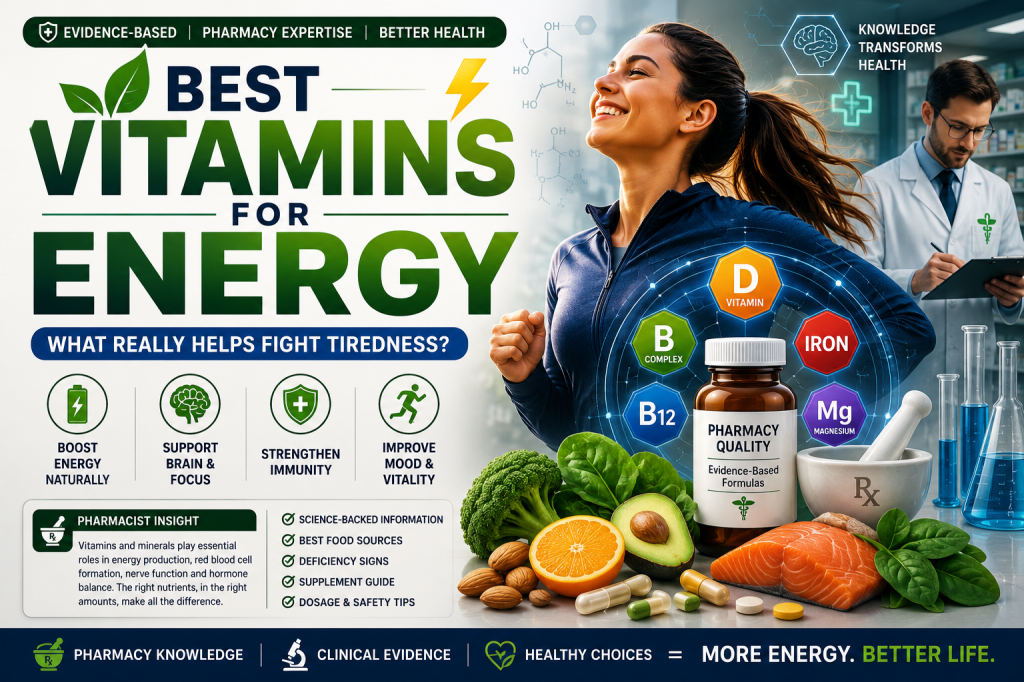
Best Vitamins for Energy: What Really Helps Fight Tiredness?
Meta Description: Discover the best vitamins for energy, how they support your body, the best food sources, and when supplementation may be appropriate.
⚡ Feeling tired all the time?
Fatigue can affect your productivity, mood, concentration, and overall quality of life. Although sleep, hydration, nutrition, and physical activity are essential for maintaining healthy energy levels, vitamin and mineral deficiencies may also contribute to persistent tiredness.
This article explains which vitamins are most closely linked to energy metabolism, where to find them naturally, and when it may be appropriate to seek medical advice.
Disclaimer: This article is for educational purposes only and should not replace professional medical advice.
🧠 Vitamin B12
Vitamin B12 plays an essential role in the formation of red blood cells and maintaining a healthy nervous system. A deficiency may lead to fatigue, weakness, memory problems, and difficulty concentrating.
Best Food Sources
- Beef
- Salmon
- Tuna
- Eggs
- Milk
- Yogurt
- Cheese
✅ Tip: Vegans and older adults are at higher risk of vitamin B12 deficiency.
🩸 Iron
Iron is responsible for helping red blood cells transport oxygen throughout the body. Low iron levels can reduce oxygen delivery to muscles and organs, causing tiredness and weakness.
Best Food Sources
- Lean beef
- Chicken
- Lentils
- Beans
- Spinach
- Pumpkin seeds
✅ Pair plant-based iron sources with foods rich in vitamin C to improve absorption.
☀️ Vitamin D
Vitamin D supports bone health, muscle function, and the immune system. Low vitamin D levels have been associated with fatigue in some individuals.
Natural Sources
- Sunlight exposure
- Salmon
- Sardines
- Egg yolks
- Fortified milk
🥬 Folate (Vitamin B9)
Folate helps produce healthy red blood cells and supports normal cell growth.
Rich Sources
- Spinach
- Kale
- Broccoli
- Lentils
- Avocados
- Asparagus
💪 Magnesium
Magnesium participates in hundreds of biochemical reactions related to muscle function, nerve health, and energy metabolism.
Best Sources
- Almonds
- Cashews
- Pumpkin seeds
- Oats
- Brown rice
- Dark chocolate
📊 Quick Comparison
Nutrient
Main Function
Good Food Sources
Vitamin B12
Red blood cells & nerves
Fish, meat, eggs, dairy
Iron
Oxygen transport
Meat, beans, spinach
Vitamin D
Muscle & immune support
Sunlight, salmon, fortified milk
Folate
Cell growth & blood formation
Leafy greens, lentils
Magnesium
Muscle & energy metabolism
Nuts, seeds, whole grains
🚨 Signs You Should See a Healthcare Professional
Seek medical evaluation if you experience:
- Persistent fatigue
- Shortness of breath
- Dizziness
- Pale skin
- Rapid heartbeat
- Numbness or tingling
- Extreme weakness
- Fatigue lasting several weeks
These symptoms may indicate anemia, thyroid disorders, vitamin deficiencies, or other medical conditions that require proper diagnosis.
🥗 Healthy Lifestyle Tips
Improving your energy levels involves more than taking vitamins.
- Sleep 7–9 hours every night.
- Eat a balanced diet rich in fruits and vegetables.
- Stay hydrated.
- Exercise regularly.
- Manage stress.
- Avoid smoking.
- Limit excessive alcohol intake.
❓ Frequently Asked Questions
Can vitamins instantly increase energy?
No. Vitamins help correct nutritional deficiencies but are not stimulants like caffeine.
Which vitamin deficiency causes fatigue most often?
Vitamin B12, iron, folate, and vitamin D deficiencies are among the most common nutritional causes of fatigue.
Should I take supplements every day?
Not necessarily. Supplements should ideally be used based on individual needs and, when appropriate, under the guidance of a qualified healthcare professional.
✅ Conclusion
Healthy energy depends on many factors, including quality sleep, physical activity, balanced nutrition, and overall health.
Vitamin B12, iron, vitamin D, folate, and magnesium play important roles in normal energy metabolism. However, persistent fatigue should always be evaluated by a healthcare professional to identify and address the underlying cause.
If you found this article helpful, share it with your friends and explore our other evidence-based health guides for practical wellness tips.
❓ References
- National Institutes of Health (NIH). Office of Dietary Supplements. Vitamin B12 Fact Sheet for Health Professionals. https://ods.od.nih.gov/factsheets/VitaminB12-HealthProfessional/
- National Institutes of Health (NIH). Iron Fact Sheet for Health Professionals. https://ods.od.nih.gov/factsheets/Iron-HealthProfessional/
- National Institutes of Health (NIH). Vitamin D Fact Sheet for Health Professionals. https://ods.od.nih.gov/factsheets/VitaminD-HealthProfessional/
- National Institutes of Health (NIH). Folate Fact Sheet for Health Professionals. https://ods.od.nih.gov/factsheets/Folate-HealthProfessional/
- National Institutes of Health (NIH). Magnesium Fact Sheet for Health Professionals. https://ods.od.nih.gov/factsheets/Magnesium-HealthProfessional/
- Harvard T.H. Chan School of Public Health. The Nutrition Source: Vitamins and Minerals. https://www.hsph.harvard.edu/nutritionsource/
- World Health Organization (WHO). Micronutrient Deficiencies. https://www.who.int/health-topics/micronutrients
- Mayo Clinic. Fatigue: Causes and Diagnosis. https://www.mayoclinic.org/symptoms/fatigue/basics/causes/sym-20050894
 saudeestrategicaart