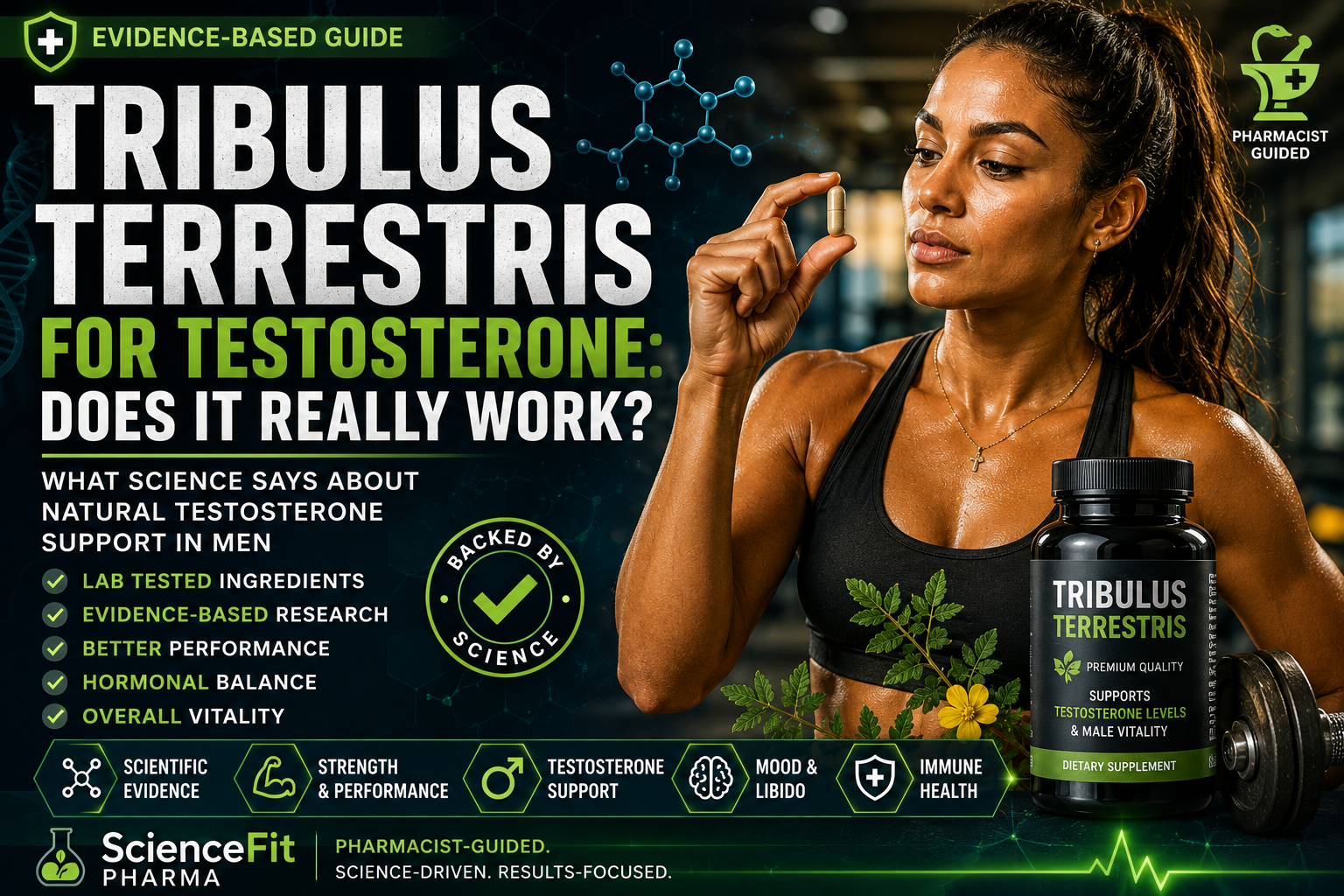

Evidence-Based Guide to Tribulus, Zinc, Vitamin D, Magnesium, Ashwagandha, Fenugreek, Sleep, Exercise and Male Hormonal Health
Part 1 — Understanding Testosterone and Natural Hormonal Health
📈 Why Testosterone Matters
Testosterone is the primary male sex hormone and one of the most important anabolic hormones in the human body. Although women also produce testosterone in smaller amounts, it plays a particularly significant role in male health.
Healthy testosterone levels contribute to:
- 💪 Muscle growth and strength
- 🔥 Fat metabolism
- ❤️ Cardiovascular health
- 🦴 Bone density
- 🧠 Cognitive performance
- 😊 Mood and motivation
- ❤️ Sexual desire (libido)
- 🧬 Fertility and sperm production
- ⚡ Energy levels
- 🛌 Recovery and sleep quality
Rather than acting alone, testosterone works within a complex endocrine network involving the brain, pituitary gland and testes.
🧠 How Is Testosterone Produced?
The production of testosterone begins in the brain through a system known as the Hypothalamic–Pituitary–Gonadal (HPG) Axis.
The process occurs in several coordinated steps:
- The hypothalamus releases Gonadotropin-Releasing Hormone (GnRH).
- GnRH stimulates the pituitary gland.
- The pituitary releases Luteinizing Hormone (LH).
- LH stimulates Leydig cells in the testes.
- Leydig cells convert cholesterol into testosterone through multiple enzymatic reactions.
This hormonal communication depends on adequate nutrition, sufficient sleep, regular exercise and overall metabolic health.
🧬 Factors That Naturally Reduce Testosterone
Several lifestyle and medical factors can interfere with normal testosterone production.
Common contributors include:
- 💤 Chronic sleep deprivation
- 🍔 Obesity
- 🍺 Excessive alcohol intake
- 🚬 Smoking
- 😰 Chronic psychological stress
- 🔥 Chronic inflammation
- 🍭 Insulin resistance
- 🧓 Aging
- ⚖️ Severe calorie restriction
- 🏥 Certain medications
- 💉 Anabolic steroid abuse
Many of these factors are modifiable through lifestyle interventions.
🌿 What Is Tribulus Terrestris?
Tribulus terrestris is a medicinal plant traditionally used in Ayurvedic, Chinese and Mediterranean medicine.
The plant contains several bioactive compounds, including:
- Steroidal saponins (especially protodioscin)
- Flavonoids
- Alkaloids
- Polyphenols
For decades, it has been marketed as a “natural testosterone booster.”
However, popularity does not necessarily mean scientific effectiveness.
🔬 How Is Tribulus Supposed to Work?
Several mechanisms have been proposed:
- Increased luteinizing hormone (LH)
- Enhanced nitric oxide production
- Improved endothelial function
- Increased libido
- Antioxidant activity
- Reduced oxidative stress
While these mechanisms are biologically plausible, they do not automatically translate into meaningful increases in testosterone in humans.
📚 What Does Science Really Say?
Clinical studies have produced mixed results.
Overall, the current evidence suggests:
Healthy Men
Most randomized clinical trials have not demonstrated a consistent increase in circulating testosterone after Tribulus supplementation.
Men with Sexual Dysfunction
Some studies suggest improvements in:
- Libido
- Sexual satisfaction
- Erectile function
These improvements may occur without significant changes in testosterone levels.
Athletes
Evidence does not consistently support improvements in:
- Muscle mass
- Strength
- Athletic performance
when compared with placebo.
⚠️ Libido Is Not the Same as Testosterone
One of the biggest misconceptions is assuming that improved sexual desire automatically means higher testosterone.
Libido depends on multiple factors, including:
- Dopamine signaling
- Psychological well-being
- Relationship quality
- Sleep
- Stress
- Cardiovascular health
- Hormonal balance beyond testosterone alone
Therefore, a supplement may improve sexual function without measurably increasing testosterone.
⭐ Scientific Evidence Rating

Part 2 – Evidence-Based Strategies to Support Healthy Testosterone Naturally
🥩 Zinc and Testosterone: Does Supplementation Really Help?
Zinc is an essential trace mineral involved in more than 300 enzymatic reactions throughout the body. It plays an important role in immune function, wound healing, protein synthesis and male reproductive health.
Within the testes, zinc contributes to normal testosterone production, sperm development and protection of reproductive tissues against oxidative stress.
🔬 What Does the Evidence Show?
Current evidence indicates that:
- Men with zinc deficiency often have lower testosterone concentrations.
- Correcting a confirmed deficiency may help restore testosterone toward normal physiological levels.
- In healthy men with adequate zinc intake, routine supplementation has not consistently been shown to increase testosterone above normal levels.
This distinction is important because supplementation appears most beneficial when a deficiency is present rather than as a universal testosterone booster.
🥩 Main Dietary Sources of Zinc
- Oysters
- Beef
- Lamb
- Pumpkin seeds
- Cashews
- Chickpeas
- Dairy products
☀️ Vitamin D and Male Hormonal Health
Vitamin D functions as a hormone rather than a traditional vitamin. Vitamin D receptors are present in numerous tissues, including the testes.
Researchers have investigated whether vitamin D status influences testosterone production.
🔬 Scientific Evidence
Several observational studies have reported that men with low vitamin D levels are more likely to have lower testosterone concentrations.
Randomized clinical trials suggest that correcting vitamin D deficiency may improve testosterone in deficient individuals, but supplementation has not consistently increased testosterone in men who already have sufficient vitamin D levels.
Practical Takeaway
✔ Correct vitamin D deficiency when identified.
✖ Do not expect vitamin D supplementation alone to substantially increase testosterone in men with normal vitamin D status.
🥜 Magnesium and Free Testosterone
Magnesium is involved in ATP production, muscle contraction and hundreds of enzymatic processes.
Some research suggests that adequate magnesium intake may help support normal testosterone physiology by:
- Reducing inflammation
- Improving sleep quality
- Supporting exercise performance
- Potentially increasing free testosterone in physically active individuals
Although the evidence is encouraging, further high-quality clinical trials are still needed.
🌿 Ashwagandha: One of the Most Promising Herbal Supplements
Ashwagandha (Withania somnifera) is an adaptogenic herb widely studied for stress reduction and physical performance.
Proposed Mechanisms
- Reduction in cortisol levels
- Improved sleep quality
- Enhanced recovery
- Improved resistance training performance
- Possible indirect support of testosterone production
Clinical Evidence
Several randomized controlled trials have found:
- Moderate increases in testosterone in some populations
- Improved sperm quality in infertile men
- Increased muscle strength when combined with resistance training
- Reduced perceived stress
These effects appear to be stronger in men experiencing stress, infertility or engaging in structured resistance training.
🌱 Fenugreek (Trigonella foenum-graecum)
Fenugreek is another popular botanical ingredient in men’s health supplements.
Some studies suggest improvements in:
- Libido
- Sexual function
- Perceived vitality
However, evidence regarding testosterone increases remains inconsistent.
Most systematic reviews conclude that more high-quality trials are needed before firm conclusions can be drawn.
🏋 Exercise Remains the Most Effective Natural Strategy
No supplement consistently outperforms a healthy lifestyle.
The strongest evidence supports:
💪 Resistance Training
Compound exercises such as:
- Squats
- Deadlifts
- Bench Press
- Pull-Ups
- Overhead Press
are associated with favorable hormonal responses and improvements in muscle mass and strength.
🚶 Healthy Body Weight
Excess body fat is associated with increased aromatase activity, an enzyme that converts testosterone into estrogen.
Losing excess weight—particularly in men with overweight or obesity—can improve hormonal balance.
😴 Sleep: The Most Powerful “Natural Testosterone Booster”
Testosterone production peaks during sleep.
Research consistently demonstrates that chronic sleep restriction is associated with reduced testosterone concentrations.
Healthy Sleep Habits
- 🛌 Aim for 7–9 hours of sleep per night.
- 🌙 Maintain consistent sleep and wake times.
- 📱 Limit screen exposure before bedtime.
- ☕ Avoid excessive caffeine late in the day.
- 🍷 Limit alcohol, especially near bedtime.
🧩 Best Evidence-Based Supplement Combinations
No supplement combination has been proven to dramatically increase testosterone in healthy men. However, some combinations may support overall hormonal health, especially when deficiencies are corrected.

⚠️ Safety, Dosage and Side Effects
Natural does not always mean risk-free.
Tribulus Terrestris
- Usually well tolerated in studies.
- Possible gastrointestinal discomfort.
- Product quality may vary between manufacturers.
Ashwagandha
- May cause digestive symptoms or drowsiness in some individuals.
- Use caution in people with thyroid disorders or when taking medications that may interact.
Zinc
- Excessive intake over time can lead to copper deficiency and other adverse effects.
Vitamin D
- Excessive supplementation may cause elevated blood calcium and related complications.
Magnesium
- High doses from supplements may cause diarrhea, depending on the formulation.
Before starting supplementation, especially if you have medical conditions or take prescription medications, discuss the plan with a qualified healthcare professional.
🛒 Evidence-Based Supplement Buying Tips
When choosing supplements:
- Prefer products tested by reputable third-party certification programs when available.
- Look for clear ingredient labeling and standardized extracts for herbal products.
- Avoid products that promise dramatic or guaranteed testosterone increases.
- Be cautious with proprietary blends that do not disclose ingredient amounts.
Part 3 – Frequently Asked Questions, Conclusion and Scientific References
❓ Frequently Asked Questions (FAQ)
Can Tribulus terrestris significantly increase testosterone?
Current scientific evidence does not consistently support a significant increase in testosterone levels in healthy men. While some studies have reported modest hormonal changes, most randomized controlled trials have found no clinically meaningful increase in circulating testosterone.
Can Tribulus improve libido?
Possibly.
Several clinical studies suggest that Tribulus may improve:
- ❤️ Sexual desire
- 😊 Sexual satisfaction
- 💪 Erectile function in some men
Importantly, these benefits may occur without increasing testosterone, indicating that additional physiological mechanisms are likely involved.
Is Tribulus safe?
For most healthy adults, Tribulus appears to be well tolerated when consumed for short periods at commonly studied doses.
Possible adverse effects include:
- Mild gastrointestinal discomfort
- Stomach cramps
- Rare allergic reactions
People with chronic diseases, those taking prescription medications, or individuals with hormone-sensitive conditions should consult a healthcare professional before use.
Should every man take testosterone boosters?
No.
The majority of healthy men do not require testosterone supplements. Symptoms such as fatigue, low libido, reduced muscle mass or mood changes can have many different causes, including poor sleep, depression, thyroid disorders, nutritional deficiencies and certain medications.
Self-medicating with supplements without proper evaluation may delay the diagnosis of underlying conditions.
When Should Testosterone Levels Be Tested?
Laboratory testing may be appropriate when persistent symptoms suggest possible testosterone deficiency, particularly when accompanied by clinical findings.
Possible signs include:
- Persistent low libido
- Erectile dysfunction
- Reduced morning erections
- Loss of muscle mass
- Unexplained fatigue
- Low bone mineral density
- Infertility
- Reduced body hair
Diagnosis should combine symptoms with laboratory confirmation, rather than relying on laboratory values alone.
🚫 Common Myths About Natural Testosterone Boosters
❌ Myth 1: More testosterone is always better.
Reality: Testosterone should remain within the physiological range. Excessively high levels may increase health risks and are not synonymous with better health or performance.
❌ Myth 2: Every herbal supplement increases testosterone.
Reality: Many products are marketed as “testosterone boosters,” but only a few have been studied in well-designed clinical trials, and results remain mixed.
❌ Myth 3: Supplements replace exercise and sleep.
Reality: Lifestyle factors remain the foundation of healthy hormone production.
No supplement consistently outperforms:
- 💤 Adequate sleep
- 🏋️ Resistance training
- 🥗 Balanced nutrition
- ⚖️ Healthy body weight
- 😌 Stress management
❌ Myth 4: High testosterone guarantees greater muscle growth.
Reality: Muscle development depends on multiple factors, including progressive resistance training, sufficient protein intake, recovery, genetics and overall health.
🏆 Key Takeaways
Current evidence suggests that Tribulus terrestris should not be considered a reliable natural testosterone booster for healthy men.
However, some individuals may experience improvements in libido or sexual well-being.
Among all natural strategies currently studied, the strongest scientific support remains:
🥇 Adequate sleep
🥇 Resistance training
🥇 Weight loss (when overweight)
🥈 Correcting vitamin D deficiency
🥈 Correcting zinc deficiency
🥈 Correcting magnesium deficiency
🥈 Ashwagandha
🥉 Fenugreek
⭐ Tribulus terrestris (primarily for possible libido support rather than consistent testosterone increases)
Ultimately, maintaining hormonal health requires a comprehensive approach that combines healthy lifestyle habits, correction of nutritional deficiencies when present and evidence-based medical evaluation whenever clinically indicated.
👨⚕️ About the Author
Matheus Lucas
Pharmacist | Evidence-Based Health Writer | Founder of StrategicHealths
Matheus Lucas is a Brazilian pharmacist dedicated to translating complex medical and nutritional research into practical, accessible information for patients, healthcare professionals and the general public.
The mission of StrategicHealths is to provide evidence-based health education, helping readers make informed decisions through scientifically grounded content.
🔗 Related Evidence-Based Articles
If you enjoyed this article, you may also like:
- 💪 Creatine: Benefits, Safety, Dosage and How It Works – A Pharmacist’s Evidence-Based Guide
- 🌿 Ashwagandha: Benefits, Dosage, Side Effects and What Science Really Says
- ☀️ Vitamin D Deficiency: Symptoms, Causes, Treatment and Prevention
- 🥜 Magnesium Benefits: What Science Really Says About This Essential Mineral
- 💪 Whey Protein Explained: Benefits, Types, Dosage and What Science Really Says
- 🧬 Leucine: The Essential Amino Acid for Muscle Growth and Healthy Aging
- ⚡ Coenzyme Q10 (CoQ10): Benefits, Uses, Dosage, Side Effects and What Science Really Says
- 🔥 Insulin Resistance: Early Signs, Diagnosis and Natural Ways to Improve Metabolic Health
- 🩸 Iron Deficiency in Women: Symptoms, Causes, Best Iron Supplements and What Science Really Says
- 🧬 The Science of Healthy Aging: Evidence-Based Strategies to Slow Aging Naturally
📚 Scientific References
- Bhasin S, et al. Testosterone Therapy in Men With Hypogonadism: An Endocrine Society Clinical Practice Guideline. Journal of Clinical Endocrinology & Metabolism.
- American Urological Association (AUA). Guideline on Testosterone Deficiency.
- International Society of Sports Nutrition (ISSN). Position Stand: Resistance Training and Nutritional Strategies for Muscle Hypertrophy.
- Pilz S, et al. Vitamin D and Testosterone in Men: Clinical Evidence and Biological Mechanisms.
- Wankhede S, et al. Examining the Effect of Ashwagandha Supplementation on Muscle Strength and Recovery. Journal of the International Society of Sports Nutrition.
- Antonio J, et al. ISSN Position Stand: Dietary Supplements and Performance.
- Borst SE, et al. Zinc and Human Health: Effect on Hormonal Function and Reproduction.
- Gröber U, et al. Magnesium in Prevention and Therapy. Nutrients.
- Isidori AM, et al. Effects of Testosterone on Sexual Function, Mood and Body Composition: Systematic Review and Meta-analysis.
- Recent systematic reviews on Tribulus terrestris, Fenugreek, and male reproductive health published in peer-reviewed endocrinology and sports nutrition journals.
⚕️ Medical Disclaimer
This article is intended for educational purposes only and should not be considered medical advice. Supplements and lifestyle interventions should not replace individualized evaluation by a qualified healthcare professional. If you experience persistent symptoms suggestive of testosterone deficiency, consult a physician or other licensed healthcare provider for appropriate diagnosis and management.
Leave a Reply