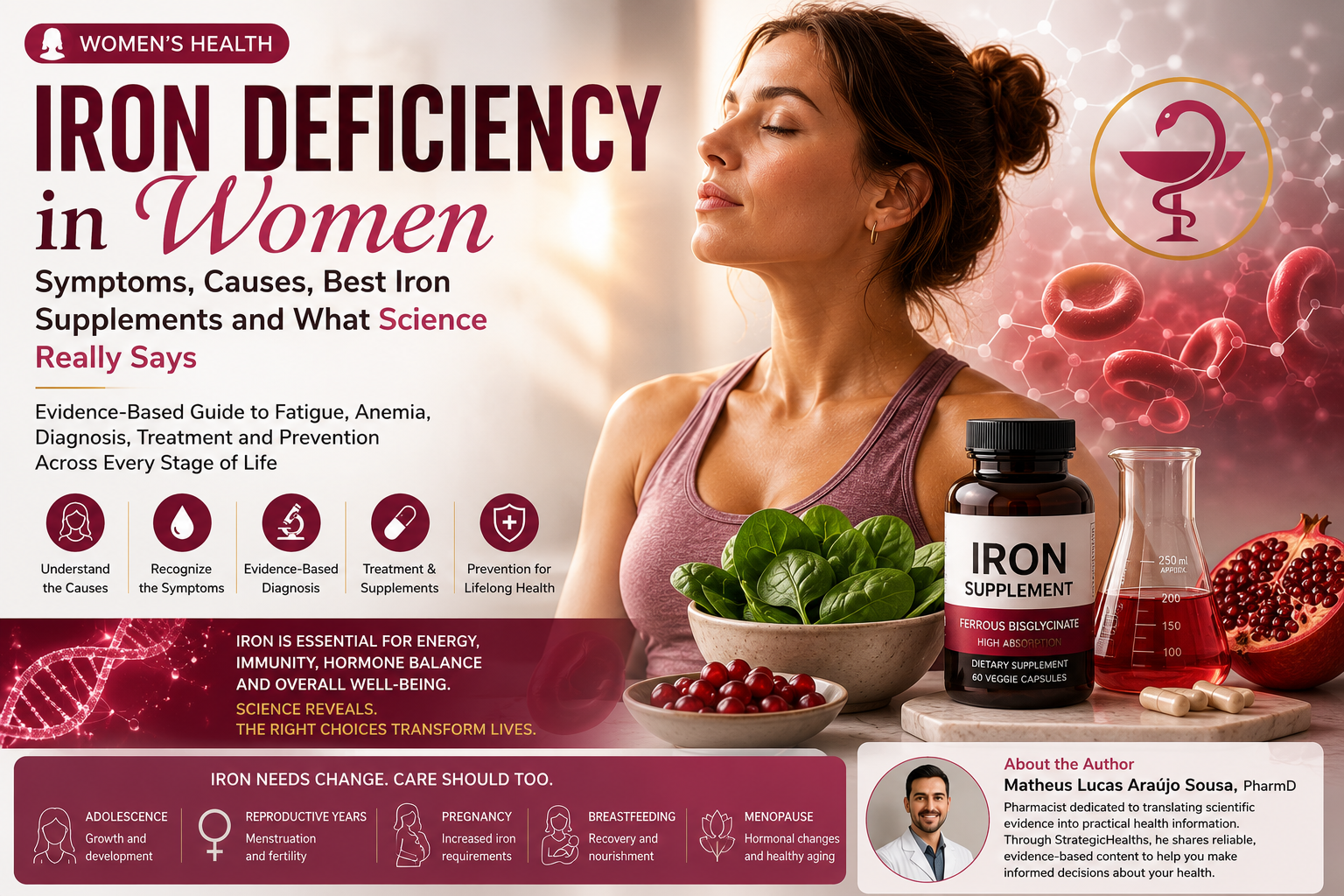

Evidence-Based Guide to Fatigue, Anemia, Diagnosis, Treatment and Prevention Across Every Stage of Life
Introduction
Iron deficiency is the most common nutritional deficiency worldwide and affects women disproportionately due to menstruation, pregnancy, breastfeeding, and increased physiological iron demands. According to the World Health Organization (WHO), iron deficiency is the leading cause of anemia globally and remains a significant public health concern.
While iron deficiency often develops gradually, its effects can extend far beyond fatigue. It may impair cognitive performance, physical endurance, immune function, pregnancy outcomes, and overall quality of life.
Importantly, iron deficiency can exist even before anemia develops, making early recognition and appropriate evaluation essential.
This evidence-based guide explains the causes, symptoms, diagnosis, treatment, dietary strategies, supplementation, and prevention of iron deficiency in women, based on current international recommendations.
What Is Iron?
Iron is an essential mineral involved in hundreds of biological processes.
Its primary functions include:
- 🩸 Oxygen transport (hemoglobin)
- 💪 Muscle oxygen storage (myoglobin)
- 🧠 Brain development and cognitive function
- ⚡ Cellular energy production
- 🛡️ Immune system support
- 🧬 DNA synthesis
- ❤️ Cardiovascular health
Because the human body cannot actively excrete excess iron, iron balance depends mainly on intestinal absorption.
Why Are Women at Greater Risk?
Women generally require more iron than men during their reproductive years.
Major reasons include:
🩸 Menstrual blood loss
Monthly menstruation is the leading cause of iron depletion in healthy women.
Heavy menstrual bleeding substantially increases risk.
🤰 Pregnancy
Iron requirements nearly double during pregnancy because iron is needed for:
- Fetal development
- Placental growth
- Expansion of maternal blood volume
🤱 Breastfeeding
Although breast milk contains relatively small amounts of iron, maternal recovery after childbirth often requires restoration of depleted iron stores.
🥗 Low Dietary Intake
Risk increases among women who:
- Consume little red meat
- Follow poorly planned vegetarian or vegan diets
- Have restrictive eating patterns
🩺 Reduced Iron Absorption
Several conditions impair absorption, including:
- Celiac disease
- Inflammatory bowel disease
- Gastric bypass surgery
- Chronic use of proton pump inhibitors
- Atrophic gastritis
Signs and Symptoms
Early symptoms may be subtle.
Common manifestations include:
- 😴 Persistent fatigue
- 🧠 Difficulty concentrating
- 🤕 Headaches
- 😵 Dizziness
- ❄️ Cold intolerance
- 😮💨 Shortness of breath during exercise
- ❤️ Palpitations
- 😟 Reduced exercise performance
As deficiency progresses:
- Pale skin
- Brittle nails
- Hair thinning
- Restless legs syndrome
- Craving for ice or non-food substances (pica)
- Glossitis (inflamed tongue)
- Cracks at the corners of the mouth (angular cheilitis)
Stages of Iron Deficiency

Risk Factors
Women at increased risk include:
- Adolescents
- Women with heavy menstrual bleeding
- Frequent blood donors
- Pregnant women
- Endurance athletes
- Vegetarians and vegans
- Women with gastrointestinal disorders
- Women after bariatric surgery
Diagnosis
Diagnosis should combine symptoms with laboratory evaluation.
Common laboratory tests include:
- Ferritin
- Hemoglobin
- Hematocrit
- Serum iron
- Transferrin saturation
- Total iron-binding capacity (TIBC)
- C-reactive protein (to help interpret ferritin in inflammatory states)
Ferritin is generally considered the most useful marker for assessing iron stores, but results should always be interpreted in the clinical context.
Dietary Sources of Iron
Heme Iron (Better Absorbed)
- 🥩 Lean beef
- 🐄 Liver (consumption during pregnancy requires specific medical guidance because of its high vitamin A content)
- 🐟 Fish
- 🐓 Poultry
Non-Heme Iron
- Lentils
- Beans
- Chickpeas
- Tofu
- Spinach
- Pumpkin seeds
- Fortified cereals
How to Improve Iron Absorption
Iron absorption increases when combined with:
- 🍊 Vitamin C-rich fruits
- Strawberries
- Bell peppers
- Broccoli
Try to avoid consuming iron-rich meals together with large amounts of:
- Tea
- Coffee
- Calcium supplements
- High-calcium dairy products
These can reduce iron absorption.
Iron Supplements
Iron supplementation should ideally be based on laboratory confirmation of deficiency and guidance from a healthcare professional.
Common formulations include:
- Ferrous sulfate
- Ferrous fumarate
- Ferrous gluconate
- Iron bisglycinate
- Ferric maltol (in selected situations)
The best option depends on factors such as gastrointestinal tolerance, the degree of deficiency, individual response, and medical history.
Potential side effects include:
- Constipation
- Nausea
- Dark stools
- Abdominal discomfort
Treatment usually continues beyond normalization of hemoglobin to replenish iron stores, with follow-up determined by the treating clinician.
Prevention
Healthy habits that may reduce the risk of iron deficiency include:
- Eating a balanced diet with adequate iron intake.
- Pairing iron-rich foods with vitamin C sources.
- Seeking evaluation for unusually heavy menstrual bleeding.
- Attending recommended prenatal care during pregnancy.
- Donating blood only when medically appropriate.
- Having medical assessment when persistent fatigue or symptoms suggest deficiency.
Frequently Asked Questions
Can you have iron deficiency without anemia?
Yes. Iron stores may become depleted before hemoglobin decreases, and symptoms can occur during this stage.
Is fatigue always caused by iron deficiency?
No. Fatigue has many possible causes, including thyroid disorders, sleep problems, chronic disease, depression, vitamin deficiencies, and others.
Can too much iron be harmful?
Yes. Excess iron can damage organs and should not be taken routinely without an appropriate indication.
Conclusion
Iron deficiency is one of the most common and treatable nutritional deficiencies affecting women. Early recognition, appropriate laboratory evaluation, a balanced diet, and individualized treatment can help improve energy levels, cognitive function, physical performance, and overall health.
Because symptoms are not specific and excess iron can also be harmful, evaluation and treatment should be tailored to the individual, particularly during pregnancy or in the presence of chronic medical conditions.
About the Author
Matheus Lucas Araújo Sousa, PharmD
Pharmacist dedicated to translating scientific evidence into practical health information. Through StrategicHealths, he provides evidence-based educational content on nutrition, supplementation, preventive care, and healthy aging to help readers make informed decisions.
🔗 Related Evidence-Based Articles
If you enjoyed this article, you may also like:
- 💪 Creatine: Benefits, Safety, Dosage and How It Works
- 🥛 Whey Protein Explained: Benefits, Types, Dosage and What Science Really Says
- 🧬 Coenzyme Q10 (CoQ10): Benefits, Uses, Dosage, Side Effects and What Science Really Says
- 🧠 Magnesium Explained: Benefits, Deficiency, Dosage and What Science Really Says
- 🔥 Insulin Resistance: Early Signs, Diagnosis and Natural Ways to Improve Metabolic Health
References
- World Health Organization (WHO). Anaemia. 2024.
- World Health Organization (WHO). Guideline on iron supplementation. 2024.
- Centers for Disease Control and Prevention (CDC). Iron and Iron Deficiency.
- National Institutes of Health (NIH), Office of Dietary Supplements. Iron Fact Sheet for Health Professionals.
- Camaschella C. Iron Deficiency. New England Journal of Medicine. 2015.
- British Society for Haematology. Guidelines on the diagnosis and management of iron deficiency anaemia.
Leave a Reply