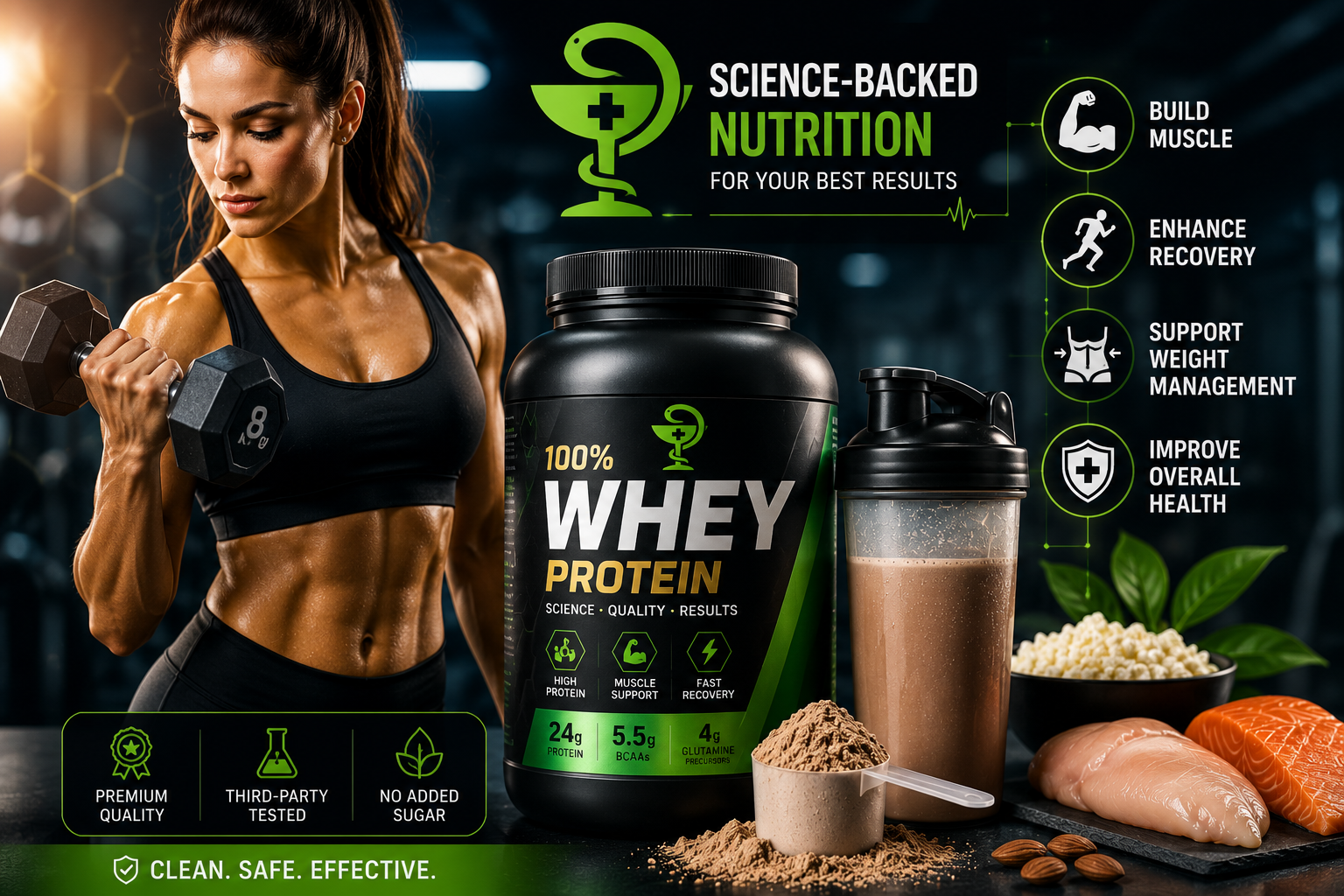

Evidence-Based Guide to Muscle Growth, Weight Management, Recovery and Healthy Aging
Part 1 — Understanding Whey Protein
Whey protein is one of the most extensively researched dietary supplements in sports nutrition and clinical nutrition. Originally considered a by-product of cheese production, it is now recognized as a high-quality protein source that supports muscle maintenance, exercise recovery, and healthy aging.
Thanks to its excellent amino acid profile and high digestibility, whey protein has become a popular supplement among athletes, older adults, and individuals seeking to increase their daily protein intake.
🥛 What Is Whey Protein?
Whey protein is a complete protein naturally found in milk.
During cheese production, milk separates into:
🥛 Casein (approximately 80%)
💧 Whey (approximately 20%)
The liquid whey undergoes filtration and drying to produce whey protein powder.
Unlike many plant proteins, whey naturally contains all nine essential amino acids required by the human body.
⭐ Why Is Whey Protein Considered a High-Quality Protein?
Protein quality is determined by several factors, including amino acid composition and digestibility.
Whey protein scores highly because it:
✅ Contains all essential amino acids
✅ Is rich in branched-chain amino acids (BCAAs)
✅ Provides a high amount of leucine
✅ Is rapidly digested and absorbed
✅ Has a high Protein Digestibility Corrected Amino Acid Score (PDCAAS) and Digestible Indispensable Amino Acid Score (DIAAS)
Leucine is particularly important because it plays a key role in stimulating muscle protein synthesis.
🧬 Amino Acid Profile
Whey protein naturally contains:
- 💪 Leucine
- 💪 Isoleucine
- 💪 Valine
- 🧠 Tryptophan
- ❤️ Lysine
- ⚡ Methionine
- 🦴 Threonine
- 🛡️ Histidine
- 🔬 Phenylalanine
These amino acids are involved in muscle repair, enzyme production, hormone synthesis, immune function, and tissue maintenance.
🏆 Types of Whey Protein
Three primary forms are available.
🥇 Whey Protein Concentrate (WPC)
Typically contains:
- 35–80% protein
- Small amounts of lactose
- Healthy milk fats
- Bioactive compounds
Best for:
✅ General health
✅ Most recreational exercisers
🥈 Whey Protein Isolate (WPI)
Undergoes additional filtration.
Usually contains:
- ≥90% protein
- Very little lactose
- Minimal fat
- Fewer carbohydrates
Best for:
- Lactose-sensitive individuals
- Athletes
- Lean muscle gain
- Higher protein intake with fewer calories
🥉 Whey Protein Hydrolysate (WPH)
Protein is partially broken down into smaller peptides.
Characteristics:
- Faster digestion
- Easier absorption
- Higher cost
- Often used in clinical nutrition and specialized sports products
📊 Comparison of Whey Types

💪 How Does Whey Protein Work?

🏋️ Main Evidence-Based Benefits
Research supports whey protein for several purposes when combined with an adequate diet and, where relevant, resistance exercise.
💪 Muscle Growth
One of the strongest evidence-supported uses.
Combined with strength training, whey protein helps maximize muscle protein synthesis and supports increases in lean body mass.
🦴 Healthy Aging
Beginning around age 30–40, adults gradually lose muscle mass in a process known as sarcopenia.
Adequate protein intake—particularly high-quality protein rich in leucine—combined with resistance exercise can help preserve muscle and physical function in older adults.
⚡ Exercise Recovery
Following intense exercise, muscles require amino acids for repair.
Whey protein provides rapidly absorbed amino acids that support recovery and adaptation after training.
⚖️ Weight Management
Higher-protein diets may:
- Increase satiety
- Help preserve lean mass during weight loss
- Support healthy body composition when combined with calorie control and physical activity
Whey protein is not a weight-loss product by itself but can be a useful dietary tool.
🛡️ Immune Function
Whey naturally contains bioactive proteins such as lactoferrin and immunoglobulins.
While these compounds have biological activity, more research is needed to determine their clinical impact in healthy adults consuming standard whey supplements.
Who May Benefit?
Whey protein may be useful for:
- 🏋️ Athletes
- 💪 Resistance trainers
- 👴 Older adults
- ⚖️ Individuals trying to preserve muscle during weight loss
- 🩺 People with increased protein requirements (under professional guidance)
- 🥗 Individuals who struggle to meet protein needs through food alone
Is Whey Protein Necessary?
No.
Daily protein requirements can be met through foods such as:
- Chicken
- Fish
- Eggs
- Dairy products
- Lean beef
- Soy products
- Legumes
Whey protein is best viewed as a convenient supplement, not a replacement for a balanced diet.
Why Is Whey Protein So Popular?
Its popularity stems from:
- Strong scientific evidence for muscle support
- Convenience
- High protein quality
- Rapid digestion
- Versatility in shakes and recipes
- Wide availability
Evidence-Based Guide to Muscle Growth, Weight Management, Recovery and Healthy Aging
Part 2 — What Science Really Says About Whey Protein
🧪 What Does the Scientific Evidence Show?

Whey protein is one of the most extensively studied nutritional supplements. Numerous randomized controlled trials and systematic reviews support its effectiveness when used alongside an adequate diet and resistance exercise.
The strongest evidence supports its role in:
- 💪 Increasing muscle protein synthesis
- 🏋️ Preserving lean muscle mass
- ⚡ Enhancing recovery after exercise
- 👴 Supporting healthy aging
- ⚖️ Helping maintain lean mass during weight loss
However, whey protein is not a magic supplement. Its benefits depend on total daily protein intake, training, sleep, and overall nutrition.
💪 Muscle Growth
Muscle growth occurs when muscle protein synthesis exceeds muscle protein breakdown.
Whey protein is particularly effective because it is:
✅ Rapidly digested
✅ Rich in leucine
✅ High in essential amino acids
Leucine activates the mTOR pathway, a key regulator of muscle protein synthesis.
Studies consistently show that combining resistance training with adequate protein intake leads to greater increases in muscle mass and strength than training alone.
⚡ Exercise Recovery
Intense exercise creates microscopic damage to muscle fibers.
Recovery depends on:
- Protein availability
- Adequate calories
- Sleep
- Training quality
Research suggests whey protein consumed after exercise can:
- Reduce muscle protein breakdown
- Support muscle repair
- Improve recovery between training sessions
The magnitude of these benefits is greatest when total daily protein intake is sufficient.
⚖️ Fat Loss and Body Composition
One common misconception is that whey protein directly burns fat.
Scientific evidence shows a more nuanced picture.
Whey protein may assist weight management by:
- Increasing satiety
- Helping preserve lean muscle during calorie restriction
- Slightly increasing the thermic effect of food due to protein digestion
It works best as part of a calorie-controlled diet and regular exercise program.
👴 Whey Protein for Healthy Aging
Beginning around the fourth decade of life, skeletal muscle gradually declines—a process known as sarcopenia.
Older adults often require relatively higher protein intake to maximally stimulate muscle protein synthesis.
When combined with resistance exercise, whey protein may help:
- Preserve muscle mass
- Improve strength
- Enhance physical function
- Reduce frailty risk
Maintaining muscle health is an essential component of healthy aging.
🩺 Whey Protein and Kidney Health
A common myth is that whey protein damages healthy kidneys.
Current evidence indicates:
✅ In healthy individuals, higher protein intakes within recommended ranges have not been shown to cause kidney disease.
However:
Individuals with chronic kidney disease (CKD) may need to limit protein intake depending on disease stage and should follow medical advice.
Protein supplementation should always be individualized in people with kidney disorders.
🩸 Whey Protein and Diabetes
Whey protein has been studied for its effects on blood glucose regulation.
Some research suggests it may:
- Improve post-meal glucose responses in certain situations
- Increase satiety
- Support weight management
- Help preserve lean mass during weight loss
However, whey protein is not a treatment for diabetes and should complement—not replace—medical care, healthy eating, and physical activity.
🕒 Best Time to Take Whey Protein
One of the most frequently asked questions is:
“Should I take whey protein before or after exercise?”
Current evidence suggests that total daily protein intake is more important than exact timing.
That said:
🏋️ After Exercise
Often the most practical time because muscles are particularly responsive to amino acids after training.
🌅 Breakfast
Useful for increasing total daily protein intake and improving protein distribution throughout the day.
😴 Before Bed
Casein protein is generally preferred before sleep due to its slower digestion, though whey can still contribute to daily protein goals.
📊 How Much Whey Protein Should You Take?
Protein needs vary according to activity level and health status.

*These values refer to total daily protein intake from all dietary sources, not whey protein alone.
A typical serving of whey protein provides 20–30 grams of protein, which is sufficient for many adults to stimulate muscle protein synthesis as part of a balanced diet.
⚠️ Safety and Side Effects
Whey protein is generally considered safe for healthy individuals when consumed in appropriate amounts.
Possible side effects include:
- Bloating
- Gas
- Mild gastrointestinal discomfort
- Lactose-related symptoms (more common with concentrate)
- Rare allergic reactions in people with milk protein allergy
Individuals with lactose intolerance often tolerate whey isolate better because it contains much less lactose.
💊 Drug Interactions
Whey protein has relatively few clinically significant drug interactions.
However, caution may be appropriate in people taking medications affected by changes in protein intake or those with specific medical conditions.
People with chronic illnesses should consult their healthcare provider before starting supplementation.
🔍 Myths vs. Facts

✅ Key Takeaways
✔️ Whey protein is one of the highest-quality protein sources available.
✔️ It supports muscle growth when combined with resistance training.
✔️ Total daily protein intake matters more than precise timing.
✔️ Whey protein is generally safe for healthy individuals.
✔️ People with kidney disease or milk protein allergy should seek individualized medical advice.
Evidence-Based Guide to Muscle Growth, Weight Management, Recovery and Healthy Aging
Part 3 — Practical Guide, FAQs and Final Recommendations
❓ Frequently Asked Questions (FAQ)
Is whey protein safe?
Yes.
For most healthy adults, whey protein is considered safe when consumed in appropriate amounts as part of a balanced diet.
It has been extensively studied for decades and is recognized as a high-quality protein source.
Individuals with milk protein allergy or chronic kidney disease should consult a healthcare professional before supplementation.
Can whey protein help build muscle without exercise?
Not effectively.
Muscle growth depends primarily on:
- 🏋️ Resistance training
- 🍗 Adequate protein intake
- 😴 Quality sleep
- ⚖️ Sufficient calories
Without resistance exercise, whey protein alone has limited effects on increasing muscle mass.
Is whey protein suitable for weight loss?
Yes.
Whey protein may support weight management by:
- Increasing satiety
- Helping preserve lean muscle during calorie restriction
- Making it easier to meet protein goals
However, successful weight loss still depends on maintaining a calorie deficit and adopting healthy lifestyle habits.
Does whey protein cause acne?
Current evidence is mixed.
Some individuals may notice acne worsening after consuming dairy-based proteins, while many people experience no effect.
Responses appear to vary from person to person.
Can lactose-intolerant individuals use whey protein?
Often, yes.
- 🥛 Whey Concentrate contains more lactose.
- 💎 Whey Isolate contains very little lactose and is usually better tolerated.
- ⚡ Whey Hydrolysate also contains very low lactose and is rapidly absorbed.
People with a true milk protein allergy should avoid whey protein.
🥩 Best Natural Protein Sources
Even without supplements, excellent protein intake can be achieved through food.

🛒 How to Choose the Best Whey Protein
Choosing the right product depends on your goals, digestive tolerance, and budget.
🥇 Whey Concentrate
Best if you:
- Want a more affordable option
- Tolerate lactose well
- Need a quality everyday protein
🥈 Whey Isolate
Best if you:
- Are lactose-sensitive
- Want higher protein with fewer carbohydrates and fats
- Are in a calorie-restricted phase
- Prefer a leaner formula
🥉 Whey Hydrolysate
Best if you:
- Want rapid absorption
- Compete in high-performance sports
- Prefer partially hydrolyzed protein
- Do not mind paying more
📊 Quick Buying Guide

⚠️ Buying Tips
When comparing products, look for:
✅ Third-party quality testing
✅ Transparent ingredient lists
✅ Protein content per serving
✅ Low added sugar
✅ Minimal unnecessary fillers
✅ Good manufacturing practices
Remember that the “best” whey protein is the one that fits your nutritional needs, preferences, and budget—not necessarily the most expensive product.
🔑 Key Takeaways
✔️ Whey protein is one of the highest-quality protein sources available.
✔️ It is rich in leucine and essential amino acids.
✔️ Resistance training and adequate protein intake work together to maximize muscle growth.
✔️ Total daily protein intake is generally more important than precise timing.
✔️ Whey protein can support healthy aging, recovery, and body composition when incorporated into a balanced diet.
✔️ Supplements should complement—not replace—a nutritious eating pattern.
🛒 Recommended Products
⭐ Best Overall
Optimum Nutrition Gold Standard 100% Whey Protein is one of the most trusted whey protein supplements worldwide, offering high-quality protein, excellent taste, and outstanding mixability.
💰 Best Value
MuscleTech Nitro-Tech
A high-protein formula that also contains creatine, making it a great option for individuals focused on muscle growth and strength.
🏋️ Best Whey Isolate
Dymatize ISO100
Hydrolyzed whey isolate with fast absorption and very low lactose content, ideal for post-workout recovery.
🌿 Clean Formula
Naked Whey
Made with minimal ingredients and sourced from grass-fed cows, ideal for those seeking a simple, clean protein supplement.
Disclosure: As an Amazon Associate, StrategicHealths may earn from qualifying purchases at no additional cost to you. Product recommendations are based on scientific evidence, product quality, and consumer reputation.
✅ Conclusion
Whey protein remains one of the most scientifically supported nutritional supplements available today. Its complete amino acid profile, high leucine content, and excellent digestibility make it an effective option for supporting muscle protein synthesis, exercise recovery, and maintaining lean body mass.
Research consistently shows that whey protein can benefit not only athletes but also older adults, individuals pursuing weight management, and anyone who struggles to meet daily protein requirements through food alone.
Despite its popularity, whey protein is not a shortcut to better health or athletic performance. The greatest benefits occur when supplementation is combined with regular resistance exercise, adequate total protein intake, sufficient sleep, and an overall balanced lifestyle.
Choosing the appropriate type—concentrate, isolate, or hydrolysate—should be based on individual goals, digestive tolerance, and nutritional needs rather than marketing claims.
📚 Selected Scientific References
- Morton RW, et al. A Systematic Review, Meta-analysis and Meta-regression of Protein Supplementation on Resistance Training–Induced Gains in Muscle Mass and Strength. British Journal of Sports Medicine.
- Jäger R, et al. International Society of Sports Nutrition Position Stand: Protein and Exercise.
- Phillips SM, et al. Dietary Protein for Athletes: From Requirements to Metabolic Advantage.
- Thomas DT, Erdman KA, Burke LM. Nutrition and Athletic Performance. Academy of Nutrition and Dietetics.
- Wolfe RR. The Underappreciated Role of Muscle in Health and Disease.
- National Institutes of Health (NIH). Dietary Protein and Nutrition Resources.
- International Society of Sports Nutrition (ISSN). Position Statements on Protein Intake.
👨⚕️ About the Author
Matheus Lucas Araújo Sousa, PharmD
Matheus Lucas Araújo Sousa is a pharmacist committed to translating complex scientific evidence into practical, trustworthy health information. Through Strategic Health, he helps readers make informed decisions about supplements, nutrition, disease prevention, and healthy aging using an evidence-based approach.
🔗 Related Evidence-Based Articles
If you enjoyed this article, you may also like:
- 💪 Creatine Benefits, Safety, Dosage and How It Works: A Pharmacist’s Evidence-Based Guide
- 🧠 Leucine: The Essential Amino Acid for Muscle Growth and Healthy Aging
- 🧴 Collagen Supplements: Do They Really Work for Skin, Hair and Joints?
- 🐟 Omega-3 Benefits: What Science Really Says About Heart, Brain, and Longevity
- 🧬 Vitamin K2 + Vitamin D3: Benefits for Bones, Heart and Longevity
- 🩸 Iron Deficiency: Symptoms, Causes, Best Iron Supplements and What Science Really Says
- 🔥 Insulin Resistance: Early Signs, Diagnosis and Natural Ways to Improve Metabolic Health
- 🦠 Probiotics Explained: A Pharmacist’s Evidence-Based Guide to Gut Health
- 🌱 Berberine: Benefits, Uses, Dosage and What Science Really Says
- 🧬 The Science of Healthy Aging: Evidence-Based Strategies to Slow Aging Naturally
Medical Disclaimer: This article is intended for educational purposes only and should not replace professional medical advice, diagnosis, or treatment. Always consult a qualified healthcare professional before starting any dietary supplement, particularly if you have a chronic medical condition, are pregnant or breastfeeding, or use prescription medications.
Leave a Reply