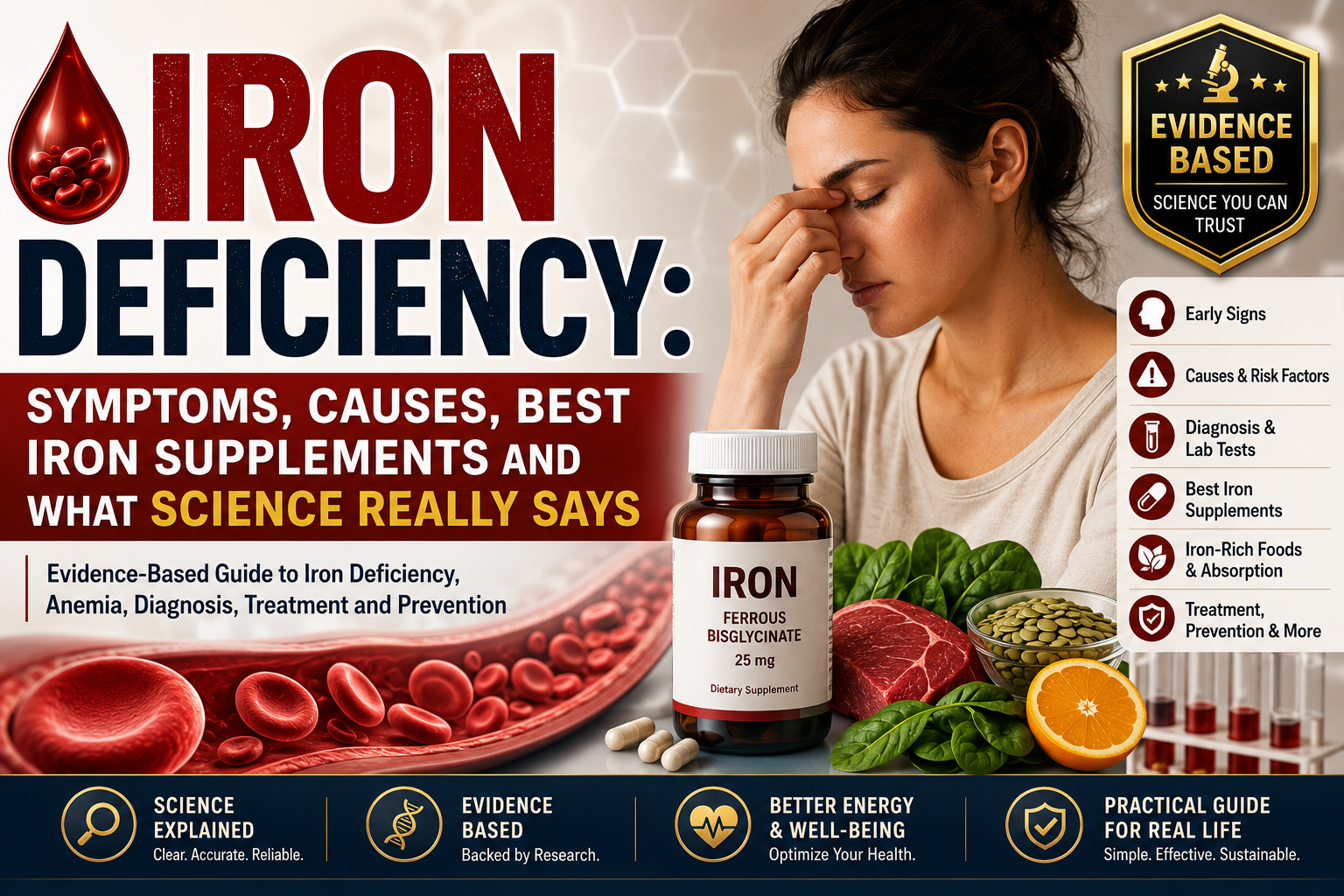

Evidence-Based Guide to Iron Deficiency, Anemia, Diagnosis, Treatment and Prevention
Part 1 – Understanding Iron Deficiency
🩸 Introduction
Iron deficiency is the most common nutritional deficiency worldwide, affecting an estimated over 2 billion people. It is one of the leading causes of anemia and remains a major public health concern across all age groups.
Although often associated with fatigue, iron plays a far broader role in human health. Every cell in the body depends on adequate iron availability for oxygen transport, energy production, immune defense, cognitive performance, muscle function, thyroid activity, and normal growth.
Iron deficiency develops gradually. Many individuals experience symptoms for months—or even years—before anemia appears on routine blood tests. Early recognition is therefore essential to prevent complications and restore optimal health.
In this evidence-based guide, we’ll explore:
- 🩸 What iron does inside the body
- ⚡ Why iron deficiency develops
- 🔬 How iron deficiency is diagnosed
- 💊 Which iron supplements work best
- 🍖 The richest dietary sources of iron
- ⚠️ Side effects and safety considerations
- 📚 What current scientific evidence says about treatment
🧬 What Is Iron?

Iron is an essential trace mineral required for numerous biological processes.
Although the body contains only about 3–4 grams of iron, nearly every organ depends on it.
Approximately:
- ❤️ 65–70% is found in hemoglobin
- 💪 10% in myoglobin
- 🧠 Small amounts in enzymes involved in metabolism
- 🏥 Remaining iron is stored mainly as ferritin in the liver, spleen, and bone marrow
Unlike some nutrients, the body cannot actively excrete excess iron. Instead, iron balance is maintained primarily through regulation of intestinal absorption.
⚙️ Why Is Iron So Important?
Iron participates in hundreds of enzymatic reactions.
Its major physiological functions include:
❤️ Oxygen Transport
Iron forms the central component of hemoglobin, allowing red blood cells to carry oxygen from the lungs to tissues.
Without sufficient iron:
- tissues receive less oxygen
- fatigue develops
- exercise capacity declines
💪 Muscle Performance
Iron is also present in myoglobin, a protein that stores oxygen inside skeletal muscle.
Adequate iron supports:
- endurance
- muscle recovery
- athletic performance
⚡ Cellular Energy Production

Iron-containing enzymes are essential components of the mitochondrial electron transport chain.
Healthy iron levels contribute to:
- ATP production
- reduced fatigue
- efficient metabolism
🧠 Brain Function
Iron supports:
- neurotransmitter synthesis
- cognitive performance
- learning
- attention
- memory
Low iron has been associated with impaired concentration and reduced cognitive performance, particularly in children and women of reproductive age.
🛡️ Immune Function
Iron contributes to:
- immune cell maturation
- infection defense
- normal inflammatory responses
Both deficiency and excess may negatively affect immunity.
🔬 Types of Iron Found in Food
Dietary iron exists in two forms.
🥩 Heme Iron
Found in animal foods.
Examples include:
- beef
- liver
- poultry
- seafood
Characteristics:
- highly bioavailable
- absorption approximately 15–35%
- less affected by other dietary factors
🌱 Non-Heme Iron
Found primarily in plant foods.
Examples:
- beans
- lentils
- spinach
- tofu
- fortified cereals
Characteristics:
- absorption approximately 2–20%
- strongly influenced by meal composition
- enhanced by vitamin C
- inhibited by phytates, calcium, tea, and coffee consumed with meals
📉 What Causes Iron Deficiency?
Iron deficiency develops whenever iron losses or requirements exceed absorption.
Common causes include:
🩸 Blood Loss
The leading cause in adults.
Examples:
- heavy menstrual bleeding
- gastrointestinal bleeding
- ulcers
- colorectal polyps
- hemorrhoids
- frequent blood donation
🤰 Increased Requirements
Iron requirements rise substantially during:
- pregnancy
- adolescence
- rapid growth
- endurance training
🥗 Low Dietary Intake
Vegetarian or vegan diets can meet iron needs but require careful planning because non-heme iron is absorbed less efficiently.
🩺 Poor Absorption
Certain gastrointestinal conditions reduce iron absorption:
- celiac disease
- inflammatory bowel disease
- gastric bypass surgery
- chronic gastritis
- long-term use of proton pump inhibitors
🚨 Early Symptoms of Iron Deficiency
Symptoms usually develop gradually.
Common signs include:
- 😴 Persistent fatigue
- 😵 Weakness
- 💨 Shortness of breath
- ❤️ Palpitations
- 🤕 Headaches
- 🧠 Poor concentration
- ❄️ Cold hands and feet
- 😴 Daytime sleepiness
- 😶 Pale skin
- 💇 Hair thinning or increased hair loss
- 💅 Brittle or spoon-shaped nails
- 👅 Sore tongue
- 😬 Cracks at the corners of the mouth
Some people experience pica, a craving for non-food substances such as ice, clay, or starch, which can be a clue to significant iron deficiency.
👥 Who Is at Higher Risk?
Groups at increased risk include:
- 👩 Women with heavy menstrual periods
- 🤰 Pregnant women
- 👶 Infants
- 🧒 Young children
- 🌱 Vegetarians and vegans
- 🏃 Endurance athletes
- 👴 Older adults
- 🏥 Individuals with gastrointestinal diseases
- 🩺 Frequent blood donors
🧠 Iron Deficiency Without Anemia

One important clinical concept is that iron deficiency may exist even when hemoglobin levels remain normal.
Low ferritin can precede anemia by months.
Symptoms may already include:
- chronic fatigue
- reduced exercise tolerance
- difficulty concentrating
- restless legs syndrome
- decreased work productivity
Recognizing this early stage allows intervention before more severe deficiency develops.
Evidence-Based Guide to Iron Deficiency, Anemia, Diagnosis, Treatment and Prevention
Part 2 – Diagnosis, Iron Supplementation and Evidence-Based Treatment
🧪 How Is Iron Deficiency Diagnosed?
Iron deficiency cannot be diagnosed reliably based on symptoms alone. Fatigue, weakness, dizziness, and poor concentration are nonspecific and may result from many medical conditions.
Healthcare professionals combine the patient’s history, physical examination, and laboratory tests to determine whether iron deficiency is present and to identify its underlying cause.
The goal is not only to confirm low iron stores but also to determine why iron deficiency developed, since persistent blood loss or gastrointestinal disease may require additional investigation.
🔬 Key Laboratory Tests
Several biomarkers are used together because no single laboratory test is perfect.
🩸 Ferritin
Ferritin is the body’s primary iron storage protein and is generally considered the most useful initial test for evaluating iron deficiency.
Low ferritin strongly suggests depleted iron stores.
Typical interpretation:

Ferritin may be falsely elevated during inflammation, infection, obesity, or liver disease. In these situations, additional tests become particularly important.
❤️ Hemoglobin
Hemoglobin measures the oxygen-carrying capacity of red blood cells.
Normal hemoglobin does not exclude iron deficiency.
Many patients develop:
- depleted ferritin
- reduced iron stores
- symptoms
months before anemia appears.
📊 Transferrin Saturation (TSAT)
Transferrin transports iron throughout the bloodstream.
Transferrin saturation estimates how much circulating iron is available for tissues.
Low transferrin saturation often accompanies iron deficiency, particularly when ferritin results are difficult to interpret.
🔬 Serum Iron
Serum iron measures circulating iron at a single moment.
Because levels fluctuate throughout the day and after meals, serum iron alone has limited diagnostic value.
🧬 Total Iron-Binding Capacity (TIBC)
TIBC estimates how much iron the body is capable of transporting.
Iron deficiency commonly produces:
- increased TIBC
- increased transferrin
- reduced transferrin saturation
🩺 Complete Blood Count (CBC)
A complete blood count provides important information regarding:
- hemoglobin
- hematocrit
- mean corpuscular volume (MCV)
- red blood cell morphology
Microcytic, hypochromic red blood cells are classic findings in established iron deficiency anemia.
📋 Common Laboratory Pattern
Typical findings include:

💊 Oral Iron Supplements
Oral supplementation is considered first-line therapy for most individuals with uncomplicated iron deficiency.
Several formulations are available.
🥇 Ferrous Sulfate
The most extensively studied supplement worldwide.
Advantages:
- inexpensive
- highly effective
- widely available
- recommended in many clinical guidelines
Disadvantages:
- gastrointestinal side effects are relatively common
🥈 Ferrous Fumarate
Provides a higher amount of elemental iron per tablet.
Frequently used when higher daily iron intake is required.
🥉 Ferrous Gluconate
Contains less elemental iron but is sometimes better tolerated in individuals with gastrointestinal sensitivity.
🌿 Iron Bisglycinate
Iron bisglycinate is a chelated form of iron that has gained popularity because of its favorable tolerability profile.
Potential advantages include:
- improved gastrointestinal tolerance
- lower rates of constipation
- reduced nausea
- good bioavailability
Growing evidence suggests that bisglycinate may achieve comparable improvements in iron status while producing fewer digestive symptoms in some patients.
💉 When Is Intravenous Iron Necessary?
Intravenous iron is generally reserved for situations in which oral supplementation is ineffective or inappropriate.
Examples include:
- inflammatory bowel disease
- severe anemia requiring rapid correction
- chronic kidney disease
- poor intestinal absorption
- intolerance to oral iron
- persistent blood loss
- bariatric surgery
Modern intravenous preparations are substantially safer than older formulations, although administration should occur under appropriate medical supervision.
🍊 How to Improve Iron Absorption
Several dietary strategies can significantly increase iron absorption.
✅ Take Iron With Vitamin C
Vitamin C enhances non-heme iron absorption.
Examples include:
- oranges
- kiwi
- strawberries
- bell peppers
- vitamin C supplements
✅ Take Iron on an Empty Stomach (If Tolerated)
Iron is generally absorbed more efficiently without food.
However, individuals who develop nausea or stomach discomfort may take iron with a light meal if necessary.
❌ Avoid Tea and Coffee Around Supplement Time
Polyphenols found in tea and coffee reduce iron absorption.
Waiting approximately two hours before or after supplementation is often recommended.
❌ Separate Calcium Supplements
Calcium competes with iron absorption.
Iron and calcium supplements should ideally be taken at different times of the day.
⚠️ Common Side Effects
Most adverse effects involve the gastrointestinal tract.
Common symptoms include:
- nausea
- constipation
- abdominal discomfort
- diarrhea
- dark stools
- metallic taste
These effects are usually dose-dependent.
Strategies that may improve tolerance include:
- reducing the daily dose
- taking iron every other day when appropriate
- switching formulations
- using iron bisglycinate if clinically suitable
❌ Common Myths About Iron Supplementation
❌ “More iron is always better.”
False.
Excess iron may promote oxidative stress, organ damage, and iron overload disorders in susceptible individuals.
❌ “Everyone with fatigue needs iron.”
False.
Fatigue has many potential causes, including thyroid disease, vitamin deficiencies, sleep disorders, depression, and chronic illnesses.
Iron supplementation should be based on clinical evaluation and laboratory confirmation whenever possible.
❌ “Spinach alone can quickly correct iron deficiency.”
False.
Although spinach contains iron, it also contains oxalates that reduce absorption.
A balanced dietary approach combined with appropriate medical treatment is often necessary.
❌ “Iron supplements work immediately.”
False.
Most patients require several weeks before symptoms begin improving.
Replenishing iron stores often takes several months, even after hemoglobin has normalized.
📚 What Do Current Clinical Guidelines Recommend?
Major organizations generally recommend:
- 🩸 Confirm iron deficiency with appropriate laboratory testing before initiating long-term supplementation.
- 💊 Use oral iron as first-line therapy for most uncomplicated cases.
- 🍊 Optimize absorption through dietary strategies and appropriate dosing.
- 🔄 Continue supplementation for several months after hemoglobin normalization to restore iron stores.
- 🩺 Investigate the underlying cause of iron deficiency, especially in men, postmenopausal women, older adults, or individuals with recurrent deficiency.
- 💉 Consider intravenous iron when oral therapy is ineffective, not tolerated, or when rapid replenishment is clinically indicated.
Current evidence also supports individualized dosing schedules. In some patients, alternate-day oral iron supplementation may improve absorption and reduce gastrointestinal side effects compared with traditional daily dosing.
Evidence-Based Guide to Iron Deficiency, Anemia, Diagnosis, Treatment and Prevention
Part 3 – Prevention, Nutrition, Special Populations and Final Evidence-Based Recommendations
🥩 Best Iron-Rich Foods
A balanced diet remains one of the most effective strategies for preventing iron deficiency. Foods rich in iron provide not only this essential mineral but also protein, vitamins, and other nutrients involved in healthy red blood cell production.
🥇 Heme Iron (Highest Bioavailability)
Heme iron is absorbed far more efficiently than plant-based iron.
Excellent sources include:
- 🥩 Lean beef
- 🐄 Beef liver (consume in moderation)
- 🦌 Lamb
- 🦃 Turkey
- 🐓 Chicken thighs
- 🦪 Oysters
- 🦐 Shellfish
- 🐟 Sardines
- 🐟 Tuna
- 🐟 Salmon
🌱 Non-Heme Iron (Plant Sources)
Although absorption is lower, plant foods can contribute significantly to iron intake when combined with appropriate dietary strategies.
Examples include:
- 🫘 Lentils
- 🫘 Beans
- 🌱 Chickpeas
- 🌿 Spinach
- 🥬 Kale
- 🌾 Quinoa
- 🥜 Pumpkin seeds
- 🥜 Sesame seeds
- 🌰 Cashews
- 🥣 Fortified breakfast cereals
- 🍫 Dark chocolate (high cocoa content)
🍊 How to Maximize Iron Absorption
Small dietary changes can substantially improve iron absorption.
✅ Combine Iron with Vitamin C
Examples:
- 🍊 Orange
- 🥝 Kiwi
- 🍓 Strawberries
- 🍋 Lemon
- 🌶️ Bell peppers
Vitamin C converts iron into a form that is more easily absorbed.
✅ Include Protein Sources
Animal proteins enhance absorption of non-heme iron consumed in the same meal.
❌ Reduce Absorption Inhibitors During Iron-Rich Meals
Try to avoid consuming these immediately before or after iron-rich meals:
- ☕ Coffee
- 🍵 Tea
- 🥛 Large amounts of calcium
- 🌾 Excess phytates from unprepared grains and legumes
👩 Iron Requirements Throughout Life
Iron needs vary according to age, sex, and physiological conditions.
👩 Women
Women of reproductive age are among the highest-risk groups because of menstrual blood loss.
Pregnancy dramatically increases iron requirements due to fetal growth, placental development, and expanded maternal blood volume.
🤰 Pregnancy
Untreated iron deficiency during pregnancy has been associated with:
- maternal anemia
- premature birth
- low birth weight
- impaired infant neurodevelopment
Routine prenatal evaluation is recommended in accordance with local clinical guidelines.
👶 Infants and Children
Iron is essential for:
- brain development
- cognitive function
- learning
- growth
- immune maturation
Early deficiency may affect neurodevelopment, making prevention particularly important during infancy.
🏃 Athletes
Endurance athletes may lose additional iron through:
- sweating
- gastrointestinal microbleeding
- foot-strike hemolysis
- increased training demands
Athletes with persistent fatigue or declining performance should seek medical evaluation rather than self-prescribing supplements.
👴 Older Adults
Iron deficiency in older adults deserves careful investigation because gastrointestinal blood loss may indicate underlying conditions requiring medical assessment.
💇 Iron Deficiency and Hair Loss
Hair follicles are among the body’s fastest-growing tissues and require a continuous supply of oxygen and nutrients.
Low iron stores have been associated with increased hair shedding in some individuals, particularly women.
However:
- not every case of hair loss is caused by iron deficiency
- supplementation is beneficial only when deficiency is confirmed
- excessive iron does not stimulate additional hair growth
🧠 Iron and Brain Health
Iron contributes to:
- dopamine synthesis
- serotonin metabolism
- myelin production
- mitochondrial energy generation
- cognitive performance
Iron deficiency has been associated with:
- reduced attention
- impaired memory
- decreased work productivity
- difficulty concentrating
- restless legs syndrome
Maintaining healthy iron stores supports normal neurological function throughout life.
⚠️ Can Too Much Iron Be Harmful?
Yes.
Unlike many vitamins, excess iron can accumulate within the body.
Potential consequences include:
- oxidative stress
- liver injury
- pancreatic damage
- heart complications
- endocrine dysfunction
Individuals with hereditary hemochromatosis or other iron overload disorders should only take iron supplements under medical supervision.
Iron supplementation should never be used unless there is an appropriate clinical indication.
❓ Frequently Asked Questions (FAQ)
Can I take iron every day?
Treatment depends on the clinical situation. Some individuals respond well to alternate-day dosing, which may improve absorption and reduce gastrointestinal side effects.
Is black stool normal?
Yes. Dark stools are a common and harmless side effect of oral iron supplementation.
Does spinach contain enough iron?
Spinach contains iron but also oxalates that reduce absorption. It should be part of a varied diet rather than relied upon as the sole source of iron.
How long does treatment take?
Hemoglobin often improves within several weeks, but restoring iron stores usually requires several months. Treatment duration should follow professional guidance and laboratory monitoring.
Should healthy adults take iron supplements preventively?
Routine supplementation is generally not recommended unless deficiency or increased requirements have been identified by a healthcare professional.
✅ Conclusion
Iron is indispensable for oxygen transport, cellular energy production, muscle performance, immune function, and cognitive health.
Because iron deficiency develops gradually, early recognition is essential. Symptoms such as persistent fatigue, reduced exercise tolerance, hair loss, poor concentration, and restless legs syndrome may appear long before anemia becomes evident.
An evidence-based approach includes identifying the underlying cause, confirming the diagnosis with appropriate laboratory tests, improving dietary intake, and using supplementation only when clinically indicated.
Maintaining adequate iron status supports healthier aging, improved physical performance, and better overall quality of life.
👨⚕️ About the Author
Matheus Lucas Araújo Sousa, PharmD
Pharmacist dedicated to translating scientific evidence into practical, trustworthy health information.
Through Strategic Healths, he publishes evidence-based articles on nutrition, supplementation, healthy aging, preventive medicine, and lifestyle strategies designed to help readers make informed decisions about their health.
🔗 Related Evidence-Based Articles
If you enjoyed this article, you may also like:
- 🔥 Insulin Resistance: Early Signs, Diagnosis and Natural Ways to Improve Metabolic Health
- 🧬 The Science of Healthy Aging: Evidence-Based Strategies to Slow Aging Naturally
- ⚡ What Are Free Radicals?
- 🫀 Omega-3 Benefits: What Science Really Says About Heart, Brain, and Longevity
- 💊 Coenzyme Q10 (CoQ10): Benefits, Uses, Dosage, Side Effects, and What Science Really Says
- 🧴 Collagen Supplements: Do They Really Work for Skin, Hair and Joints?
- 💇 Hair Loss Explained: Causes, Best Supplements and What Science Really Says
- 🧬 Leucine: The Essential Amino Acid for Muscle Growth and Healthy Aging
- ⚙️ Testosterone: Science-Based Ways to Support Healthy Testosterone Levels
📚 Scientific References
- World Health Organization (WHO). Anaemia. Latest guidance.
- National Institutes of Health (NIH) – Office of Dietary Supplements. Iron Fact Sheet for Health Professionals.
- Camaschella C. Iron Deficiency. New England Journal of Medicine.
- British Society of Gastroenterology Guidelines for the Management of Iron Deficiency Anaemia.
- American Society of Hematology. Clinical guidance on iron deficiency.
- Auerbach M, Adamson JW. How We Diagnose and Treat Iron Deficiency Anemia. Blood.
- Tolkien Z, et al. Ferrous sulfate supplementation and gastrointestinal adverse effects: systematic review and meta-analysis.
- Stoffel NU, et al. Oral iron supplementation in alternate-day versus consecutive-day dosing. The Lancet Haematology.
- European Society of Gastrointestinal Endoscopy. Clinical practice recommendations.
- Institute of Medicine. Dietary Reference Intakes for Iron.
Leave a Reply