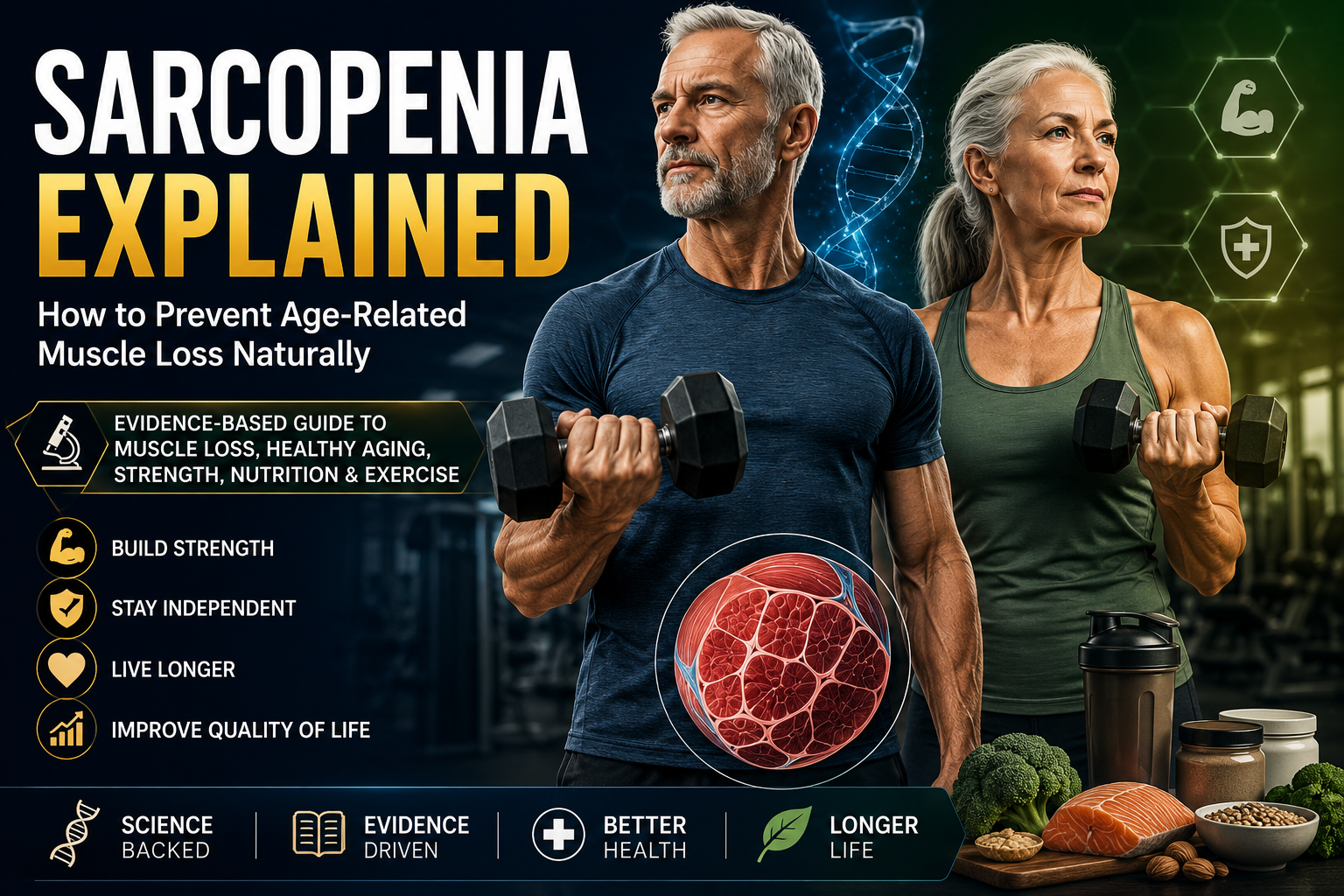

Evidence-Based Guide to Muscle Loss, Healthy Aging, Strength, Nutrition and Exercise
Part 1 – Understanding Sarcopenia
🧬 Introduction
Aging is inevitable, but losing muscle is not.
One of the most important yet underrecognized conditions affecting older adults is sarcopenia—the progressive loss of skeletal muscle mass, strength, and physical performance associated with aging.
Although many people assume muscle loss is simply a normal part of getting older, modern research shows that much of it can be prevented, slowed, or even partially reversed through evidence-based nutrition, resistance exercise, and healthy lifestyle habits.
Sarcopenia affects millions of adults worldwide and significantly increases the risk of falls, fractures, disability, hospitalization, frailty, and loss of independence. It is also associated with reduced quality of life and higher mortality.
The good news is that muscle tissue remains responsive throughout life. Even individuals in their seventies, eighties, and beyond can improve muscle strength and function with appropriate interventions.
In this evidence-based guide, you’ll learn:
- 💪 What sarcopenia is
- 🧬 Why muscle loss occurs with aging
- ⚠️ Early symptoms and warning signs
- 🧪 How sarcopenia is diagnosed
- 🍗 The best nutrition strategies
- 💊 Which supplements have the strongest scientific evidence
- 🏋️ The most effective exercise approaches
- 📚 Current international clinical recommendations
💪 What Is Sarcopenia?

Sarcopenia is a progressive skeletal muscle disorder characterized by:
- decreased muscle mass
- reduced muscle strength
- impaired physical performance
The term comes from the Greek words:
- sarx = flesh
- penia = loss
Today, international guidelines emphasize that muscle strength—not muscle size alone—is the most important indicator of sarcopenia.
📊 How Common Is Sarcopenia?
The prevalence increases markedly with age.
Estimated prevalence:
- 👤 Adults 60–70 years: approximately 5–13%
- 👴 Adults over 80 years: 30–50%
- 🏥 Hospitalized older adults: substantially higher
- ♿ Nursing home residents: among the highest prevalence rates
As populations age globally, sarcopenia has become one of the major public health challenges in healthy aging.
⚙️ Why Does Muscle Loss Occur?
Muscle decline results from several interacting biological processes rather than aging alone.
🧬 Anabolic Resistance
Older muscles become less responsive to dietary protein.
The same amount of protein that effectively stimulates muscle protein synthesis in younger adults produces a smaller anabolic response in older individuals.
📉 Hormonal Changes
Normal aging is accompanied by gradual reductions in several anabolic hormones.
These include:
- testosterone
- growth hormone
- IGF-1
- estrogen (particularly after menopause)
These hormonal changes contribute to reduced muscle protein synthesis over time.
🔥 Chronic Low-Grade Inflammation
Healthy aging is often associated with persistent, low-grade inflammation (“inflammaging”).
Elevated inflammatory mediators can accelerate muscle protein breakdown and impair recovery.
⚡ Mitochondrial Dysfunction
Mitochondria produce the energy required for muscle contraction.
With aging:
- ATP production declines
- oxidative stress increases
- recovery becomes slower
- muscle endurance decreases
🏃 Physical Inactivity
Muscle adapts to demand.
Prolonged inactivity, sedentary behavior, bed rest, or hospitalization can rapidly accelerate muscle loss, particularly in older adults.
🚨 Early Symptoms
Sarcopenia often develops gradually.
Early signs include:
- 💪 Reduced strength
- 🚶 Slower walking speed
- 🪑 Difficulty standing from a chair
- 🛍️ Difficulty carrying groceries
- 🪜 Trouble climbing stairs
- ⚖️ Poor balance
- 😴 Increased fatigue
- 🦴 Greater risk of falls
- 📉 Reduced exercise tolerance
These symptoms are frequently mistaken for “normal aging,” delaying diagnosis and treatment.
⚠️ Major Risk Factors
Several factors increase the likelihood of developing sarcopenia.
👴 Aging
The strongest non-modifiable risk factor.
Adults may begin losing muscle gradually after age 30, with acceleration after age 60.
🛋️ Sedentary Lifestyle
Physical inactivity significantly accelerates declines in muscle mass and strength.
🍽️ Inadequate Protein Intake
Insufficient daily protein intake limits muscle repair and maintenance.
Older adults often consume less protein than recommended.
⚖️ Obesity
Excess body fat combined with low muscle mass is known as sarcopenic obesity, a condition associated with poorer mobility and higher cardiometabolic risk.
🏥 Chronic Diseases
Conditions commonly associated with sarcopenia include:
- type 2 diabetes
- chronic kidney disease
- chronic obstructive pulmonary disease (COPD)
- cancer
- heart failure
- rheumatoid arthritis
🧠 Why Muscle Matters Beyond Strength

Skeletal muscle is far more than a structure responsible for movement.
It functions as a major metabolic organ involved in:
- glucose regulation
- insulin sensitivity
- amino acid storage
- immune function
- energy metabolism
- endocrine signaling through myokines
Maintaining healthy muscle mass contributes to better metabolic health, greater independence, and improved longevity.
🔬 Sarcopenia vs. Frailty
Although related, these conditions are not identical.
Sarcopenia primarily refers to the loss of muscle mass and strength.
Frailty is a broader syndrome characterized by reduced physiological reserve, increased vulnerability to stressors, fatigue, slower walking speed, and unintentional weight loss.
Sarcopenia is considered one of the principal biological drivers of frailty.
📈 Why Early Prevention Is Essential
Research consistently demonstrates that interventions are most effective when started before severe muscle loss develops.
Healthy habits adopted during midlife can substantially reduce the risk of disability decades later.
Even in advanced age, resistance training combined with adequate nutrition can improve strength, mobility, and quality of life.
Evidence-Based Guide to Muscle Loss, Healthy Aging, Strength, Nutrition and Exercise
Part 2 – Diagnosis, Nutrition, Supplements and Exercise
🧪 How Is Sarcopenia Diagnosed?
Sarcopenia is diagnosed through a combination of clinical assessment, muscle strength testing, physical performance evaluation, and measurement of muscle mass.
According to the European Working Group on Sarcopenia in Older People (EWGSOP2), low muscle strength is the primary indicator of probable sarcopenia. Confirmation requires evidence of reduced muscle quantity or quality, while poor physical performance indicates severe sarcopenia.
Early diagnosis is important because intervention is most effective before substantial muscle loss has occurred.
📏 Key Diagnostic Assessments
💪 Handgrip Strength
Handgrip strength is one of the simplest and most reliable measures of overall muscle strength.
A handheld dynamometer measures the maximum force generated by the hand.
Low grip strength has been associated with:
- increased frailty
- falls
- disability
- hospitalization
- all-cause mortality
🚶 Gait Speed
Walking speed reflects overall physical performance.
Individuals are asked to walk a short distance at their usual pace.
A slower gait speed has been associated with:
- mobility limitation
- functional decline
- increased fall risk
- reduced independence
🪑 Chair Stand Test
This practical assessment evaluates lower-body strength.
Patients are asked to repeatedly stand from a chair without using their arms.
Difficulty performing this task may indicate reduced muscle strength.
🧬 Muscle Mass Assessment
Muscle quantity may be evaluated using:
- DXA (Dual-Energy X-ray Absorptiometry)
- Bioelectrical Impedance Analysis (BIA)
- CT scanning
- MRI
DXA is commonly considered the reference method in clinical practice because it provides accurate estimates of lean body mass with relatively low radiation exposure.
🥩 Nutrition: The Foundation of Prevention

Nutrition is one of the most important modifiable factors affecting muscle health.
Without adequate nutrient intake, exercise alone cannot fully optimize muscle protein synthesis.
Key nutritional priorities include:
- sufficient protein
- adequate energy intake
- vitamin D when deficient
- healthy dietary patterns
- hydration
🍗 How Much Protein Do Older Adults Need?
Current evidence suggests that many healthy older adults benefit from protein intakes above the minimum recommended dietary allowance.
General recommendations include:
- Healthy older adults: approximately 1.0–1.2 g/kg/day
- Physically active adults: 1.2–1.6 g/kg/day
- Illness or recovery: individualized according to clinical needs and professional guidance
Distributing protein evenly across meals appears to stimulate muscle protein synthesis more effectively than consuming most protein in a single meal.
🧬 Leucine: The Trigger for Muscle Protein Synthesis
Leucine is one of the three branched-chain amino acids (BCAAs) and plays a central role in activating the mTOR signaling pathway, which regulates muscle protein synthesis.
Research consistently shows that leucine-rich protein sources help overcome age-related anabolic resistance.
Excellent sources include:
- whey protein
- dairy products
- lean meat
- poultry
- fish
- eggs
- soy protein
For many older adults, consuming approximately 2.5–3 g of leucine per meal may help maximize the muscle-building response when combined with adequate total protein.
💪 Creatine and Healthy Aging
Creatine is among the most extensively studied nutritional supplements for improving muscle performance.
Its primary functions include:
- increasing phosphocreatine stores
- enhancing ATP regeneration
- improving resistance training performance
- supporting gains in muscle strength
- improving lean body mass
Clinical trials suggest that creatine supplementation combined with resistance exercise may produce greater improvements than exercise alone in many older adults.
Typical maintenance doses range from 3–5 g/day, though supplementation should be individualized.
☀️ Vitamin D
Vitamin D receptors are present in skeletal muscle.
Vitamin D deficiency has been associated with:
- muscle weakness
- impaired balance
- increased fall risk
- reduced physical performance
Correction of deficiency may improve muscle function, particularly in individuals with documented low vitamin D levels.
Routine high-dose supplementation without confirmed deficiency is generally not recommended.
🫀 Omega-3 Fatty Acids
Omega-3 fatty acids may support muscle health through several mechanisms.
Potential benefits include:
- modulation of chronic inflammation
- improved muscle protein synthesis response
- enhanced muscle quality
- cardiovascular support
- healthier aging
Evidence is promising but still evolving, and omega-3 should complement—not replace—adequate protein intake and exercise.
🥛 Whey Protein
Among all dietary proteins, whey has one of the highest leucine concentrations and is rapidly digested.
Advantages include:
- excellent amino acid profile
- high digestibility
- rapid stimulation of muscle protein synthesis
- convenient intake after exercise
For individuals unable to meet protein needs through food alone, whey protein may be a practical option.
🏋️ Resistance Training: The Most Effective Intervention
Resistance exercise remains the cornerstone of sarcopenia prevention and treatment.
Muscles adapt when challenged with progressively increasing loads.
Examples include:
- free weights
- resistance machines
- elastic bands
- bodyweight exercises
Well-designed resistance training programs improve:
- muscle strength
- lean body mass
- balance
- mobility
- bone health
- insulin sensitivity
Most international organizations recommend performing resistance training at least 2–3 times per week, targeting all major muscle groups.
🚶 The Importance of Daily Movement
In addition to structured exercise, remaining physically active throughout the day contributes to maintaining muscle function.
Healthy habits include:
- walking regularly
- climbing stairs
- gardening
- household activities
- recreational sports
- reducing prolonged sitting
Even modest increases in daily movement provide measurable health benefits.
📚 Current International Recommendations
Leading scientific organizations emphasize that sarcopenia prevention should combine multiple strategies:
- 🏋️ Progressive resistance exercise
- 🥩 Adequate daily protein intake
- 🧬 High-quality protein distributed throughout the day
- 💪 Creatine supplementation when appropriate
- ☀️ Correction of vitamin D deficiency
- 🫀 Healthy dietary patterns rich in whole foods
- 🚶 Maintenance of regular physical activity
- 🩺 Early screening in older adults at increased risk
A comprehensive lifestyle approach consistently produces better long-term outcomes than any isolated intervention.
Evidence-Based Guide to Muscle Loss, Healthy Aging, Strength, Nutrition and Exercise
Part 3 – Special Populations, Myths, FAQ and Final Evidence-Based Recommendations
👵 Sarcopenia in Women and Men

Although sarcopenia affects both sexes, its progression and contributing factors may differ.
👩 Women
Women often experience accelerated muscle loss after menopause due to the decline in estrogen production.
Potential consequences include:
- reduced muscle strength
- lower bone density
- increased risk of falls
- decreased functional independence
Resistance exercise combined with adequate protein intake becomes particularly important during this stage of life.
👨 Men
Men generally possess greater muscle mass throughout adulthood.
However, age-related declines in testosterone, growth hormone, and physical activity contribute to progressive reductions in muscle size and strength.
Maintaining an active lifestyle and consuming sufficient high-quality protein are key strategies for preserving muscle health.
🏥 Sarcopenia and Chronic Diseases
Several chronic diseases accelerate muscle loss.
These include:
- ❤️ Heart failure
- 🫁 Chronic obstructive pulmonary disease (COPD)
- 🍬 Type 2 diabetes
- 🩺 Chronic kidney disease
- 🎗️ Cancer
- 🦴 Osteoporosis
- 🧠 Neurological disorders
- 🦠 Chronic inflammatory diseases
In many cases, inflammation, reduced appetite, hormonal alterations, physical inactivity, and hospitalization contribute simultaneously to muscle wasting.
Managing the underlying disease while maintaining nutritional status and physical activity is essential.
⚖️ Sarcopenic Obesity
Sarcopenia may coexist with obesity.
This condition, known as sarcopenic obesity, is characterized by:
- excess body fat
- reduced muscle mass
- impaired muscle function
Individuals may appear overweight while simultaneously experiencing significant muscle weakness.
Sarcopenic obesity has been associated with:
- insulin resistance
- metabolic syndrome
- cardiovascular disease
- disability
- increased mortality
Treatment focuses on preserving muscle while reducing excess body fat through appropriate nutrition and resistance exercise.
🌿 Lifestyle Habits That Protect Muscle Health
Muscle preservation depends on more than supplements.
Evidence consistently supports:
- 🏋️ Progressive resistance training
- 🚶 Daily physical activity
- 🥩 Adequate protein intake
- 🥗 Mediterranean-style dietary patterns
- 😴 Good sleep quality
- 🚭 Avoiding smoking
- 🍷 Limiting excessive alcohol intake
- ⚖️ Maintaining a healthy body weight
- 🧘 Managing chronic stress
Long-term consistency produces greater benefits than short-term interventions.
⚠️ Common Myths About Sarcopenia
❌ “Muscle loss is an unavoidable part of aging.”
False.
Although aging contributes to muscle decline, regular exercise and adequate nutrition can substantially slow its progression.
❌ “Only bodybuilders need protein.”
False.
Protein is essential throughout life and becomes even more important during healthy aging.
❌ “Walking alone is enough.”
Walking provides excellent cardiovascular benefits but is generally insufficient to maximize muscle strength.
Resistance training should also be included whenever possible.
❌ “Supplements alone can reverse sarcopenia.”
False.
No supplement replaces resistance exercise, balanced nutrition, and healthy lifestyle habits.
Supplements should complement—not replace—these foundations.
❌ “It is too late to build muscle after age 70.”
False.
Clinical studies consistently demonstrate meaningful improvements in strength and physical function, even among adults in their eighties and nineties.
❓ Frequently Asked Questions (FAQ)
Can sarcopenia be reversed?
Early-stage sarcopenia may be partially reversible through resistance training, adequate nutrition, and management of contributing medical conditions.
Which exercise is most effective?
Progressive resistance training remains the most effective intervention for increasing muscle strength and preserving muscle mass.
Which supplement has the strongest evidence?
Current evidence is strongest for:
- adequate dietary protein
- leucine-rich protein sources
- creatine (combined with resistance exercise)
- vitamin D when deficiency is present
Is sarcopenia the same as frailty?
No.
Sarcopenia refers specifically to loss of muscle mass and strength.
Frailty is a broader clinical syndrome involving reduced physiological reserve and increased vulnerability.
At what age should prevention begin?
Healthy muscle habits should begin in early adulthood.
However, research demonstrates that improvements remain possible at virtually any age.
✅ Conclusion
Sarcopenia is one of the leading causes of disability and loss of independence among older adults, yet it is not an inevitable consequence of aging.
Scientific evidence consistently shows that resistance exercise, sufficient dietary protein, leucine-rich foods, creatine when appropriate, correction of vitamin D deficiency, and an overall healthy lifestyle can preserve muscle strength and physical performance.
Early recognition is essential. Identifying declining strength before severe muscle loss develops allows timely intervention and may reduce the risk of falls, fractures, hospitalization, and functional decline.
Healthy aging is not simply about living longer—it is about maintaining strength, mobility, independence, and quality of life.
👨⚕️ About the Author
Matheus Lucas Araújo Sousa, PharmD
Matheus Lucas Araújo Sousa is a pharmacist dedicated to translating complex scientific evidence into practical, reliable health information.
Through Strategic Health, he publishes evidence-based articles focused on nutrition, dietary supplements, healthy aging, preventive medicine, and lifestyle strategies that help readers make informed decisions to improve long-term health and longevity.
🔗 Related Evidence-Based Articles
If you enjoyed this article, you may also like:
- 🧬 Leucine: The Essential Amino Acid for Muscle Growth and Healthy Aging
- 💪 Creatine: Benefits, Uses, Dosage and What Science Really Says
- 🫀 Omega-3 Benefits: What Science Really Says About Heart, Brain, and Longevity
- 💊 Coenzyme Q10 (CoQ10): Benefits, Uses, Dosage, Side Effects, and What Science Really Says
- 🧴 Collagen Supplements: Do They Really Work for Skin, Hair and Joints?
- 🧬 The Science of Healthy Aging: Evidence-Based Strategies to Slow Aging Naturally
- ⚡ What Are Free Radicals?
- 🩸 Iron Deficiency: Symptoms, Causes, Best Iron Supplements and What Science Really Says
- 💇 Hair Loss Explained: Causes, Best Supplements and What Science Really Says
📚 Scientific References
- Cruz-Jentoft AJ, Bahat G, Bauer J, et al. Sarcopenia: Revised European Consensus on Definition and Diagnosis (EWGSOP2). Age and Ageing. 2019.
- European Working Group on Sarcopenia in Older People. Clinical recommendations for the diagnosis and management of sarcopenia.
- Asian Working Group for Sarcopenia. Asian Consensus Update on Sarcopenia. 2019.
- National Institutes of Health. Research on aging, skeletal muscle, and nutrition.
- International Osteoporosis Foundation. Healthy aging and musculoskeletal health resources.
- Morton RW, Murphy KT, McKellar SR, et al. Protein supplementation and resistance training: systematic review and meta-analysis. British Journal of Sports Medicine. 2018.
- Devries MC, Phillips SM. Supplemental protein in support of muscle mass and health. Current Opinion in Clinical Nutrition and Metabolic Care. 2015.
- Candow DG, Forbes SC, Chilibeck PD, et al. Creatine supplementation for healthy aging. Nutrients. 2021.
- Beaudart C, Dawson A, Shaw SC, et al. Nutrition and physical activity in the prevention and treatment of sarcopenia: systematic review. Osteoporosis International. 2017.
- Dent E, Morley JE, Cruz-Jentoft AJ, et al. International Clinical Practice Guidelines for Sarcopenia Screening, Diagnosis and Management. Journal of Cachexia, Sarcopenia and Muscle. 2018.
Leave a Reply