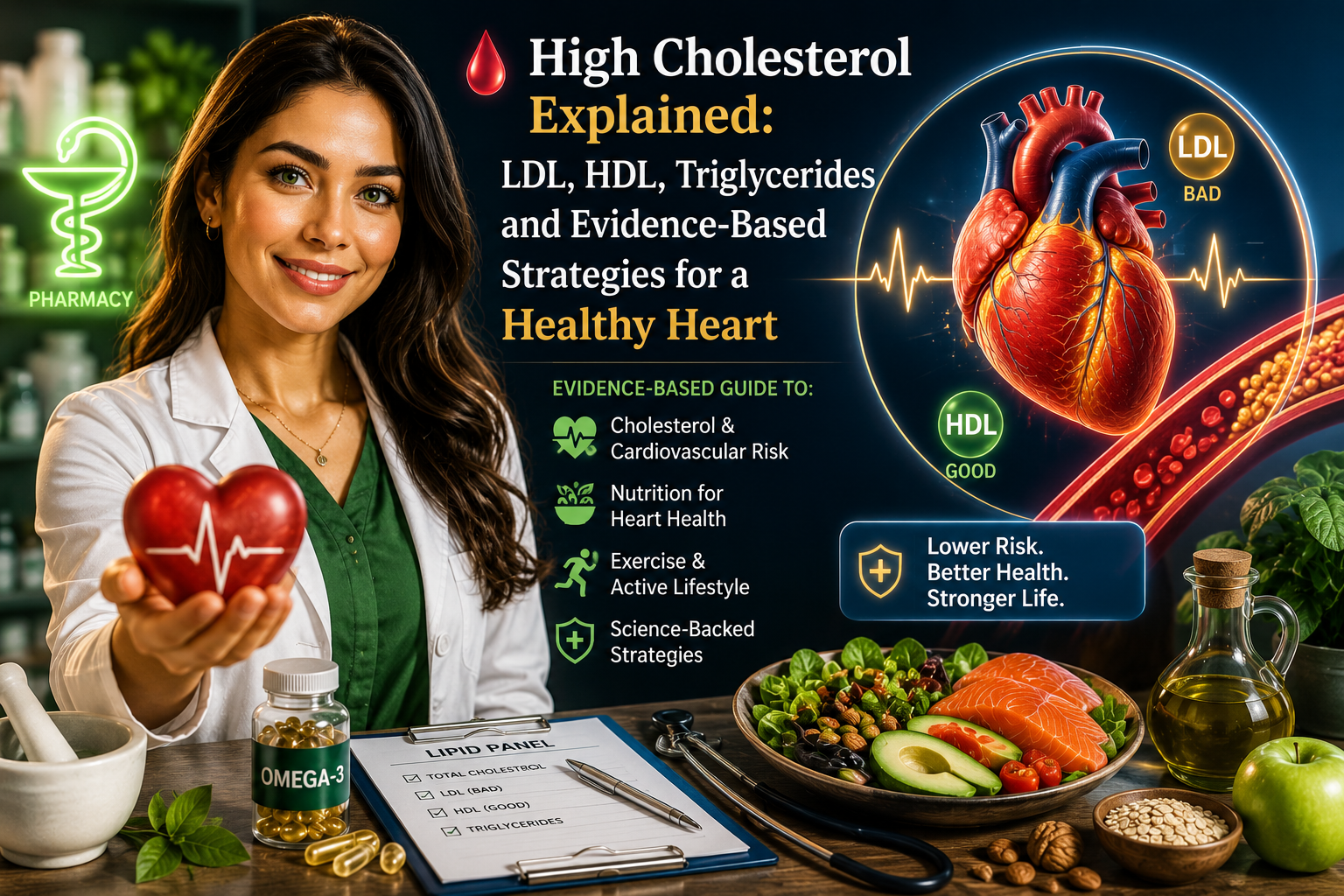

Evidence-Based Guide to Cholesterol, Cardiovascular Risk, Nutrition, Exercise and Lifestyle
Part 1 — Understanding Cholesterol
❤️ Introduction
High cholesterol affects hundreds of millions of people worldwide and is one of the leading modifiable risk factors for cardiovascular disease. Elevated levels of low-density lipoprotein cholesterol (LDL-C) contribute to the gradual development of atherosclerosis, increasing the risk of heart attack, stroke, and peripheral arterial disease.
The encouraging news is that cholesterol levels often respond well to lifestyle changes, and when necessary, evidence-based medications substantially reduce cardiovascular risk.
This guide explains what cholesterol is, how blood lipids influence health, and which strategies are supported by high-quality scientific evidence.
🧬 What Is Cholesterol?

Cholesterol is a waxy lipid that is essential for life.
Your body uses cholesterol to:
- 🧠 Build cell membranes
- 💊 Produce steroid hormones
- ☀️ Synthesize vitamin D
- 🧪 Produce bile acids for fat digestion
Approximately 70–80% of cholesterol is produced by the liver, while the remainder comes from dietary sources.
Cholesterol itself is not harmful. Problems arise when cholesterol transport becomes unbalanced.
🚚 How Cholesterol Travels Through the Blood
Because cholesterol cannot dissolve in blood, it is transported by specialized particles called lipoproteins.
The main lipoproteins include:
🔴 LDL (Low-Density Lipoprotein)
Often called “bad cholesterol.”
Excess LDL particles can penetrate artery walls, where they trigger inflammation and plaque formation.
High LDL is consistently associated with increased cardiovascular risk.
🟢 HDL (High-Density Lipoprotein)
Often referred to as “good cholesterol.”
HDL helps transport excess cholesterol from tissues back to the liver for recycling and elimination.
Higher HDL levels are generally associated with lower cardiovascular risk, although raising HDL with medication alone has not consistently improved outcomes.
🟡 Triglycerides
Triglycerides are the body’s primary storage form of fat.
Elevated triglycerides are commonly associated with:
- obesity
- insulin resistance
- metabolic syndrome
- type 2 diabetes
- excessive alcohol intake
- diets high in refined carbohydrates
Very high triglyceride levels also increase the risk of pancreatitis.
⚠️ What Causes High Cholesterol?
Several factors influence blood lipid levels:

Lifestyle Factors
- Diet high in saturated fats
- Trans fats
- Physical inactivity
- Obesity
- Smoking
- Excess alcohol
- Poor sleep
- Chronic stress
Medical Conditions
- Type 2 diabetes
- Hypothyroidism
- Chronic kidney disease
- Liver disease
- Polycystic ovary syndrome
Genetic Factors
Some individuals inherit conditions such as familial hypercholesterolemia, leading to markedly elevated LDL cholesterol from a young age.
❤️ Why High Cholesterol Is Dangerous

Over time, LDL particles can accumulate inside artery walls.
This process leads to:
- Inflammation
- Plaque formation
- Narrowing of arteries
- Reduced blood flow
- Plaque rupture
- Blood clot formation
Potential consequences include:
- ❤️ Heart attack
- 🧠 Stroke
- 🦵 Peripheral artery disease
- 🩺 Coronary artery disease
Many people have high cholesterol without any symptoms, which is why routine screening is important.
📊 Common Lipid Blood Tests
A standard lipid profile typically measures:
- Total cholesterol
- LDL cholesterol
- HDL cholesterol
- Triglycerides
- Non-HDL cholesterol (in many laboratories)
In selected patients, additional measurements such as ApoB or Lipoprotein(a) may provide further cardiovascular risk assessment.
🔬 Key Takeaways
- Cholesterol is essential for normal body function.
- Elevated LDL cholesterol is a major contributor to atherosclerosis.
- HDL participates in reverse cholesterol transport.
- Triglycerides reflect fat metabolism and can signal metabolic dysfunction.
- Healthy lifestyle habits are the foundation of cholesterol management.
- Medications may be recommended for individuals at increased cardiovascular risk.
🫒 The Mediterranean Diet: One of the Most Studied Heart-Healthy Eating Patterns
Among all dietary approaches, the Mediterranean diet has the strongest scientific support for cardiovascular protection.
Key components include:
🥗 Vegetables
🍓 Fruits
🌾 Whole grains
🫘 Legumes
🥜 Nuts
🫒 Extra-virgin olive oil
🐟 Fish (especially oily fish)
🍗 Moderate intake of lean poultry
🥛 Low-fat dairy (in moderation)
Benefits supported by research
✅ Lower LDL cholesterol
✅ Improved HDL function
✅ Reduced inflammation
✅ Better blood pressure control
✅ Improved insulin sensitivity
✅ Lower risk of heart attack and stroke
🌾 Soluble Fiber: Nature’s Cholesterol-Lowering Tool

Unlike insoluble fiber, soluble fiber forms a gel inside the intestine.
This gel binds bile acids—made from cholesterol—and increases their elimination. The liver then uses more circulating cholesterol to produce new bile acids, helping lower LDL levels.
Excellent sources
🥣 Oats
🌾 Barley
🫘 Beans
🥜 Lentils
🍎 Apples
🍐 Pears
🍊 Citrus fruits
🌱 Psyllium husk
Evidence
Regular intake of 5–10 g of soluble fiber per day can produce a modest but meaningful reduction in LDL cholesterol.
🐟 Omega-3 Fatty Acids
Omega-3 fatty acids do not substantially lower LDL cholesterol, but they provide several cardiovascular benefits.
Scientific evidence supports:
❤️ Lower triglyceride levels
🫀 Improved vascular function
🔥 Reduced inflammation
🩸 Better endothelial health
⚡ Lower cardiovascular risk in selected populations
Rich dietary sources
🐟 Salmon
🐟 Sardines
🐟 Mackerel
🐟 Herring
🐟 Trout
🌰 Walnuts
🌱 Flaxseed
🌱 Chia seeds
🥜 Nuts and Seeds
Regular consumption of unsalted nuts has been consistently associated with better cardiovascular health.
Particularly beneficial
🌰 Almonds
🌰 Walnuts
🌰 Pistachios
🌰 Hazelnuts
🌱 Flaxseed
🌱 Chia
🌱 Pumpkin seeds
Why they help
They provide:
- Healthy unsaturated fats
- Plant protein
- Fiber
- Magnesium
- Phytosterols
- Antioxidants
Studies suggest that moderate daily consumption can contribute to modest reductions in LDL cholesterol.
🌱 Plant Sterols and Stanols
Plant sterols resemble cholesterol in structure.
Inside the intestine, they compete with cholesterol for absorption, reducing the amount that enters the bloodstream.
Common sources
🥬 Vegetables
🌰 Nuts
🌾 Whole grains
🌻 Seeds
Some foods are also fortified with plant sterols.
Daily intake of about 2 g/day may reduce LDL cholesterol by approximately 7–10%, particularly when combined with other healthy lifestyle measures.
🚶 Exercise and Cholesterol

Physical activity is one of the most effective non-pharmacological interventions for cardiovascular health.
Regular exercise can:
⬇️ Reduce triglycerides
⬆️ Improve HDL cholesterol
❤️ Improve blood vessel function
🩸 Lower blood pressure
⚖️ Support healthy body weight
🧬 Improve insulin sensitivity
Evidence-based recommendations
Adults should aim for:
- 150–300 minutes/week of moderate-intensity aerobic activity, or
- 75–150 minutes/week of vigorous aerobic activity,
plus muscle-strengthening exercises at least twice per week.
Examples include:
🚶 Brisk walking
🚴 Cycling
🏊 Swimming
🏃 Running
🏋️ Resistance training
❌ Foods That May Increase LDL Cholesterol
Certain dietary patterns are associated with higher LDL cholesterol and greater cardiovascular risk.
Limit frequent consumption of:
🍟 Fried foods
🍔 Fast food
🥓 Processed meats
🧈 Excess butter
🧀 High-fat cheeses
🥐 Commercial pastries
🍩 Donuts
🍪 Cookies made with trans fats or partially hydrogenated oils
🥤 Sugar-sweetened beverages (especially when they contribute to excess calorie intake)
Rather than eliminating foods completely, focus on reducing intake and replacing them with healthier alternatives.
📋 Practical Weekly Action Plan
Every Day
✅ Eat at least 5 servings of vegetables and fruits.
✅ Choose whole grains instead of refined grains.
✅ Include a source of soluble fiber.
✅ Drink adequate water.
Two or More Times Per Week
🐟 Eat oily fish rich in omega-3.
Most Days
🚶 Walk for 30–45 minutes or perform another enjoyable aerobic activity.
🏋️ Include resistance training on at least two days per week.
Weekly Goals
🥜 Replace processed snacks with a small handful of unsalted nuts.
🫒 Use extra-virgin olive oil as the primary added fat.
🫘 Include legumes in several meals.
📉 Monitor body weight, waist circumference, and blood pressure if appropriate.
🔑 Key Takeaways
- The Mediterranean dietary pattern has the strongest evidence for improving long-term cardiovascular health.
- Soluble fiber, nuts, legumes, and olive oil can contribute to healthier LDL levels.
- Omega-3 fatty acids are especially effective for lowering triglycerides and supporting overall cardiovascular health.
- Regular physical activity complements dietary changes and improves multiple cardiovascular risk factors.
- Sustainable lifestyle habits, practiced consistently, produce greater long-term benefits than short-term restrictive diets.
Part 2 — Lifestyle Strategies to Lower Cholesterol Naturally
🥗 Nutrition: The Most Powerful Dietary Changes
Diet plays a central role in cholesterol management. Numerous randomized clinical trials have demonstrated that replacing saturated fats with unsaturated fats, increasing soluble fiber intake, and adopting dietary patterns such as the Mediterranean diet significantly reduce LDL cholesterol and cardiovascular risk.
Rather than focusing on a single “superfood,” long-term dietary patterns consistently produce the greatest benefits.
Foods That Help Lower LDL Cholesterol
✅ Oats and barley (rich in beta-glucan)
✅ Beans, lentils and chickpeas
✅ Fruits (especially apples, berries and citrus fruits)
✅ Vegetables
✅ Nuts (almonds, walnuts, pistachios)
✅ Seeds (chia and flaxseed)
✅ Extra virgin olive oil
✅ Avocados
✅ Soy foods
✅ Fatty fish rich in omega-3
🚫 Foods That Increase Cardiovascular Risk
Scientific evidence consistently recommends limiting:
❌ Trans fats
❌ Ultra-processed foods
❌ Processed meats
❌ Excess saturated fat
❌ Sugary beverages
❌ Excess refined carbohydrates
❌ Frequent fast-food consumption
Replacing these foods with minimally processed alternatives produces measurable improvements in lipid profiles over time.
🏃 Exercise: A Natural Cholesterol Therapy

Physical activity improves lipid metabolism through several mechanisms:
✔ Increases HDL cholesterol
✔ Reduces triglycerides
✔ Improves insulin sensitivity
✔ Promotes weight loss
✔ Reduces visceral fat
✔ Lowers blood pressure
✔ Improves endothelial function
Current guidelines generally recommend:
Aerobic Exercise
• 150–300 minutes/week of moderate intensity
or
• 75–150 minutes/week of vigorous activity
Examples:
- Brisk walking
- Running
- Cycling
- Swimming
- Rowing
Strength Training
At least 2 sessions per week involving all major muscle groups.
Resistance training contributes to:
• Better glucose metabolism
• Reduced body fat
• Increased lean muscle mass
• Lower cardiometabolic risk
⚖️ Weight Loss and Cholesterol
Excess body fat—particularly visceral fat—is strongly associated with:
• Higher LDL cholesterol
• Higher triglycerides
• Lower HDL cholesterol
• Chronic inflammation
• Insulin resistance
Even a 5–10% reduction in body weight can significantly improve metabolic health and cardiovascular risk factors.
🚭 Lifestyle Habits That Matter
Small daily habits accumulate over decades.
Scientific evidence supports:
❤️ Stop smoking
❤️ Limit alcohol intake
❤️ Prioritize 7–9 hours of sleep
❤️ Manage chronic stress
❤️ Maintain regular physical activity
❤️ Eat mostly whole foods
❤️ Maintain a healthy waist circumference
These lifestyle changes work together and often produce larger benefits than any isolated intervention.
🌿 Do Supplements Help Lower Cholesterol?
Several dietary supplements have been studied for cholesterol management. However, evidence quality varies considerably.
Stronger Scientific Evidence
✅ Psyllium (soluble fiber)
- Reduces LDL cholesterol
- Improves digestive health
- Supported by multiple clinical trials
✅ Plant Sterols and Stanols
- Reduce intestinal cholesterol absorption
- Lower LDL by approximately 7–12%
- Most effective when consumed daily
Moderate Evidence
🟡 Omega-3 Fatty Acids
Primarily reduce triglycerides rather than LDL cholesterol.
Potential benefits include:
• Lower triglycerides
• Reduced cardiovascular risk in selected high-risk individuals
• Anti-inflammatory effects
🟡 Red Yeast Rice
Can substantially lower LDL cholesterol because it naturally contains monacolin K, a compound chemically similar to lovastatin.
However:
⚠ Product quality varies.
⚠ Potency is inconsistent.
⚠ Side effects similar to statins may occur.
Medical supervision is recommended.
Supplements With Limited or Inconsistent Evidence
Current evidence remains insufficient to recommend these supplements specifically for lowering LDL cholesterol:
• Garlic
• Green tea extract
• Berberine (promising but still evolving)
• Coenzyme Q10 (useful for some statin-related muscle symptoms but not for lowering LDL)
• Niacin (no longer routinely recommended solely for cholesterol reduction because potential risks often outweigh additional cardiovascular benefit)
📊 Lifestyle vs Supplements: Which Has the Greatest Impact?

🔎 Key Takeaway
Lifestyle interventions remain the cornerstone of cholesterol management. A heart-healthy diet, regular exercise, weight management, and smoking cessation consistently provide the greatest long-term reductions in cardiovascular risk. Some supplements—particularly psyllium and plant sterols—can provide additional benefits, but they should complement, not replace, evidence-based lifestyle changes and prescribed therapies when indicated.
Part 3 — Medical Treatment, Prevention and Long-Term Cholesterol Management
💊 Cholesterol-Lowering Medications: What Does Science Say?
While lifestyle modification remains the foundation of treatment, many individuals also benefit from medications that have been proven to reduce cardiovascular events.
The choice of therapy depends on:
- Individual cardiovascular risk
- LDL cholesterol level
- Age
- Medical history
- Presence of diabetes
- Previous heart attack or stroke
- Familial hypercholesterolemia
- Overall tolerance to treatment
💊 Statins (First-Line Therapy)
Statins are the most extensively studied cholesterol-lowering medications and remain the first-line treatment for most patients who require drug therapy.
How They Work
Statins inhibit the enzyme HMG-CoA reductase, reducing cholesterol production in the liver. In response, the liver increases LDL receptor expression, removing more LDL cholesterol from the bloodstream.
Examples
- Atorvastatin
- Rosuvastatin
- Simvastatin
- Pravastatin
- Pitavastatin
Evidence-Based Benefits
✅ Lower LDL cholesterol by approximately 30–60%, depending on the medication and dose.
✅ Reduce the risk of:
- ❤️ Heart attack
- 🧠 Stroke
- 🩸 Cardiovascular death
- 🫀 Coronary revascularization procedures
Possible Side Effects
Most people tolerate statins well.
Potential adverse effects include:
- Mild muscle pain
- Temporary elevation of liver enzymes
- Rare muscle injury (rhabdomyolysis)
- Small increase in diabetes risk among susceptible individuals
For most patients with elevated cardiovascular risk, the benefits greatly outweigh these risks.
💊 Ezetimibe
Ezetimibe reduces cholesterol absorption in the small intestine.
When Is It Used?
- Alongside statins when LDL targets are not achieved
- As an alternative for some patients who cannot tolerate higher statin doses
Benefits
✅ Additional LDL reduction of approximately 15–25%
✅ Improved cardiovascular outcomes when combined with statin therapy in selected high-risk patients.
💉 PCSK9 Inhibitors
Examples include:
- Evolocumab
- Alirocumab
These injectable monoclonal antibodies increase the liver’s ability to remove LDL cholesterol from the blood.
Benefits
⬇️ LDL reduction often exceeding 50–60%
Especially beneficial for:
- Familial hypercholesterolemia
- Patients with established cardiovascular disease
- Individuals whose LDL remains elevated despite maximally tolerated statin therapy
🧬 Emerging Therapies
New lipid-lowering treatments continue to expand options for patients at very high cardiovascular risk.
Examples include:
- Inclisiran (small interfering RNA targeting PCSK9 synthesis)
- Bempedoic acid (ATP citrate lyase inhibitor)
These therapies may be appropriate in selected patients under specialist guidance.
🧪 Who Should Receive Treatment?
Medication decisions are based on overall cardiovascular risk, not cholesterol values alone.
Treatment is more likely to be recommended for individuals with:
❤️ Previous heart attack
🧠 Stroke
🩸 Peripheral artery disease
🧬 Familial hypercholesterolemia
🩺 Diabetes with elevated cardiovascular risk
📈 Persistently elevated LDL cholesterol despite lifestyle modification
Healthcare professionals also consider age, blood pressure, smoking status, kidney disease, family history, and other risk factors.
📊 Understanding Cholesterol Targets
Rather than a single “normal” value, recommended LDL goals depend on cardiovascular risk.
General principle
🟢 Lower-risk individuals may have less aggressive LDL targets.
🟠 Moderate-risk individuals often benefit from lower LDL concentrations.
🔴 Very high-risk individuals (such as those with established cardiovascular disease) generally require the lowest LDL levels, following current clinical guidelines.
Targets should always be individualized by a healthcare professional.
❤️ Can High Cholesterol Be Reversed?
In many people, cholesterol levels improve significantly through:
🥗 Healthy dietary patterns
🏃 Regular exercise
⚖️ Weight reduction when appropriate
🚭 Smoking cessation
😴 Adequate sleep
💊 Evidence-based medications when indicated
Although existing arterial plaque may not disappear completely, slowing progression and stabilizing plaque substantially lowers the risk of heart attack and stroke.
❓ Frequently Asked Questions (FAQ)
Is cholesterol always harmful?
No. Cholesterol is essential for hormone production, vitamin D synthesis, cell membranes, and bile acid formation. Problems arise when LDL cholesterol remains elevated over time.
Can thin people have high cholesterol?
Yes. Genetics, diet, and certain medical conditions can lead to elevated cholesterol regardless of body weight.
Are eggs bad for cholesterol?
For most healthy individuals, moderate egg consumption has little effect on cardiovascular risk. Overall dietary patterns are more important than any single food.
Is exercise alone enough?
Exercise provides substantial cardiovascular benefits, but combining physical activity with a healthy diet—and medication when indicated—produces the greatest improvement.
Should everyone take cholesterol medication?
No. Medication decisions depend on individual cardiovascular risk and should be made in consultation with a healthcare professional.
📝 Evidence-Based Conclusion
High cholesterol is one of the most important modifiable cardiovascular risk factors, yet it is also one of the most manageable.
Scientific evidence consistently demonstrates that healthy eating patterns, regular physical activity, weight management, smoking cessation, and appropriate medical therapy can dramatically reduce the risk of heart attack, stroke, and premature death.
Rather than focusing on quick fixes, long-term lifestyle changes supported by evidence offer the greatest protection for lifelong cardiovascular health.
Regular lipid testing and individualized medical care remain essential components of prevention.
🛍️ Recommended Products for Heart Health
Disclosure: As an Amazon Associate, StrategicHealths may earn a commission from qualifying purchases at no additional cost to you. Product recommendations are based on scientific evidence and are intended to support healthy lifestyle habits—they are not a substitute for medical advice.
❤️ Heart-Healthy Nutrition
✔️ Extra Virgin Olive Oil
Ideal for replacing butter and other saturated fats in everyday cooking.
Suggested button:
✔️ Psyllium Husk Fiber Supplement
A practical option to help increase soluble fiber intake, which can contribute to lowering LDL cholesterol as part of a balanced diet.
Suggested button:
✔️ Omega-3 Fish Oil (Third-Party Tested)
Useful for individuals who consume little oily fish. EPA and DHA supplementation may help lower triglycerides and support cardiovascular health.
Suggested button:
🏃 Lifestyle Support
✔️ Automatic Blood Pressure Monitor
Helpful for home monitoring, especially for individuals with hypertension or increased cardiovascular risk.
Suggested button:
✔️ Digital Kitchen Scale
Supports portion control and meal preparation.
Suggested button:
✔️ Fitness Tracker or Smartwatch
Can help monitor physical activity, heart rate, and daily exercise goals.
Suggested button:
🔗 Suggested Internal Links
- ❤️ Heart Health Explained: Evidence-Based Strategies to Protect Your Heart Naturally
- 🐟 Omega-3 Benefits: What Science Really Says About Heart, Brain, and Longevity
- 🔥 Metabolic Syndrome Explained: Risk Factors, Diagnosis, Treatment and Prevention
- ⚖️ Obesity Classes Explained: How to Measure Health Risks and Evidence-Based Strategies to Reverse Obesity
- 🔥 Chronic Inflammation Explained: Silent Damage and Evidence-Based Ways to Reduce Inflammation
- ⚡ Best Vitamins for Energy: What Science Really Says
Leave a Reply