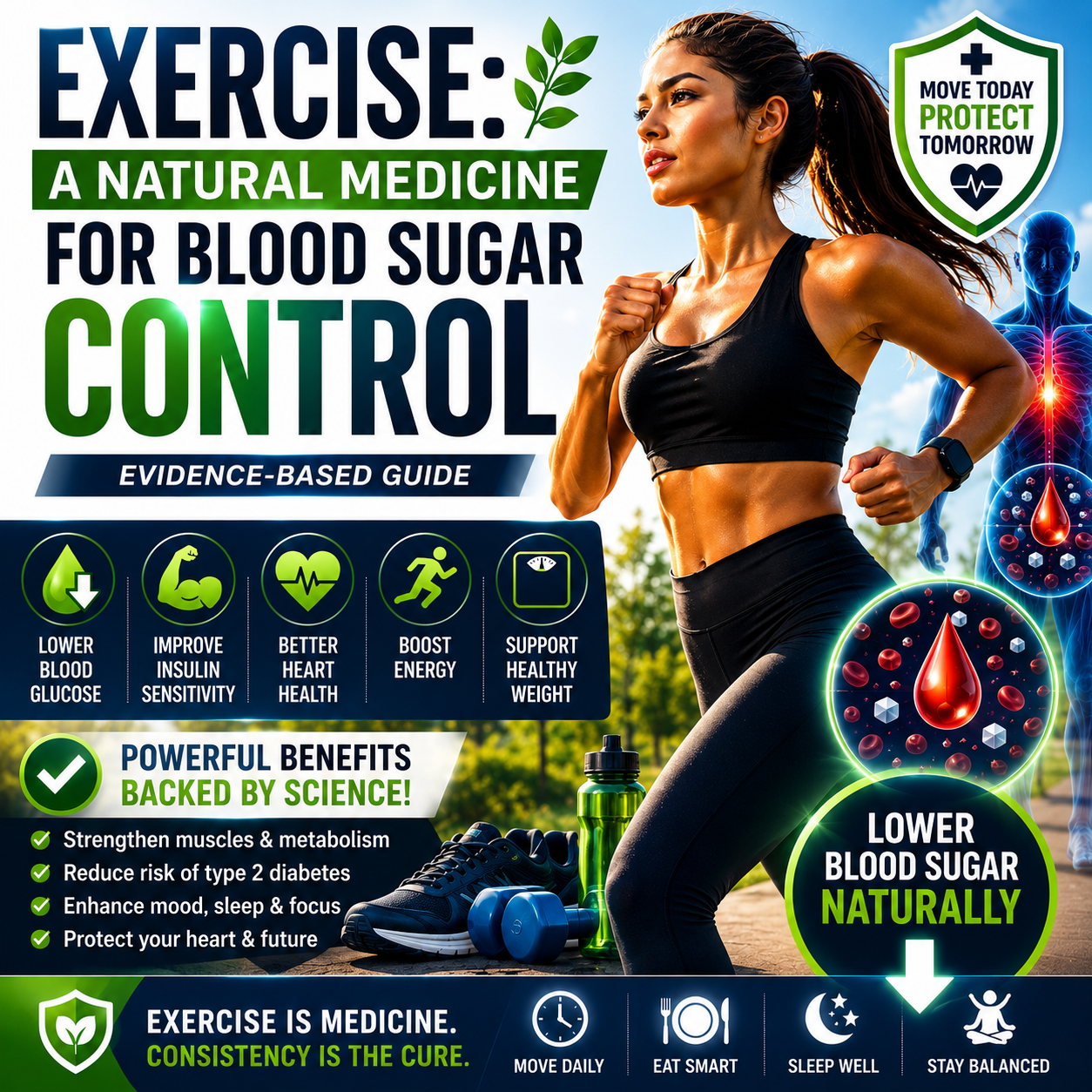

Evidence-Based Guide to Exercise, Insulin Sensitivity, Glucose Metabolism and Diabetes Prevention
🩺 Part 1 — Why Exercise Is One of the Most Powerful Medicines
🌍 Why Does Exercise Matter?
Regular physical activity is one of the most effective non-pharmacological strategies for improving blood sugar control.
Unlike many medications that target a single pathway, exercise benefits multiple organs simultaneously, improving:
❤️ Heart health
💪 Muscle function
🩸 Blood glucose regulation
⚖️ Body weight
🧠 Brain function
😴 Sleep quality
🧬 Insulin sensitivity
For this reason, many healthcare professionals refer to exercise as “nature’s medicine.”
🧬 How Does Exercise Lower Blood Sugar?
Every time you move, your muscles require energy.
The body’s preferred fuel is glucose.
During physical activity:

Even more importantly:
✅ Exercising muscles can absorb glucose with less dependence on insulin, making physical activity especially beneficial for people with insulin resistance.
⚙️ Exercise and Insulin Sensitivity
Insulin acts like a key that unlocks cells so glucose can enter.
With insulin resistance:
🔒 The key becomes less effective.
After regular exercise:
🔑 Cells become more responsive.
⬇️
🩸 Less insulin is needed.
⬇️
📉 Blood glucose improves.
This improvement may last 24–72 hours after a workout, highlighting the importance of exercising consistently.
🔬 What Happens Inside the Muscles?
Exercise stimulates several beneficial adaptations.
💪 Increased GLUT4 Activity
Muscle contractions move GLUT4 transporters to the cell surface.
These transporters help glucose enter muscle cells efficiently.
🏭 More Mitochondria
Regular exercise increases the number and efficiency of mitochondria.
Benefits include:
⚡ Better energy production
🩸 Improved glucose utilization
🔥 Greater fat oxidation
💪 Increased Muscle Mass
More muscle means:
✅ Greater glucose storage
✅ Better insulin sensitivity
✅ Higher resting energy expenditure
📊 Immediate vs Long-Term Benefits

🏃 Which Types of Exercise Help?
Scientific evidence supports several forms of physical activity.
🚶 Aerobic Exercise
Examples:
🚶 Brisk walking
🏃 Jogging
🚴 Cycling
🏊 Swimming
Benefits:
✔ Improves cardiovascular fitness
✔ Lowers blood glucose
✔ Burns calories
💪 Resistance Training
Examples:
🏋️ Weight training
🦵 Resistance bands
💪 Bodyweight exercises
Benefits:
✔ Builds muscle
✔ Improves insulin sensitivity
✔ Increases glucose storage
⚡ High-Intensity Interval Training (HIIT)
Alternating short periods of intense exercise with recovery.
Benefits:
🔥 Efficient workouts
🩸 Improved insulin sensitivity
❤️ Better cardiovascular fitness
⚠️ Beginners or people with medical conditions should consult a healthcare professional before starting HIIT.
🚶 Everyday Movement
Not all activity requires a gym.
Simple habits include:
🚶 Walking after meals
🪜 Taking the stairs
🚲 Cycling to work
🌳 Gardening
🧹 Household chores
Small increases in daily movement can meaningfully improve metabolic health.
🌟 Why Walking After Meals Is So Effective
One of the easiest evidence-based strategies is a 10–15 minute walk after eating.
Benefits include:
📉 Smaller post-meal blood sugar spikes
💪 Greater glucose uptake by muscles
🧬 Improved insulin sensitivity
❤️ Better cardiovascular health
This habit is simple, free, and accessible for most people.
💡 Key Takeaways
✔️ Exercise acts like a natural medicine for blood sugar control.
✔️ Muscles use glucose as fuel, lowering blood sugar during and after activity.
✔️ Regular exercise improves insulin sensitivity and reduces the risk of type 2 diabetes.
✔️ Aerobic exercise, resistance training, and daily movement all contribute to better metabolic health.
✔️ Even short walks after meals can produce measurable improvements in glucose control.
🏃 Part 2 — How Much Exercise Do You Really Need?
Evidence-Based Recommendations for Blood Sugar Control
Exercise is not just about burning calories—it’s about improving how your body uses glucose every day.
Scientific organizations such as the American Diabetes Association (ADA) and the American College of Sports Medicine (ACSM) recommend regular physical activity as one of the most effective strategies for preventing and managing insulin resistance.
📊 How Much Exercise Is Recommended?
For most adults, the ideal weekly goal is:
🏃 150–300 minutes of moderate-intensity aerobic exercise
OR
🏃♂️ 75–150 minutes of vigorous-intensity exercise
PLUS
💪 Strength training on 2–3 days per week
PLUS
🤸 Flexibility and balance exercises 2–3 times weekly, especially for older adults.
🏃 What Counts as Moderate Exercise?
Moderate intensity means:
💓 Your heart beats faster.
😮 Your breathing increases.
🗣️ You can still talk, but singing becomes difficult.
Examples
🚶 Brisk walking
🚴 Leisure cycling
🏊 Swimming
💃 Dancing
🥾 Hiking
🛶 Recreational rowing
🔥 What Counts as Vigorous Exercise?
Higher intensity activities produce greater cardiovascular demand.
Examples include:
🏃 Running
🚵 Mountain biking
🏊 Fast swimming
⚽ Soccer
🥊 Boxing
🔥 HIIT workouts
During vigorous exercise:
🗣️ Speaking full sentences becomes difficult.
💓 Heart rate rises substantially.
💪 Why Strength Training Is Essential
Many people think only aerobic exercise lowers blood sugar.
Scientific evidence shows that building muscle is equally important.
Muscle tissue acts as the body’s largest glucose storage site.
Benefits include:
🧬 Greater insulin sensitivity
📦 Increased glycogen storage
🔥 Higher resting metabolism
⚖️ Better weight management
🦴 Improved bone health
🏃 Better functional capacity
📅 Example Weekly Exercise Plan

💡 Consistency is far more important than perfection.
🍽️ Walking After Meals: A Simple Strategy That Works
One of the easiest evidence-based habits is taking a 10–15 minute walk after meals.
Benefits include:
📉 Lower post-meal glucose spikes
💪 Greater glucose uptake by muscles
🧬 Improved insulin sensitivity
❤️ Better cardiovascular health
Even light movement after eating can produce meaningful metabolic benefits.
⚠️ Common Exercise Mistakes
Avoid these frequent errors:
❌ Exercising only on weekends.
❌ Sitting for many hours without moving.
❌ Ignoring strength training.
❌ Increasing intensity too quickly.
❌ Skipping warm-up and cool-down.
❌ Exercising while dehydrated.
❌ Expecting immediate weight loss and giving up too soon.
Small, sustainable habits are more effective than occasional intense workouts.
💧 Stay Hydrated
Water is essential during exercise.
Adequate hydration helps:
💪 Muscle performance
❤️ Cardiovascular function
🌡️ Temperature regulation
🩸 Blood circulation
Aim to drink fluids regularly throughout the day and replace losses during prolonged activity.
🩺 Safety Considerations
Before beginning a new exercise program, consult a healthcare professional if you have:
❤️ Heart disease
🩺 Diabetes with complications
🦴 Severe joint problems
🫁 Chronic lung disease
🤰 Pregnancy with medical complications
👴 Limited mobility or frailty
Exercise programs should always be individualized.
🎯 How Quickly Do Benefits Appear?
Many people notice improvements within a few weeks.
📅 After a Single Session
📉 Lower blood glucose
⚡ Improved glucose uptake
😊 Better mood
📅 After 2–4 Weeks
🧬 Improved insulin sensitivity
❤️ Better cardiovascular fitness
😴 Better sleep quality
📅 After Several Months
💪 Increased muscle mass
⚖️ Reduced body fat
🩸 Better HbA1c levels
❤️ Lower cardiovascular risk
🩺 Reduced risk of developing type 2 diabetes
💡 Key Takeaways
✔️ Aim for 150–300 minutes of moderate exercise each week.
✔️ Include strength training at least twice weekly.
✔️ Walking after meals is one of the simplest ways to improve blood sugar control.
✔️ Regular movement is more effective than occasional intense workouts.
✔️ Combining aerobic exercise, resistance training, flexibility and healthy lifestyle habits provides the greatest metabolic benefits.
🏃 Part 3 — Maximizing Results: Nutrition, Recovery and Lifestyle
Evidence-Based Strategies to Optimize Blood Sugar Control Through Exercise
Exercise is one of the most powerful tools for improving metabolic health—but its benefits are even greater when combined with healthy nutrition, quality sleep, proper recovery and sustainable lifestyle habits.
These strategies work together to improve insulin sensitivity, reduce inflammation and lower the risk of type 2 diabetes.
🥗 1. Nutrition: Fuel Your Body for Better Blood Sugar Control
Exercise increases the body’s ability to use glucose, but nutrition determines how much glucose enters the bloodstream in the first place.
✅ Prioritize

⚠️ Limit

🍽️ Build a Healthy Plate
An easy evidence-based approach:
🥦 ½ Plate: Non-starchy vegetables
🍗 ¼ Plate: Lean protein
🌾 ¼ Plate: Whole grains or other high-fiber carbohydrates
🥑 Add healthy fats in moderate amounts.
This pattern supports more stable blood glucose levels throughout the day.
⚖️ 2. Maintain a Healthy Body Weight
Excess visceral fat is strongly associated with insulin resistance.
Even modest weight loss can improve metabolic health.
Benefits of Losing 5–10% of Body Weight
📉 Improved insulin sensitivity
🩸 Lower fasting glucose
❤️ Better blood pressure
🧬 Reduced inflammation
🫀 Lower cardiovascular risk
Remember: progress matters more than perfection.
😴 3. Recovery Is Part of Training
Your body adapts to exercise during recovery, not only during the workout itself.
Recovery includes:
😴 Quality sleep
💧 Proper hydration
🍗 Adequate protein intake
🧘 Rest days
🚶 Light active recovery
Poor recovery may reduce exercise performance and slow metabolic improvements.
🌙 4. Sleep and Blood Sugar
Sleep plays a major role in hormone regulation.
Adults should aim for:
🛌 7–9 hours of sleep each night
Benefits include:
🧬 Better insulin sensitivity
😌 Lower cortisol levels
🍽️ Better appetite regulation
💪 Improved muscle recovery
⚡ Higher energy levels
😌 5. Manage Stress
Chronic stress increases cortisol, which may elevate blood glucose and worsen insulin resistance.
Helpful strategies include:
🧘 Meditation
🌳 Spending time outdoors
🎵 Listening to relaxing music
📖 Reading
🚶 Walking
👨👩👧 Social connection
💊 Evidence-Based Supplements
Supplements should support—not replace—a healthy lifestyle.
Current evidence suggests potential benefits for selected individuals.

⚠️ Always consult a healthcare professional before starting supplements, especially if you take prescription medications.
📅 Your Daily Blood Sugar Checklist
✔️ 🚶 Move your body every day
✔️ 💪 Perform strength training 2–3 times weekly
✔️ 🥗 Fill half your plate with vegetables
✔️ 💧 Stay hydrated
✔️ 😴 Sleep 7–9 hours
✔️ 😌 Manage daily stress
✔️ ⚖️ Monitor your weight and waist circumference
✔️ 🩺 Attend regular health check-ups
Small habits practiced consistently produce lasting health improvements.
🛍️ Recommended Products
📢 Disclosure: Some links below are affiliate links. If you purchase through these links, we may earn a small commission at no extra cost to you. We only recommend products that align with current scientific evidence and may support a healthy lifestyle.
🩸 Blood Sugar Monitoring
🩺 Blood Glucose Monitor Kit
Monitor your blood glucose trends at home when recommended by your healthcare professional.
🛒 Amazon Affiliate Link
🩸 Blood Glucose Test Strips
Compatible with your glucose meter for regular monitoring.
🛒 Amazon Affiliate Link
💪 Home Exercise Equipment
🏋️ Resistance Bands Set
A practical and affordable way to build strength at home.
🛒 Amazon Affiliate Link
🏋️ Adjustable Dumbbells
Ideal for progressive resistance training and increasing muscle mass.
🛒 Amazon Affiliate Link
⌚ Fitness Smartwatch
Track daily steps, heart rate, calories burned and exercise sessions.
🛒 Amazon Affiliate Link
⚖️ Weight Management
⚖️ Smart Digital Scale
Track body weight and monitor your long-term progress.
🛒 Amazon Affiliate Link
📏 Waist Measuring Tape
An easy way to monitor abdominal fat, an important marker of metabolic health.
🛒 Amazon Affiliate Link
🥗 Healthy Nutrition
⚖️ Digital Kitchen Scale
Perfect for portion control and meal planning.
🛒 Amazon Affiliate Link
🥣 Glass Meal Prep Containers
Prepare healthy meals ahead of time and stay consistent with your nutrition goals.
🛒 Amazon Affiliate Link
💊 Evidence-Based Supplements
🌾 Psyllium Husk Fiber
Supports fiber intake and healthy post-meal blood sugar responses.
🛒 Amazon Affiliate Link
⚡ Magnesium Glycinate
Supports normal muscle and nerve function and may benefit glucose metabolism in people with deficiency.
🛒 Amazon Affiliate Link
🐟 High-Quality Omega-3 Fish Oil
Supports cardiovascular health and complements an active lifestyle.
🛒 Amazon Affiliate Link
💡 Pharmacist’s Tip
Exercise is one of the few interventions that benefits nearly every organ in the body. Combined with balanced nutrition, restorative sleep, stress management and consistency, it can significantly improve insulin sensitivity, cardiovascular health and long-term metabolic well-being. Lasting results come from sustainable habits—not quick fixes.
⚠️ Medical Disclaimer: This article is intended for educational purposes only and does not replace professional medical advice. Always consult a qualified healthcare professional before starting any exercise program, supplement or medication, particularly if you have diabetes, cardiovascular disease or other chronic health conditions.
📌 Key Takeaways
✔️ Exercise is one of the most effective natural tools for blood sugar control.
✔️ Combining exercise with healthy eating produces greater improvements than either strategy alone.
✔️ Strength training, aerobic exercise, quality sleep and stress management work together to improve insulin sensitivity.
✔️ Small, consistent lifestyle changes can substantially reduce the risk of type 2 diabetes.
✔️ Long-term consistency—not perfection—is the key to better metabolic health.
🔗 Continue Reading
➡️ 🔥 Metabolic Syndrome Explained: Risk Factors, Diagnosis, Treatment and Prevention
➡️ ⚖️ Obesity Classes Explained: How to Measure Health Risks
➡️ ❤️ Heart Health Explained: Evidence-Based Strategies to Protect Your Heart Naturally
➡️ 🧬 Chronic Inflammation Explained: Silent Damage to Your Health
➡️ 🥗 Best Vitamins for Energy: What Science Really Says
➡️ 💪 Creatine: Benefits, Safety, Dosage and How It Works
📚 Scientific References
- American Diabetes Association. Standards of Care in Diabetes.
- American College of Sports Medicine. ACSM Guidelines for Exercise Testing and Prescription.
- World Health Organization. Guidelines on Physical Activity and Sedentary Behaviour.
- Diabetes Prevention Program Research Group. Reduction in the Incidence of Type 2 Diabetes with Lifestyle Intervention or Metformin. New England Journal of Medicine. 2002.
- Centers for Disease Control and Prevention (CDC).
Leave a Reply