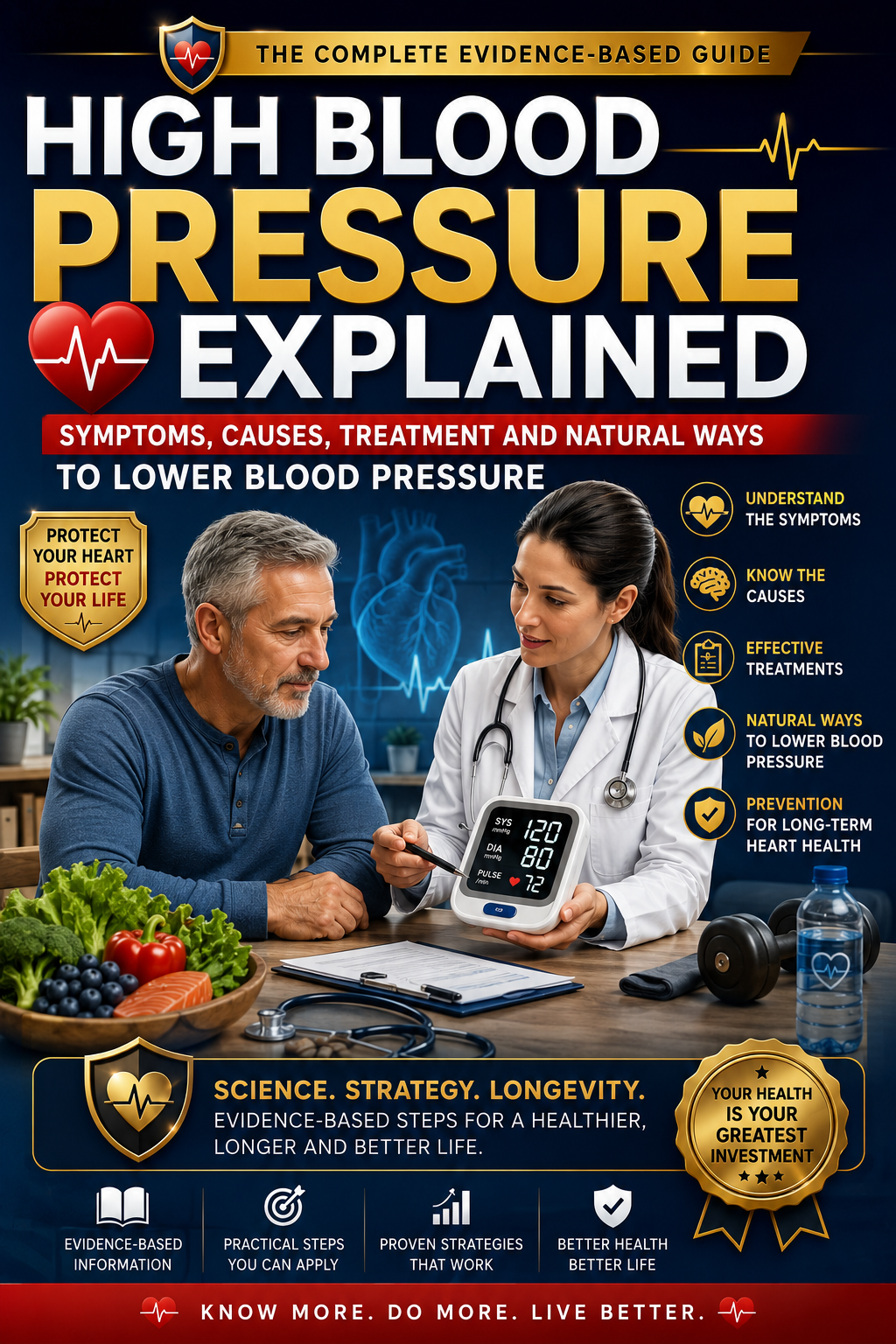

Evidence-Based Guide to Hypertension, Heart Health, Nutrition, Exercise and Prevention
🩺 Part 1 — Understanding High Blood Pressure
❤️ What Is High Blood Pressure?
High blood pressure (hypertension) is one of the most common chronic health conditions worldwide and a leading risk factor for heart attack, stroke, heart failure, kidney disease and premature death.
Blood pressure measures the force of blood pushing against the walls of your arteries every time your heart beats.
When this pressure remains consistently elevated, the heart and blood vessels must work harder, increasing wear and tear throughout the cardiovascular system.
💡 The concerning part: Hypertension often develops silently over many years, causing damage before symptoms appear.
📊 Blood Pressure at a Glance
🫀 Main Organ Affected
❤️ Heart and blood vessels
🩸 What Happens?
⬆️ Blood pressure stays consistently elevated.
⚠️ Symptoms
😶 Often absent
❤️ Major Risks
💔 Heart attack
🧠 Stroke
🩺 Heart failure
🫘 Chronic kidney disease
👁️ Vision loss
🩸 Aortic disease
✅ Can It Be Controlled?
Yes. Lifestyle changes, regular monitoring and medication when necessary can greatly reduce complications.
⚙️ How Blood Pressure Works
Your cardiovascular system functions like a network of flexible pipes.

🚨 What Happens in Hypertension?
When blood pressure remains high for months or years:

📈 Understanding Blood Pressure Numbers
Blood pressure is written using two numbers.
Example:
120/80 mmHg
❤️ Top Number (Systolic)
Measures pressure when the heart contracts.
❤️ Bottom Number (Diastolic)
Measures pressure while the heart relaxes between beats.
Both values are important.
📋 Blood Pressure Classification

🚨 A hypertensive crisis requires immediate medical evaluation, particularly if accompanied by symptoms such as chest pain, severe headache, shortness of breath, weakness or changes in vision.
🤔 Why Is Hypertension Called the “Silent Killer”?
Most people with hypertension:
😶 Feel completely normal.
No pain.
No warning signs.
No obvious symptoms.
Meanwhile, high blood pressure may gradually damage:
❤️ Heart
🧠 Brain
👁️ Eyes
🫘 Kidneys
🩸 Blood vessels
For this reason, routine blood pressure measurement is essential—even if you feel well.
🌍 Why Is Hypertension Becoming More Common?
Several modern lifestyle factors contribute to rising blood pressure.
🍟 Diets high in sodium and ultra-processed foods
⚖️ Overweight and obesity
🪑 Physical inactivity
😴 Poor sleep
😰 Chronic stress
🚬 Smoking
🍺 Excess alcohol consumption
🧬 Family history
👴 Aging
These factors often interact, progressively increasing cardiovascular risk.
💡 Key Takeaways
✔️ Hypertension is one of the leading preventable causes of cardiovascular disease.
✔️ It often causes no symptoms, making regular screening essential.
✔️ Blood pressure is measured using systolic and diastolic values.
✔️ Healthy lifestyle habits play a central role in prevention and treatment.
✔️ Early diagnosis dramatically reduces the risk of heart attack, stroke and kidney disease.
🩺 Part 2 — Symptoms, Risk Factors, Diagnosis and Complications of Hypertension
Evidence-Based Guide to Recognizing High Blood Pressure Early
Although hypertension affects more than one billion people worldwide, many individuals remain undiagnosed because the condition usually develops without noticeable symptoms.
This is why hypertension is often called “the silent killer.”
🚨 Does High Blood Pressure Cause Symptoms?
Most people with hypertension feel completely healthy, even when blood pressure is dangerously elevated.
However, some individuals may experience symptoms, particularly when blood pressure becomes very high.
⚠️ Possible Symptoms
🤕 Persistent Headache
Usually more common with severely elevated blood pressure.
😵 Dizziness
Some individuals may experience lightheadedness or dizziness.
👁️ Blurred Vision
High blood pressure may affect the small blood vessels in the eyes.
❤️ Chest Pain
May indicate a cardiovascular emergency requiring immediate medical evaluation.
😮💨 Shortness of Breath
Can occur when the heart struggles to pump blood effectively.
❤️🔥 Heart Palpitations
Some individuals notice rapid or irregular heartbeats.
👃 Nosebleeds
Occasional nosebleeds are usually unrelated, but frequent episodes with very high blood pressure require medical assessment.
📊 Common Symptoms at a Glance

⚠️ Important: Most people with hypertension have no symptoms, making regular blood pressure checks essential.
⚠️ Who Is Most at Risk?
Hypertension usually develops from a combination of genetic, environmental and lifestyle factors.
🐟 High-Quality Omega-3 Fish Oil
👴 Age
Blood pressure tends to increase with aging because arteries gradually become less elastic.
🧬 Family History
Having close relatives with hypertension increases risk.
⚖️ Overweight or Obesity
Excess body fat increases the workload on the heart and contributes to insulin resistance.
🧂 High Sodium Intake
Excess dietary sodium may increase blood pressure in susceptible individuals.
🪑 Physical Inactivity
Sedentary lifestyles reduce cardiovascular fitness and increase hypertension risk.
🚬 Smoking
Smoking damages blood vessels and accelerates atherosclerosis.
🍺 Excess Alcohol
Heavy alcohol intake is associated with higher blood pressure.
😰 Chronic Stress
Long-term stress may contribute to persistent blood pressure elevation.
😴 Poor Sleep
Insufficient sleep and obstructive sleep apnea are associated with hypertension.
🩺 Diabetes
People with diabetes have a substantially higher cardiovascular risk.
🫘 Chronic Kidney Disease
Kidney disease and hypertension frequently occur together.
📋 Hypertension Risk Checklist
How many apply to you?
☐ Age over 40 years
☐ Family history of hypertension
☐ Overweight or obesity
☐ Waist circumference above recommended levels
☐ Sedentary lifestyle
☐ High-sodium diet
☐ Smoking
☐ Excess alcohol consumption
☐ Diabetes
☐ Chronic kidney disease
☐ High cholesterol
☐ Poor sleep quality
✅ The more risk factors present, the more important regular blood pressure monitoring becomes.
🩺 How Is Hypertension Diagnosed?
Hypertension cannot be diagnosed from a single elevated reading.
Blood pressure should be measured correctly on multiple occasions.
🩺 Office Blood Pressure Measurement
Performed by a healthcare professional using a validated device.
🏠 Home Blood Pressure Monitoring
Multiple readings taken at home provide a more accurate picture of day-to-day blood pressure.
⏱️ Ambulatory Blood Pressure Monitoring (24-hour ABPM)
A portable monitor records blood pressure throughout the day and night.
This helps identify:
🌙 Nocturnal hypertension
👨⚕️ White-coat hypertension
🏠 Masked hypertension
🩸 Why Regular Monitoring Matters
Routine blood pressure checks help:
✅ Detect hypertension early
❤️ Reduce cardiovascular risk
💊 Guide treatment decisions
📈 Monitor treatment effectiveness
Even healthy adults should have their blood pressure checked periodically.
⚠️ What Happens If Hypertension Is Left Untreated?
Persistent high blood pressure gradually damages nearly every major organ.
❤️ Heart
💔 Heart attack
❤️ Heart failure
❤️ Enlarged heart
🧠 Brain
🧠 Stroke
🧠 Vascular dementia
👁️ Eyes
👁️ Hypertensive retinopathy
👁️ Vision loss
🫘 Kidneys
🩺 Chronic kidney disease
🩸 Kidney failure
🩸 Blood Vessels
🧱 Atherosclerosis
💥 Aortic aneurysm
📊 Long-Term Complications

🚨 When Should You Seek Emergency Care?
Call emergency medical services immediately if very high blood pressure is accompanied by:
🚨 Severe chest pain
🚨 Sudden weakness or numbness
🚨 Difficulty speaking
🚨 Severe shortness of breath
🚨 Confusion
🚨 Vision loss
🚨 Severe headache unlike previous headaches
These symptoms may indicate a hypertensive emergency, stroke or heart attack.
💡 Key Takeaways
✔️ Hypertension usually develops without symptoms.
✔️ Age, obesity, high sodium intake, inactivity and genetics are major risk factors.
✔️ Diagnosis requires proper blood pressure measurements over time.
✔️ Untreated hypertension can damage the heart, brain, kidneys, eyes and arteries.
✔️ Early diagnosis and treatment dramatically reduce the risk of life-threatening complications.
🩺 Part 3 — Evidence-Based Treatment and Natural Ways to Lower Blood Pressure
Evidence-Based Guide to Lifestyle Changes, DASH Diet, Medications and Heart Protection
High blood pressure is highly treatable.
For many people, healthy lifestyle changes can significantly reduce blood pressure, while others may also require medication to achieve safe blood pressure levels.
The best results come from combining healthy habits with medical treatment when indicated.
🥗 1. Follow the DASH Diet
The DASH (Dietary Approaches to Stop Hypertension) eating pattern is considered one of the most effective dietary strategies for lowering blood pressure.
Scientific studies have consistently shown that the DASH diet can reduce blood pressure while improving overall cardiovascular health.
✅ Foods to Prioritize
🥦 Vegetables
🍎 Fruits
🌾 Whole grains
🫘 Beans and lentils
🐟 Fish
🍗 Lean poultry
🥜 Unsalted nuts
🥛 Low-fat dairy products
🫒 Olive oil
💧 Water
⚠️ Foods to Limit
🧂 Excess sodium
🍟 Ultra-processed foods
🍕 Fast food
🥓 Processed meats
🍩 Sugary desserts
🥤 Sugar-sweetened beverages
🍺 Excess alcohol
🧂 Reduce Sodium Intake
Too much sodium causes the body to retain fluid, increasing blood volume and blood pressure.
Practical Tips
✅ Read food labels.
✅ Choose fresh foods more often.
✅ Use herbs and spices instead of salt.
✅ Limit processed foods and canned products.
Small reductions in sodium intake can produce meaningful improvements in blood pressure.
🏃 Exercise Is One of the Best Natural Treatments
Regular physical activity helps:
❤️ Strengthen the heart
🩸 Improve blood vessel function
⚖️ Promote healthy weight
🧬 Improve insulin sensitivity
😌 Reduce stress
Aim for:
🏃 150–300 minutes of moderate-intensity aerobic activity each week
PLUS
💪 Strength training at least 2 days per week.
⚖️ Lose Excess Body Weight
Even modest weight loss can lower blood pressure.
Losing just 5–10% of body weight may help:
📉 Lower blood pressure
❤️ Reduce heart workload
🧬 Improve insulin sensitivity
🔥 Reduce chronic inflammation
🩺 Lower cardiovascular risk
😌 Manage Stress
Chronic stress may contribute to persistent blood pressure elevation.
Helpful strategies include:
🧘 Meditation
🌳 Spending time outdoors
📖 Reading
🎵 Relaxing music
🚶 Walking
👨👩👧 Time with family and friends
Managing stress benefits both mental and cardiovascular health.
😴 Prioritize Quality Sleep
Adults should aim for:
🛌 7–9 hours of sleep each night
Healthy sleep supports:
❤️ Blood pressure regulation
🧬 Hormonal balance
💪 Recovery
⚡ Daily energy
Poor sleep and obstructive sleep apnea are associated with a higher risk of hypertension.
💊 When Are Medications Necessary?
Lifestyle changes remain the foundation of treatment, but medication may be recommended when:
🩺 Blood pressure remains above target despite healthy habits.
🔴 Stage 2 hypertension is present.
❤️ Cardiovascular disease is already established.
🫘 Chronic kidney disease is present.
🩸 Diabetes significantly increases cardiovascular risk.
The decision depends on the individual’s overall cardiovascular risk and should always be made with a healthcare professional.
💊 Common Classes of Blood Pressure Medications
Healthcare professionals may prescribe:
💊 ACE inhibitors
💊 Angiotensin receptor blockers (ARBs)
💊 Calcium channel blockers
💊 Thiazide diuretics
💊 Beta-blockers (in selected situations)
Never stop or change blood pressure medication without medical advice.
🌿 Supplements With the Best Scientific Evidence
Supplements should complement—not replace—medical treatment and healthy lifestyle habits.

⚠️ Potassium supplementation should only be used under medical supervision, especially in people with kidney disease or those taking certain medications.
🛍️ Recommended Products
📢 Disclosure: Some links below are affiliate links. If you purchase through these links, we may earn a small commission at no extra cost to you. We only recommend products that align with current scientific evidence and may support heart health.
🩺 Blood Pressure Monitoring
❤️ Automatic Blood Pressure Monitor
Monitor your blood pressure accurately at home.
🛒 Amazon Affiliate Link
⌚ Heart Health Tracking
⌚ Fitness Smartwatch
Track heart rate, daily activity and exercise.
🛒 Amazon Affiliate Link
⚖️ Healthy Weight
⚖️ Smart Digital Scale
Monitor body weight and long-term progress.
🛒 Amazon Affiliate Link
🏋️ Exercise Equipment
💪 Resistance Bands Set
An affordable way to perform strength training at home.
🛒 Amazon Affiliate Link
🚶 Walking Pad or Treadmill
Stay physically active regardless of the weather.
🛒 Amazon Affiliate Link
🥗 Nutrition
⚖️ Digital Kitchen Scale
Helps with portion control and meal planning.
🛒 Amazon Affiliate Link
🥣 Glass Meal Prep Containers
Support healthy eating and consistency.
🛒 Amazon Affiliate Link
💊 Evidence-Based Supplements
⚡ Magnesium
🛒 Amazon Affiliate Link
🛒 Amazon Affiliate Link
🧄 Aged Garlic Extract
🛒 Amazon Affiliate Link
💡 Pharmacist’s Tip
Hypertension rarely develops overnight, and controlling it usually doesn’t require a single dramatic change. Daily habits—such as eating a balanced diet, staying physically active, limiting sodium, sleeping well and taking medications as prescribed—work together to protect your heart, brain, kidneys and blood vessels over time. Consistency is one of the most powerful tools for long-term cardiovascular health.
📌 Key Takeaways
✔️ The DASH diet is one of the most effective nutritional strategies for lowering blood pressure.
✔️ Regular exercise and maintaining a healthy weight significantly reduce cardiovascular risk.
✔️ Limiting sodium, improving sleep and managing stress are essential lifestyle interventions.
✔️ Blood pressure medication may be necessary for many individuals and should be used as prescribed.
✔️ Long-term success comes from combining healthy habits with appropriate medical care.
🔗 Continue Reading
➡️ ❤️ Heart Health Explained: Evidence-Based Strategies to Protect Your Heart Naturally
➡️ 🏃 Exercise: A Natural Medicine for Blood Sugar Control
➡️ 🩺 Prediabetes Explained: Symptoms, Causes, Diagnosis, Reversal and What Science Really Says
➡️ 🔥 Metabolic Syndrome Explained: Risk Factors, Diagnosis, Treatment and Prevention
➡️ ⚖️ Obesity Classes Explained: How to Measure Health Risks
➡️ 🧬 Chronic Inflammation Explained: Silent Damage to Your Health
➡️ 🐟 Omega-3: What Science Really Says About Heart, Brain and Longevity
📚 Scientific References
- 2024 European Society of Cardiology (ESC) Guidelines for the management of elevated blood pressure and hypertension.
- American Heart Association (AHA). Understanding Blood Pressure Readings.
- American College of Cardiology (ACC) / AHA Guideline for the Prevention, Detection, Evaluation, and Management of High Blood Pressure in Adults.
- World Health Organization (WHO). Hypertension Fact Sheet.
- Sacks FM, et al. Effects on Blood Pressure of Reduced Dietary Sodium and the DASH Diet. New England Journal of Medici
Leave a Reply