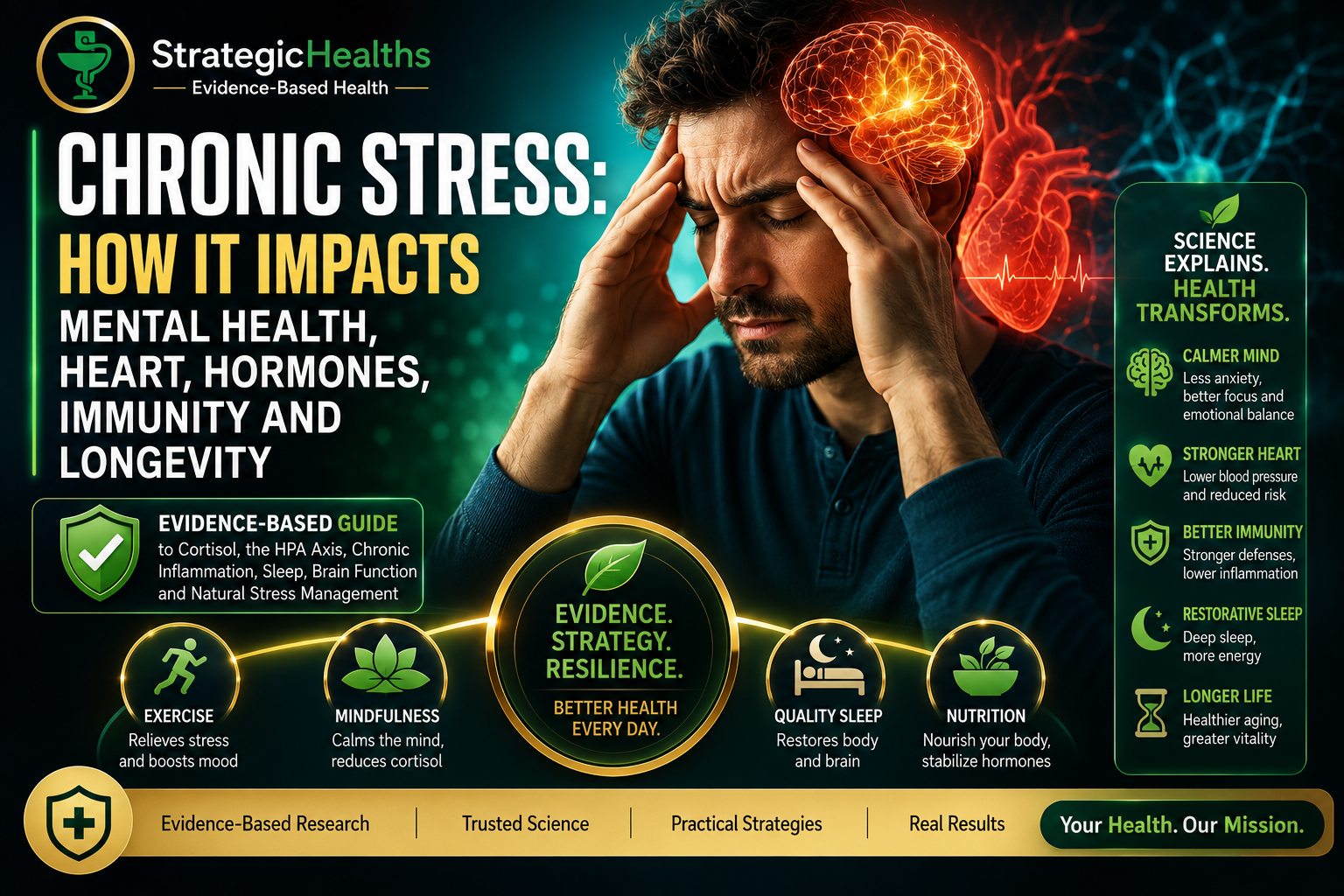

Evidence-Based Guide to Cortisol, the HPA Axis, Chronic Inflammation, Sleep, Brain Function and Natural Stress Management
🧠 Part 1 — Understanding Stress
🧠 What Is Stress?
Stress is the body’s natural physiological and psychological response to situations perceived as challenging, threatening, or demanding. Contrary to popular belief, stress is not always harmful. In fact, short-term stress is an essential survival mechanism that has helped humans adapt to dangerous environments throughout evolution.
When the brain detects a potential threat—whether physical, emotional, or psychological—it rapidly activates multiple biological systems designed to protect the body.
This response increases alertness, mobilizes energy stores, sharpens attention, elevates heart rate, and prepares muscles for immediate action. This phenomenon is commonly known as the “fight-or-flight” response.
Although this response is highly beneficial in emergencies, problems arise when stress becomes persistent and the body remains in a constant state of physiological activation.
⚡ Acute Stress vs. Chronic Stress
Not all stress is the same. Understanding the difference is essential because their health effects are dramatically different.

⚡ Acute Stress
Acute stress occurs during short-lived situations such as:
- Public speaking
- Exams
- Job interviews
- Sports competitions
- Emergency situations
- Intense exercise
During acute stress, hormones like adrenaline and cortisol temporarily increase, helping improve:
✅ Reaction time
✅ Memory formation
✅ Energy availability
✅ Blood circulation
✅ Mental focus
Once the challenge ends, hormone levels return to normal and the body recovers.
🔥 Chronic Stress

Chronic stress develops when stressors persist for prolonged periods without adequate recovery.
Common causes include:
- Financial difficulties
- Excessive workload
- Relationship problems
- Chronic illness
- Poor sleep
- Caregiver burden
- Social isolation
- Anxiety disorders
- Depression
Instead of protecting the body, persistent activation of stress pathways begins to damage nearly every organ system.
Scientific evidence links chronic stress to:
❤️ High blood pressure
🧠 Anxiety disorders
😔 Depression
🩺 Heart disease
🍬 Type 2 diabetes
⚖️ Weight gain
🦠 Reduced immune function
😴 Sleep disorders
🧬 Accelerated biological aging
🧬 The HPA Axis: The Body’s Central Stress System
One of the most important biological systems involved in stress is the Hypothalamic–Pituitary–Adrenal (HPA) Axis.
This sophisticated communication network coordinates the body’s hormonal response to physical and emotional stress.
The process follows several steps:
① The Brain Detects a Threat
The hypothalamus, located deep within the brain, acts as the body’s control center.
When stress is perceived, it releases Corticotropin-Releasing Hormone (CRH).
⬇️
② The Pituitary Responds
CRH stimulates the pituitary gland to release Adrenocorticotropic Hormone (ACTH) into the bloodstream.
⬇️
③ The Adrenal Glands Activate
ACTH reaches the adrenal glands, located above the kidneys.
These glands produce:
- Cortisol
- Adrenaline
- Noradrenaline
These hormones prepare the body to respond quickly to danger.
💊 Cortisol: The Primary Stress Hormone

Cortisol is often called the “stress hormone,” but its role extends far beyond stress.
Under normal conditions, cortisol helps regulate:
🩸 Blood glucose
🧬 Metabolism
🦴 Bone remodeling
🛡️ Immune function
❤️ Blood pressure
🧠 Brain function
🌙 Circadian rhythm
In healthy individuals, cortisol follows a daily pattern:
☀️ Highest shortly after waking.
🌅 Gradually decreases throughout the day.
🌙 Lowest during the night to facilitate sleep.
This rhythm is essential for maintaining metabolic and hormonal balance.
🚨 What Happens When Cortisol Remains Elevated?
When stress becomes chronic, cortisol regulation becomes impaired.
Persistently elevated cortisol has been associated with:
⚖️ Increased abdominal fat accumulation
🍬 Insulin resistance
❤️ Hypertension
🧠 Memory impairment
😔 Depression
😴 Poor sleep quality
🦠 Suppressed immune function
🦴 Bone loss
💪 Reduced muscle mass
🧬 Accelerated aging
⚡ Adrenaline: The Immediate Survival Hormone
While cortisol acts over minutes to hours, adrenaline works within seconds.
Its primary functions include:
❤️ Increasing heart rate
🫁 Expanding airways
💪 Enhancing blood flow to muscles
🩸 Raising blood pressure
🧠 Improving alertness
👀 Dilating pupils
These changes are lifesaving during emergencies.
However, repeated adrenaline surges caused by chronic psychological stress may contribute to:
- Persistent hypertension
- Cardiac arrhythmias
- Anxiety
- Panic attacks
- Headaches
- Sleep disturbances
🔬 Key Takeaways
✅ Stress is a normal and essential biological response.
✅ Acute stress can improve performance and survival.
✅ Chronic stress disrupts hormonal balance and affects nearly every organ system.
✅ The HPA axis coordinates the body’s response to stress through CRH, ACTH, cortisol, and adrenaline.
✅ Long-term dysregulation of this system increases the risk of cardiovascular disease, obesity, diabetes, depression, weakened immunity, and premature aging.
🧠 Part 2 — How Chronic Stress Affects the Entire Body

🧠 Stress and the Brain: Why Chronic Stress Changes How You Think and Feel
The brain is one of the first organs affected by prolonged stress.
Although the stress response is designed to help us survive immediate threats, continuous activation of stress pathways can gradually alter brain structure, neurotransmitter balance, and cognitive performance.
Scientists have identified three brain regions that are particularly vulnerable.
🧠 1. Hippocampus: Memory and Learning
The hippocampus plays a central role in:
📚 Learning
🧠 Memory formation
🧭 Spatial orientation
This region contains one of the highest concentrations of cortisol receptors in the body.
When cortisol remains elevated for months or years, research suggests it may:
❌ Reduce neurogenesis (the formation of new neurons)
❌ Impair memory consolidation
❌ Decrease learning capacity
❌ Reduce hippocampal volume in susceptible individuals
These changes may explain why people experiencing chronic stress often report:
- Forgetfulness
- Difficulty concentrating
- Mental fatigue
- Reduced productivity
😨 2. Amygdala: The Brain’s Alarm System
The amygdala detects threats and regulates fear and emotional responses.
Persistent stress can make the amygdala increasingly reactive.
As a result, individuals may experience:
⚠️ Heightened anxiety
⚠️ Increased emotional sensitivity
⚠️ Irritability
⚠️ Panic symptoms
⚠️ Hypervigilance
This creates a vicious cycle in which stress increases anxiety, and anxiety further amplifies the stress response.
🎯 3. Prefrontal Cortex: Decision-Making and Self-Control
The prefrontal cortex is responsible for:
🧩 Planning
🎯 Decision-making
💬 Emotional regulation
🤝 Social behavior
⚖️ Impulse control
High cortisol levels can temporarily reduce activity in this area, making it harder to:
- Focus on complex tasks
- Make rational decisions
- Control emotions
- Solve problems effectively
This helps explain why people under intense stress often feel mentally “foggy” or overwhelmed.
❤️ Chronic Stress and Cardiovascular Health
Stress affects far more than emotions.
Every episode of stress activates the sympathetic nervous system, increasing:
❤️ Heart rate
🩸 Blood pressure
💪 Cardiac workload
Under normal circumstances, these changes are temporary.
However, chronic activation contributes to long-term cardiovascular strain.
Scientific studies have associated chronic stress with:
🩺 Hypertension
🫀 Coronary artery disease
💔 Heart attacks
🧠 Stroke
❤️ Heart rhythm disturbances
Stress also promotes unhealthy behaviors such as smoking, poor diet, excessive alcohol consumption, and physical inactivity, which further increase cardiovascular risk.
🛡️ Stress and the Immune System
The immune system is closely regulated by cortisol.
During acute stress, cortisol helps control excessive inflammation.
When stress becomes chronic, this regulation becomes impaired.
Initially, immune function may be suppressed, increasing susceptibility to infections.
Over time, immune cells may become less responsive to cortisol, allowing chronic low-grade inflammation to develop.
Researchers have linked prolonged stress to increased inflammatory markers, including:
- C-reactive protein (CRP)
- Interleukin-6 (IL-6)
- Tumor necrosis factor-alpha (TNF-α)
Chronic inflammation has been associated with numerous diseases, including:
🫀 Cardiovascular disease
🍬 Type 2 diabetes
🧬 Metabolic syndrome
🧠 Alzheimer’s disease
🦴 Osteoporosis
Certain cancers
🦠 The Gut-Brain Axis: Stress Begins in the Brain but Also Affects the Intestine
The digestive tract communicates continuously with the brain through the gut-brain axis.
Stress can alter:
🦠 Gut microbiota composition
🍽️ Intestinal motility
🧱 Gut barrier integrity
🧪 Digestive enzyme secretion
As a result, many individuals experience:
🤢 Nausea
💨 Bloating
💩 Constipation
🚽 Diarrhea
😖 Irritable bowel syndrome (IBS) symptoms
Scientists continue to investigate how alterations in the gut microbiome may influence mood, anxiety, and overall metabolic health.
⚖️ Stress, Cortisol and Weight Gain
One of the most recognized consequences of chronic stress is unwanted weight gain.
Elevated cortisol may:
🍰 Increase cravings for calorie-dense foods
🍫 Promote emotional eating
🍕 Increase appetite
🛌 Reduce motivation for physical activity
😴 Impair sleep quality
At the same time, insufficient sleep further alters hormones involved in appetite regulation, including:
⬆️ Ghrelin (increases hunger)
⬇️ Leptin (reduces satiety)
This combination often favors abdominal fat accumulation and increases the risk of obesity and metabolic syndrome.
🧬 Chronic Stress and Biological Aging
Scientists now recognize chronic stress as a contributor to accelerated biological aging.
Potential mechanisms include:
🧬 Increased oxidative stress
🔥 Persistent inflammation
🧪 Mitochondrial dysfunction
🧫 DNA damage
🧵 Shortened telomeres
These biological changes may increase vulnerability to age-related diseases and reduce overall resilience over time.
Although aging is influenced by many factors, effective stress management is considered an important component of healthy aging.
🔬 What Does Science Say About Reducing Chronic Stress?
Evidence suggests that several lifestyle interventions can help regulate the stress response and improve overall health.
The strongest evidence supports:
🏃 Regular physical exercise
😴 Adequate sleep
🧘 Mindfulness and meditation
🥗 A balanced, nutrient-rich diet
🤝 Strong social connections
🌳 Spending time in nature
🚭 Avoiding smoking and limiting alcohol
🩺 Seeking professional support when stress becomes overwhelming or persistent
No single strategy eliminates stress entirely, but combining healthy habits can substantially improve resilience and reduce the long-term effects of chronic stress.
📌 Key Takeaways
✅ Chronic stress affects the brain, cardiovascular system, immune function, gut health, metabolism, and biological aging.
✅ Prolonged cortisol dysregulation contributes to cognitive impairment, anxiety, chronic inflammation, weight gain, and increased cardiovascular risk.
✅ The gut-brain axis plays a significant role in how stress influences both digestive and mental health.
✅ Healthy lifestyle habits and evidence-based stress management strategies can reduce many of the harmful effects associated with chronic stress.
🧠 Part 3 — Evidence-Based Stress Management: What Really Works?

While stress cannot be completely eliminated, decades of scientific research show that healthy lifestyle interventions can significantly improve the body’s ability to respond to stress and reduce its harmful long-term effects.
Rather than relying on a single solution, experts recommend combining multiple evidence-based strategies that target the brain, hormones, cardiovascular system, sleep, and mental well-being.
🏃 Exercise: One of the Most Effective Natural Stress Therapies
Regular physical activity is consistently ranked among the most effective non-pharmacological interventions for chronic stress.
Exercise helps regulate the Hypothalamic–Pituitary–Adrenal (HPA) axis, improves mood, enhances sleep quality, and reduces inflammation.
Evidence-Based Benefits
✅ Lowers perceived stress
✅ Improves mood
✅ Reduces symptoms of anxiety
✅ Helps prevent depression
✅ Improves sleep quality
✅ Reduces blood pressure
✅ Enhances cognitive function
Recommended Weekly Exercise
🏋️ Resistance Training
- 2–4 sessions per week
🚶 Moderate Aerobic Exercise
- 150–300 minutes weekly
🏃 Vigorous Exercise
- 75–150 minutes weekly
🧘 Flexibility & Mobility
- 2–3 sessions weekly
Even a 20–30 minute walk can temporarily reduce cortisol levels and improve mood.
😴 Sleep: The Foundation of Stress Recovery
Sleep is when the brain and body recover from daily stress.
Poor sleep increases cortisol, impairs emotional regulation, and raises the risk of anxiety, depression, obesity, and cardiovascular disease.
Healthy Sleep Habits
🌙 Maintain a consistent sleep schedule.
📱 Avoid screens at least one hour before bedtime.
☕ Limit caffeine in the afternoon and evening.
🌡️ Keep the bedroom cool, quiet, and dark.
📖 Develop a relaxing bedtime routine.
Adults generally benefit from 7–9 hours of quality sleep each night.
🥗 Nutrition and Stress
Diet directly influences inflammation, neurotransmitter production, gut health, and hormonal regulation.
A dietary pattern rich in whole foods is associated with lower levels of chronic inflammation and better mental health outcomes.
Foods That Support Stress Resilience
🥬 Leafy green vegetables
🫐 Berries
🐟 Fatty fish rich in Omega-3
🥜 Nuts and seeds
🫘 Legumes
🥣 Whole grains
🥑 Olive oil
🍊 Fruits rich in vitamin C
Foods to Limit
🍩 Ultra-processed foods
🥤 Sugar-sweetened beverages
🍟 Fried foods
🍺 Excess alcohol
⚡ Excessive energy drinks
🧘 Mindfulness and Meditation
Mindfulness teaches individuals to focus attention on the present moment without judgment.
Large clinical studies demonstrate benefits for:
🧠 Anxiety
😔 Depression
😴 Sleep quality
❤️ Blood pressure
🧩 Emotional regulation
Practicing 10–20 minutes daily may improve resilience over time.
🌬️ Breathing Techniques
Controlled breathing directly influences the autonomic nervous system.
Slow diaphragmatic breathing activates the parasympathetic (“rest-and-digest”) response.
One simple technique:
🫁 4–6 Breathing
1️⃣ Inhale through the nose for 4 seconds
2️⃣ Exhale slowly for 6 seconds
Repeat for 5–10 minutes.
Benefits may include:
✅ Reduced heart rate
✅ Lower blood pressure
✅ Reduced muscle tension
✅ Improved emotional regulation
🌳 Nature and Social Connection
Research suggests that spending time in natural environments can reduce perceived stress and improve mood.
Examples include:
🌲 Walking in parks
🏖️ Visiting beaches
🌄 Hiking
🌺 Gardening
Strong relationships also act as a protective factor against chronic stress.
Healthy social support is associated with:
❤️ Better cardiovascular health
🧠 Improved mental health
😊 Greater resilience
📈 Longer life expectancy
💬 Psychological Therapies
When stress becomes persistent or significantly affects daily life, professional support can be highly effective.
Evidence-based approaches include:
🧠 Cognitive Behavioral Therapy (CBT)
💬 Acceptance and Commitment Therapy (ACT)
🧘 Mindfulness-Based Stress Reduction (MBSR)
These therapies help individuals identify unhelpful thought patterns, develop healthier coping strategies, and improve emotional regulation.
💊 Supplements: What Does the Evidence Show?
Supplements should complement—not replace—a healthy lifestyle. Evidence varies in quality, and individual responses differ.
🟢 Stronger or Moderate Evidence
🐟 Omega-3 Fatty Acids
- May improve mood and reduce symptoms of stress and depression in some individuals.
🧂 Magnesium
- May support muscle relaxation and improve sleep, particularly in people with inadequate magnesium intake.
🌿 Ashwagandha (Withania somnifera)
- Several randomized controlled trials suggest reductions in perceived stress and cortisol levels, though long-term safety and optimal dosing require further study.
🌼 Lavender (oral preparations or aromatherapy)
- May help reduce mild anxiety and promote relaxation.
🫖 L-Theanine
- An amino acid found in tea that may promote relaxation without causing drowsiness.
⚠️ Supplements with Limited or Mixed Evidence
❓ Adaptogenic blends
❓ GABA supplements
❓ CBD products
These may help some individuals, but current evidence is inconsistent, and product quality varies.
Always consult a qualified healthcare professional before starting supplements, especially if you are pregnant, breastfeeding, have chronic medical conditions, or take prescription medications.
🚨 When Should You Seek Medical Help?
Stress is a normal part of life, but professional evaluation is recommended if symptoms become severe or persistent.
Seek medical or mental health support if you experience:
🚨 Persistent anxiety lasting several weeks
🚨 Depressed mood most days
🚨 Panic attacks
🚨 Severe insomnia
🚨 Significant weight loss or gain
🚨 Difficulty functioning at work or school
🚨 Thoughts of self-harm or suicide (seek immediate emergency assistance)
Early intervention often leads to better outcomes and can prevent long-term complications.
📌 Final Takeaways
✅ Acute stress is a normal and beneficial survival response.
✅ Chronic stress can affect nearly every organ system, including the brain, heart, immune system, metabolism, and digestive tract.
✅ Regular exercise, restorative sleep, a nutrient-rich diet, mindfulness, breathing exercises, social support, and psychological therapies are among the most effective evidence-based strategies for reducing stress.
✅ Some supplements—such as omega-3, magnesium, ashwagandha, lavender, and L-theanine—may provide additional support when used appropriately, but they should not replace healthy habits or medical care.
Managing stress is not about eliminating life’s challenges—it’s about strengthening your resilience so your body and mind can recover, adapt, and thrive over the long term.
🧠 Conclusion
Stress is an unavoidable part of life, but its long-term effects are not inevitable.
Modern scientific evidence consistently shows that regular physical activity, restorative sleep, a nutrient-rich diet, mindfulness practices, breathing exercises, and strong social relationships can significantly reduce the harmful effects of chronic stress while improving both physical and mental health.
Acute stress remains an essential biological response that enhances survival and performance during short-term challenges. In contrast, chronic stress can disrupt hormonal balance, increase systemic inflammation, impair cognitive function, weaken immunity, accelerate biological aging, and raise the risk of cardiovascular disease, obesity, and depression.
Building resilience is not about eliminating stress—it is about strengthening your body’s ability to recover.
Small evidence-based lifestyle changes practiced consistently often produce the greatest long-term improvements in health, quality of life, and longevity.
📚 Continue Reading
If you enjoyed this article, you may also like these evidence-based guides:
- 💤 Sleep Apnea and Weight Training: Can Exercise Improve Sleep and Reduce Symptoms?
- 🫀 Fatty Liver (MASLD): Can Exercise and Supplements Reverse Liver Fat? What Science Really Says
- ☕ Caffeine Explained: Benefits, Risks, Safe Dosage and What Science Really Says
- 🧠 Omega-3 Benefits: What Science Really Says About Heart, Brain and Longevity
- ⚡ Best Vitamins for Energy: What Science Really Says
- 🦠 Magnesium Explained: Benefits, Deficiency, Safety and What Science Really Says
Internal Linking Tip: Link these titles directly to their published StrategicHealths URLs to strengthen topical authority, improve crawlability, and increase average session duration.
🛒 Recommended Products
The following products may complement a healthy lifestyle. Supplements should never replace a balanced diet, regular exercise, adequate sleep, or professional medical care.
🐟 High-Quality Omega-3 (EPA + DHA)
Supports cardiovascular health, brain function, and may help reduce inflammation associated with chronic stress.
🌿 Ashwagandha
Several randomized clinical trials suggest it may reduce perceived stress and lower cortisol levels in some adults, although more long-term studies are needed.
💊 Magnesium Glycinate
A well-absorbed form of magnesium that may support muscle relaxation, sleep quality, and normal nervous system function.
🍵 L-Theanine
An amino acid naturally found in green tea that may promote relaxation without causing significant drowsiness.
😴 Sleep Support
High-quality sleep masks, blackout curtains, white-noise machines, and ergonomic pillows can support healthy sleep hygiene.
Amazon Affiliate Disclosure: As an Amazon Associate, StrategicHealths earns from qualifying purchases. This comes at no additional cost to you and helps support the creation of evidence-based health content.
🔬 Scientific References
- McEwen BS. Protective and Damaging Effects of Stress Mediators. New England Journal of Medicine. 1998.
- McEwen BS. Physiology and Neurobiology of Stress and Adaptation. Physiological Reviews. 2007.
- Yaribeygi H, et al. The Impact of Stress on Body Function. EXCLI Journal. 2017.
- World Health Organization (WHO). Guidelines on Mental Health at Work. 2022.
- Centers for Disease Control and Prevention (CDC). Managing Stress. Updated 2026.
- National Center for Complementary and Integrative Health (NCCIH). Stress: What the Science Says.
- Worthen M, Cash E. Stress Management. StatPearls Publishing. 2023.
- World Federation of Societies for Biological Psychiatry (WFSBP). Clinical Guidelines for Lifestyle-Based Mental Health Care. 2022.
Leave a Reply