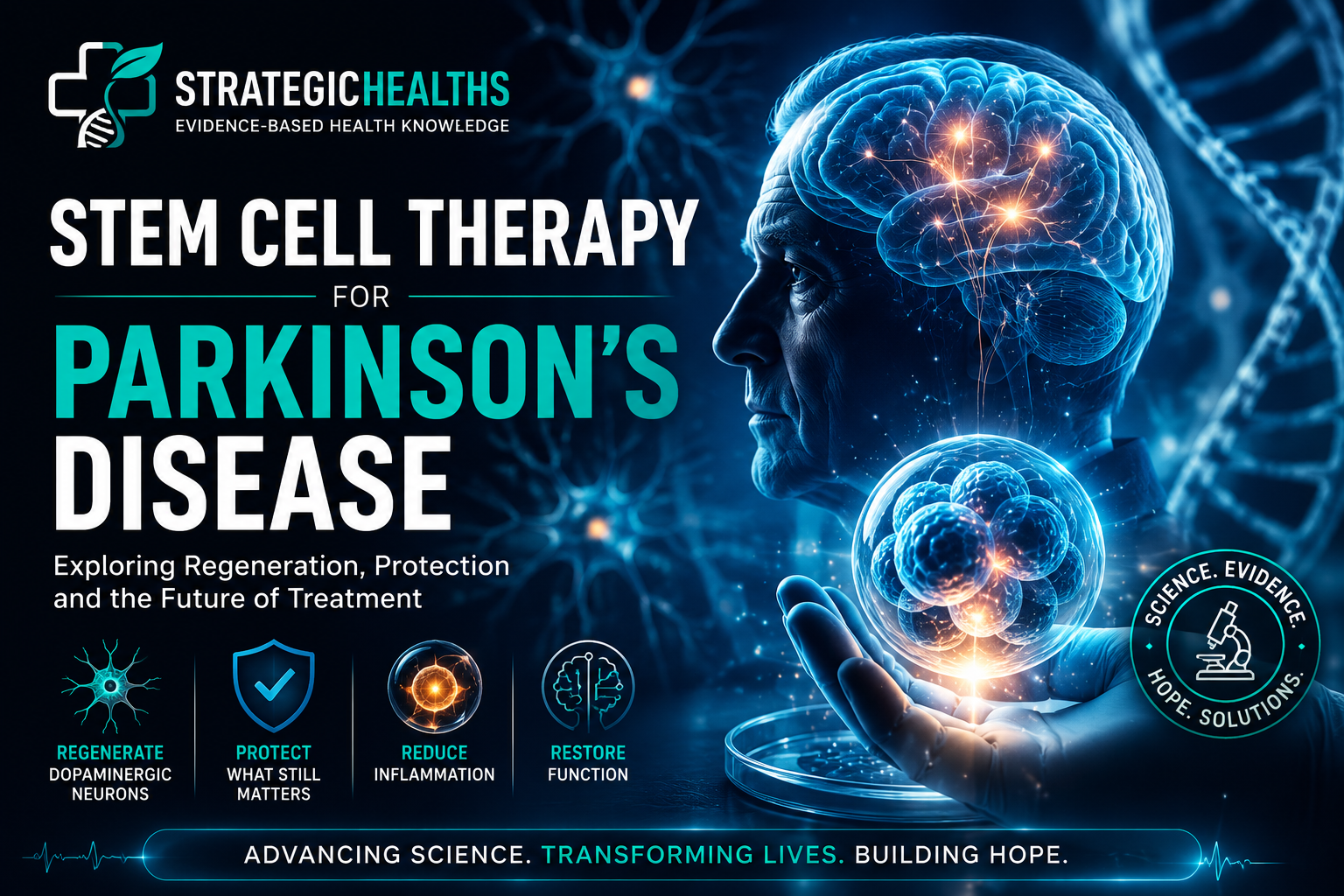
The Complete Evidence-Based Guide to Stem Cells, Dopaminergic Neuron Regeneration, Clinical Trials, Safety, Limitations and the Future of Parkinson’s Disease Treatment

Introduction
Parkinson’s disease is the second most common neurodegenerative disorder worldwide, affecting millions of people and representing a major challenge for patients, families and healthcare systems. The disease is characterized by the progressive loss of dopamine-producing neurons in a region of the brain called the substantia nigra, leading to movement difficulties such as tremor, rigidity and slowed movements, as well as a wide range of non-motor symptoms including sleep disturbances, depression, cognitive impairment and autonomic dysfunction.
Current treatments—including levodopa, dopamine agonists, monoamine oxidase-B inhibitors and deep brain stimulation—can significantly improve symptoms and quality of life. However, none of these therapies has been proven to stop or reverse the underlying neurodegenerative process. As a result, researchers continue to search for strategies capable of protecting existing neurons, restoring lost neural function and ultimately modifying the course of the disease.
Among the most promising areas of investigation is stem cell therapy. Over the past decade, advances in stem cell biology, regenerative medicine, gene editing and neuroscience have transformed what was once considered theoretical into an active field of clinical research. Scientists are exploring whether stem cells can replace damaged dopaminergic neurons, release neuroprotective molecules, reduce neuroinflammation and create a healthier environment for surviving brain cells.
Several early-phase clinical trials have reported encouraging safety data and preliminary signs of biological activity. At the same time, significant scientific challenges remain, including identifying the optimal cell source, improving long-term survival of transplanted cells, ensuring functional integration into existing brain circuits and minimizing potential risks such as immune rejection or abnormal cell growth. For these reasons, stem cell therapy for Parkinson’s disease is still considered investigational and is not part of routine clinical practice.
This comprehensive evidence-based guide reviews the current scientific understanding of stem cell therapy for Parkinson’s disease. It explains how Parkinson’s disease develops, examines the different types of stem cells under investigation, summarizes findings from preclinical and clinical studies, discusses safety, limitations and ethical considerations, and explores future directions including induced pluripotent stem cells (iPSCs), gene editing, artificial intelligence, biomarkers, exosome therapy and precision medicine.
Whether you are a patient, caregiver, healthcare professional or simply interested in the future of regenerative medicine, this article provides an objective, scientifically grounded overview of one of the most exciting areas of modern neuroscience while clearly distinguishing established medical knowledge from emerging experimental therapies.
📖 Part 1 — Understanding Parkinson’s Disease

🧠 What Is Parkinson’s Disease?
Parkinson’s disease (PD) is a chronic, progressive neurodegenerative disorder that primarily affects movement but also causes a wide range of cognitive, psychiatric, autonomic and sleep-related symptoms. It develops when specialized nerve cells (neurons) in the substantia nigra pars compacta, a region of the midbrain, gradually degenerate and die.
These neurons produce dopamine, a neurotransmitter essential for coordinating smooth, controlled and purposeful movements. As dopamine levels decline, communication within the basal ganglia becomes disrupted, leading to the characteristic motor symptoms of Parkinson’s disease.
In addition to dopamine loss, Parkinson’s disease is characterized by the accumulation of alpha-synuclein, a protein that misfolds and aggregates into intracellular inclusions known as Lewy bodies. These abnormal protein deposits are believed to contribute to neuronal dysfunction, inflammation and progressive neurodegeneration.
Parkinson’s disease affects millions of people worldwide and becomes increasingly common with advancing age. Although most cases are considered sporadic, genetic mutations and environmental exposures also contribute to disease susceptibility.
Importantly, Parkinson’s disease is much more than a movement disorder. Many patients develop non-motor symptoms years before the onset of tremor or rigidity, making early recognition increasingly important.
⚠️ Signs and Symptoms

The symptoms of Parkinson’s disease are generally classified into motor and non-motor manifestations.
Motor Symptoms
- Resting tremor
- Bradykinesia (slowness of movement)
- Muscular rigidity
- Postural instability
- Reduced facial expression (masked facies)
- Soft speech (hypophonia)
- Small handwriting (micrographia)
- Shuffling gait
- Freezing of gait
Non-Motor Symptoms
- Loss of smell (hyposmia)
- Constipation
- Sleep disorders
- REM sleep behavior disorder
- Depression
- Anxiety
- Fatigue
- Cognitive impairment
- Dementia (in advanced stages)
- Autonomic dysfunction
- Urinary symptoms
- Orthostatic hypotension
Many non-motor symptoms may appear years before the classic motor manifestations, representing an important opportunity for earlier diagnosis and intervention.
🔬 Why Dopamine Neurons Die
One of the central unanswered questions in neuroscience is why dopaminergic neurons progressively degenerate in Parkinson’s disease.
Current evidence suggests that no single mechanism explains neuronal death. Instead, multiple pathological processes interact over many years.
Major mechanisms include:
- Alpha-synuclein aggregation
- Mitochondrial dysfunction
- Oxidative stress
- Chronic neuroinflammation
- Impaired protein degradation
- Lysosomal dysfunction
- Excitotoxicity
- Calcium dysregulation
- Genetic susceptibility
- Environmental toxin exposure
These mechanisms reinforce one another, accelerating neuronal injury and disease progression.
🧬 Brain Mechanisms Behind Parkinson’s Disease
Several biological pathways contribute to disease progression.
Dopamine Depletion
Loss of dopaminergic neurons disrupts communication between the basal ganglia and motor cortex.
Alpha-Synuclein Aggregation
Misfolded alpha-synuclein accumulates inside neurons, forming Lewy bodies that interfere with normal cellular function.
Mitochondrial Dysfunction
Defective mitochondrial energy production increases oxidative damage and reduces neuronal survival.
Oxidative Stress
Reactive oxygen species damage proteins, DNA and cell membranes.
Neuroinflammation
Activated microglia release inflammatory mediators that may worsen neuronal injury.
Protein Clearance Failure
Defects in autophagy and lysosomal pathways reduce the brain’s ability to eliminate abnormal proteins.
🩺 Risk Factors
Although the exact cause remains unknown, several factors increase the likelihood of developing Parkinson’s disease.
👴 Aging
Age is the strongest known risk factor.
🧬 Genetics
Mutations in genes such as LRRK2, SNCA, PARK2 (Parkin), PINK1, DJ-1 and GBA have been associated with inherited forms or increased susceptibility.
☣️ Environmental Toxins
Long-term exposure to certain pesticides, herbicides and industrial chemicals has been associated with increased risk.
⚡ Oxidative Stress
Persistent oxidative damage contributes to neuronal degeneration.
🔥 Neuroinflammation
Chronic activation of the brain’s immune system appears to accelerate disease progression.
📊 Stages of Parkinson’s Disease
Disease progression varies among individuals but is commonly described using the Hoehn and Yahr staging system.

Disease progression is highly variable, and many patients maintain functional independence for years with appropriate treatment.
🧪 How Parkinson’s Disease Is Diagnosed
There is currently no single laboratory test that confirms Parkinson’s disease.
Diagnosis is based on:
- Detailed medical history
- Neurological examination
- Response to dopaminergic therapy
- Brain imaging when clinically indicated
- Exclusion of alternative diagnoses
Supportive investigations may include:
- Dopamine transporter (DaT) imaging
- Magnetic resonance imaging (MRI)
- PET imaging in selected research settings
- Emerging biomarker studies involving cerebrospinal fluid, blood and alpha-synuclein assays
Research is rapidly advancing toward earlier and more accurate biomarker-based diagnosis.
📊 Scientific Summary

💉 Part 2 — Stem Cell Therapy for Parkinson’s Disease

While current Parkinson’s disease treatments are highly effective at improving symptoms, they do not replace the dopaminergic neurons that have already been lost. This limitation has driven decades of research into regenerative medicine, particularly stem cell therapy. The ultimate goal is not only to improve symptoms but also to restore damaged neural circuits, protect surviving neurons and potentially slow disease progression.
It is important to emphasize that stem cell therapy for Parkinson’s disease remains investigational. Although early clinical trials have demonstrated encouraging safety profiles and preliminary biological benefits, these therapies are not currently considered standard treatment outside approved clinical research settings.
🧬 Why Stem Cells May Help
Stem cells possess unique biological properties that make them attractive candidates for regenerative therapies.
Unlike mature cells, stem cells can self-renew, differentiate into specialized cell types and secrete numerous molecules that support tissue repair.
Researchers hope stem cell therapy may contribute to Parkinson’s disease by:
- Replacing lost dopaminergic neurons.
- Protecting surviving neurons from ongoing degeneration.
- Reducing chronic neuroinflammation.
- Releasing neurotrophic growth factors.
- Promoting synaptic remodeling.
- Improving communication within damaged neural networks.
- Supporting long-term functional recovery.
Rather than acting through a single mechanism, stem cells appear to exert multiple complementary biological effects simultaneously.
🧬 Types of Stem Cells
Several stem cell sources are currently being investigated.
🌱 Embryonic Stem Cells (ESCs)
Embryonic stem cells are pluripotent cells capable of differentiating into virtually any cell type, including dopaminergic neurons.
Advantages
- Excellent differentiation potential.
- Large-scale laboratory expansion.
- High capacity for neuronal replacement.
Challenges
- Ethical considerations.
- Risk of uncontrolled cell growth if differentiation is incomplete.
- Requirement for immunosuppression after transplantation.
🧬 Induced Pluripotent Stem Cells (iPSCs)
Induced pluripotent stem cells are generated by reprogramming adult cells, such as skin fibroblasts, back into a pluripotent state.
These cells can then be differentiated into dopaminergic neurons.
Advantages
- Reduced ethical concerns.
- Potential for patient-specific therapies.
- Lower theoretical risk of immune rejection.
Current Challenges
- Manufacturing complexity.
- Cost.
- Quality control.
- Long-term safety evaluation.
Many experts consider iPSC technology one of the most promising directions for future Parkinson’s disease treatment.
🩸 Mesenchymal Stem Cells (MSCs)
Mesenchymal stem cells are typically isolated from:
- Bone marrow
- Adipose tissue
- Umbilical cord tissue
Unlike pluripotent stem cells, MSCs rarely become functional dopaminergic neurons after transplantation.
Instead, their benefits appear to result mainly from:
- Immunomodulation.
- Anti-inflammatory activity.
- Neuroprotection.
- Secretion of growth factors.
- Support of tissue repair.
Because of their favorable safety profile, MSCs remain among the most widely studied cell types in clinical trials.
🧠 Neural Stem Cells (NSCs)
Neural stem cells naturally generate neurons and glial cells within the nervous system.
Potential advantages include:
- Greater neural specificity.
- Better integration into brain tissue.
- Reduced risk of inappropriate differentiation.
However, obtaining sufficient numbers of high-quality neural stem cells remains technically challenging.
🧠 How Stem Cells Work
Current evidence suggests that stem cells influence Parkinson’s disease through several complementary mechanisms.
🧠 Dopaminergic Neuron Replacement
One major objective is replacing neurons destroyed during disease progression.
Successfully integrated transplanted neurons may restore dopamine production within affected basal ganglia circuits.
🛡️ Neuroprotection
Stem cells release molecules that may protect remaining neurons against ongoing degeneration.
Examples include:
- Brain-derived neurotrophic factor (BDNF)
- Glial cell-derived neurotrophic factor (GDNF)
- Nerve growth factor (NGF)
These proteins promote neuronal survival and function.
🔥 Anti-Inflammatory Effects
Chronic activation of microglia contributes to neuronal injury.
Mesenchymal stem cells can modulate immune responses and reduce production of inflammatory cytokines.
🌱 Neurotrophic Factor Secretion
Stem cells produce numerous signaling molecules that:
- Support neuronal metabolism.
- Enhance synaptic plasticity.
- Improve axonal growth.
- Stimulate endogenous repair mechanisms.
🔗 Synaptic Repair
Functional recovery requires more than neuronal survival.
New neurons must establish appropriate synaptic connections with existing neural circuits.
Researchers are investigating methods to improve this integration using biomaterials, electrical stimulation and tissue engineering.
📊 Current Clinical Trials
Clinical research has accelerated substantially over the past decade.
Most ongoing studies are Phase I or Phase II trials primarily evaluating safety and feasibility.
Preliminary findings have reported:
- Acceptable short-term safety.
- Survival of transplanted cells in selected patients.
- Early signs of improved motor function in some participants.
- Increased dopamine production demonstrated by imaging in certain studies.
However, important limitations remain.
Most trials include relatively few participants, use different cell sources and transplantation methods, and have limited long-term follow-up. Larger randomized clinical trials are still required before stem cell therapy can be recommended as routine treatment.
🧪 Safety
Current evidence suggests that carefully manufactured stem cell products administered within regulated clinical trials are generally well tolerated.
Reported safety observations include:
- Low incidence of serious procedure-related complications.
- Good short-term tolerability in most participants.
- No consistent evidence of widespread tumor formation in regulated trials.
Nevertheless, long-term monitoring remains essential because transplanted cells may persist for many years.
⚠️ Risks

Potential risks include:
- Tumor formation if undifferentiated pluripotent cells remain.
- Immune rejection.
- Surgical complications.
- Infection.
- Bleeding.
- Inappropriate neuronal integration.
- Unpredictable long-term outcomes.
- False expectations generated by unregulated commercial clinics.
Patients should be cautious of clinics advertising “stem cell cures” without robust clinical evidence or regulatory oversight.
🚫 Current Limitations
Several scientific challenges must still be overcome before stem cell therapy becomes routine.
These include:
- Identifying the optimal cell source.
- Standardizing manufacturing methods.
- Improving long-term graft survival.
- Achieving precise neuronal integration.
- Reducing treatment costs.
- Demonstrating durable clinical benefit in large randomized trials.
- Establishing long-term safety over many years.
These questions remain active areas of international research.
📊 Scientific Evidence Summary

🚀 Part 3 — Future Perspectives, Gene Therapy and Personalized Medicine

The future of Parkinson’s disease treatment is rapidly evolving. While current therapies primarily focus on symptom management and stem cell therapy aims to regenerate damaged neural tissue, researchers increasingly believe that the greatest advances will come from combination therapies integrating regenerative medicine, gene editing, artificial intelligence, biomarkers and personalized medicine.
Rather than relying on a single treatment, the next generation of therapies may combine multiple technologies to slow disease progression, restore neural function and improve long-term quality of life.
🧬 Gene Editing (CRISPR)
Gene editing has emerged as one of the most transformative technologies in modern medicine.
The CRISPR-Cas system allows scientists to precisely modify DNA, opening new possibilities for correcting genetic mutations associated with Parkinson’s disease.
Potential future applications include:
- Correcting disease-causing genetic mutations (e.g., LRRK2, SNCA, GBA, PINK1, PRKN).
- Enhancing survival of transplanted stem cells.
- Reducing alpha-synuclein accumulation.
- Improving dopamine neuron function.
- Increasing resistance to oxidative stress.
Although promising, CRISPR-based therapies remain experimental and require extensive safety evaluation before routine clinical use.
🧫 Brain Organoids
Brain organoids are miniature three-dimensional brain-like structures grown from pluripotent stem cells.
These laboratory models are transforming neuroscience by allowing researchers to study Parkinson’s disease in ways that were previously impossible.
Current applications include:
- Understanding disease mechanisms.
- Studying alpha-synuclein aggregation.
- Testing new drugs.
- Evaluating stem cell behavior.
- Developing personalized therapies.
Organoids are research models rather than transplantable organs, but they have become invaluable tools for accelerating discoveries.
🤖 Artificial Intelligence
Artificial intelligence (AI) is rapidly becoming an essential component of neurological research.
AI systems can analyze enormous datasets far more efficiently than traditional methods.
Potential applications include:
- Early diagnosis.
- Medical image interpretation.
- Prediction of disease progression.
- Identification of new drug targets.
- Optimization of clinical trial design.
- Selection of patients most likely to benefit from regenerative therapies.
Machine learning may significantly shorten the time required to develop future treatments.
🧪 Biomarkers
One of the greatest challenges in Parkinson’s disease is detecting the disease before significant neuronal loss occurs.
Researchers are developing biomarkers capable of identifying Parkinson’s disease at much earlier stages.
Promising biomarkers include:
- Alpha-synuclein assays.
- Neurofilament light chain (NfL).
- Cerebrospinal fluid biomarkers.
- Blood-based biomarkers.
- PET imaging.
- Advanced MRI techniques.
- Digital biomarkers from wearable devices.
Reliable biomarkers may also help monitor treatment response and improve clinical trial accuracy.
🧬 Precision Medicine
Parkinson’s disease is increasingly recognized as a heterogeneous disorder rather than a single disease.
Precision medicine aims to tailor treatment according to each patient’s:
- Genetics.
- Biomarker profile.
- Clinical symptoms.
- Disease stage.
- Lifestyle.
- Environmental exposures.
Future stem cell therapies may therefore become individualized rather than standardized.
🔬 Exosomes
Exosomes are microscopic extracellular vesicles naturally released by cells, including stem cells.
Many scientists believe that a significant portion of the beneficial effects of mesenchymal stem cells may result from the molecules contained within these vesicles.
Potential advantages include:
- Reduced neuroinflammation.
- Neuroprotection.
- Delivery of therapeutic RNA and proteins.
- Lower theoretical risk than live-cell transplantation.
- Easier manufacturing and storage.
Exosome therapy is considered one of the most promising emerging areas of regenerative medicine.
🧠 Brain–Computer Interfaces
Brain–computer interfaces (BCIs) enable direct communication between neural activity and external devices.
Future applications may include:
- Improved control of movement.
- Adaptive deep brain stimulation.
- Real-time symptom monitoring.
- Integration with wearable technologies.
- Personalized neurorehabilitation.
Although still developing, BCIs may complement regenerative therapies in selected patients.
🌍 Future Clinical Trials
The next generation of clinical trials is expected to investigate:
- Gene-edited stem cells.
- Patient-specific iPSC-derived neurons.
- Combination therapies with stem cells and gene therapy.
- Biomaterial-assisted transplantation.
- Exosome-based therapies.
- AI-assisted patient selection.
- Long-term safety and efficacy.
Large randomized controlled trials will be essential to determine whether these innovative approaches translate into meaningful clinical benefits.
💡 Frequently Asked Questions (FAQ)
Can stem cells cure Parkinson’s disease?
No. Current scientific evidence does not support the conclusion that stem cell therapy cures Parkinson’s disease. Research remains ongoing.
Are stem cell therapies available?
Some regulated clinical trials are actively recruiting participants, but routine clinical use has not been established in most countries.
Which stem cells appear most promising?
Induced pluripotent stem cells (iPSCs) are currently among the most promising because they can generate dopaminergic neurons while reducing certain ethical concerns associated with embryonic stem cells.
Are commercial stem cell clinics reliable?
Patients should exercise caution. Treatments offered outside regulated clinical trials may not be supported by robust scientific evidence or appropriate regulatory oversight.
What is the biggest challenge?
Long-term survival and functional integration of transplanted neurons while demonstrating durable clinical benefit and safety.
📊 Scientific Summary

🏁 Conclusion
Parkinson’s disease remains one of the most challenging neurodegenerative disorders worldwide, but advances in regenerative medicine have fundamentally changed the outlook for future treatment. Stem cell therapy has demonstrated encouraging safety and biological potential in early clinical studies, offering hope for replacing damaged dopaminergic neurons, reducing neuroinflammation and supporting neural repair.
Nevertheless, important scientific challenges remain. Long-term efficacy, optimal cell selection, functional integration, manufacturing standardization and sustained safety must all be confirmed before stem cell therapy can become part of routine clinical practice.
The future is likely to be driven by multidisciplinary approaches that integrate stem cells, CRISPR gene editing, brain organoids, exosome therapy, artificial intelligence, biomarkers and precision medicine. Together, these technologies have the potential to transform Parkinson’s disease care from symptom management toward truly disease-modifying interventions.
While no regenerative therapy can currently cure Parkinson’s disease, the pace of scientific progress continues to accelerate. Ongoing clinical trials and international collaboration provide reason for cautious optimism that safer, more effective and more personalized treatments will become available in the years ahead.
🔗 Related Evidence-Based Articles
🧬 Stem Cell Therapy for Amyotrophic Lateral Sclerosis (ALS): Current Scientific Evidence, Clinical Trials and Future Perspectives (2026)
Why read this?
Explore how stem cell therapy is being investigated for ALS, including neuroprotection, clinical trials, current limitations and future regenerative strategies.
🧬 The Future of Regenerative Medicine: Gene Editing, Tissue Engineering and Beyond (2026)
Why read this?
Learn how stem cells, CRISPR gene editing, biomaterials, tissue engineering and personalized medicine are transforming the future of healthcare.
🧠 ADHD (Attention-Deficit/Hyperactivity Disorder): The Complete Evidence-Based Guide (2026)
Why read this?
Discover the latest evidence on brain function, neurotransmitters, executive function, treatment options and long-term management.
🧠 ADHD and Exercise Performance: Can Strength Training Improve Focus, Memory, Executive Function and Brain Health?
Why read this?
Understand how resistance training influences neuroplasticity, dopamine signaling, cognition and overall brain health.
☀️ Vitamin D Deficiency: Symptoms, Causes, Treatment and Prevention (2026)
Why read this?
Vitamin D plays an important role in immune regulation, muscle function and neurological health. Learn how deficiency affects the body and brain.
🏋️ Creatine: Benefits, Safety, Dosage and Scientific Evidence (2026)
Why read this?
Explore the evidence supporting creatine not only for muscle performance but also for brain energy metabolism and potential neuroprotective effects.
🔥 Chronic Inflammation Explained: Causes, Health Risks and Evidence-Based Treatments (2026)
Why read this?
Understand how chronic inflammation contributes to neurodegeneration and how nutrition, exercise and lifestyle may help reduce inflammatory burden.
🧬 Oxidative Stress Explained: Causes, Health Effects and Evidence-Based Strategies (2026)
Why read this?
Learn why oxidative stress is a major contributor to Parkinson’s disease and other neurodegenerative disorders, and discover evidence-based approaches to minimize cellular damage.
💊 Coenzyme Q10: Benefits, Safety and Scientific Evidence (2026)
Why read this?
Review the current evidence on CoQ10, mitochondrial function, antioxidant defense and its investigated role in neurological diseases.
🌿 Magnesium: Health Benefits, Deficiency and Evidence-Based Supplementation (2026)
Why read this?
Discover magnesium’s role in nerve signaling, muscle function, sleep quality and overall neurological health.
📚 Continue Exploring Evidence-Based Health Topics
Interested in learning more about neuroscience, regenerative medicine and healthy aging? Visit the StrategicHealths library for additional evidence-based articles covering neurological diseases, metabolism, nutrition, exercise, longevity and the latest advances in modern medicine.
📚 References
- Armstrong MJ, Okun MS. Diagnosis and Treatment of Parkinson Disease: A Review. JAMA. 2020;323(6):548–560.
- Bloem BR, Okun MS, Klein C. Parkinson’s disease. The Lancet. 2021;397(10291):2284–2303.
- Kalia LV, Lang AE. Parkinson’s disease. The Lancet. 2015;386(9996):896–912.
- Poewe W, Seppi K, Tanner CM, et al. Parkinson disease. Nature Reviews Disease Primers. 2017;3:17013.
- Barker RA, Drouin-Ouellet J, Parmar M. Cell-based therapies for Parkinson disease—past insights and future potential. Nature Reviews Neurology. 2025.
- Parmar M, Grealish S, Henchcliffe C. The future of stem cell therapies for Parkinson disease. Nature Reviews Neuroscience. 2020;21:103–115.
- Schweitzer JS, Song B, Herrington TM, et al. Personalized iPSC-derived dopamine progenitor cells for Parkinson’s disease. New England Journal of Medicine. 2020;382:1926–1932.
- Takahashi J. iPSC-based therapy for Parkinson’s disease: current status and future perspectives. Nature Reviews Neurology. 2024.
- International Parkinson and Movement Disorder Society. Evidence-Based Review of Treatments for Parkinson’s Disease. Updated clinical recommendations.
- National Institute of Neurological Disorders and Stroke (NINDS). Parkinson’s Disease Information Page.
- Parkinson’s Foundation. Stem Cell Research for Parkinson’s Disease. Updated 2025.
- U.S. Food and Drug Administration (FDA). Important Patient Information About Regenerative Medicine Therapies. Updated 2025.
- International Society for Stem Cell Research (ISSCR). Guidelines for Stem Cell Research and Clinical Translation. 2021.
- European Medicines Agency (EMA). Advanced Therapy Medicinal Products (ATMPs): Regulatory Framework and Guidance.
- Nature Reviews Neurology. Advances in Parkinson’s disease research and regenerative medicine. 2024–2026.
- Nature Reviews Neuroscience. Stem cell-derived dopaminergic neuron transplantation for Parkinson’s disease. 2023–2025.
- Cell Stem Cell. Clinical translation of pluripotent stem cell therapies for neurodegenerative diseases. 2023–2025.
- Stem Cell Reports. Mesenchymal stem cells and neurodegenerative disorders: mechanisms and clinical evidence. 2024.
- The Lancet Neurology. Emerging disease-modifying therapies for Parkinson’s disease. 2024–2025.
- Movement Disorders. Current clinical trials in stem cell therapy for Parkinson’s disease. 2024–2026.
- Nature Medicine. Advances in precision medicine for Parkinson’s disease. 2024–2025.
- Brain. Biomarkers and early diagnosis of Parkinson’s disease: Current evidence and future directions. 2024.
- JAMA Neurology. Artificial intelligence and digital biomarkers in Parkinson’s disease. 2024.
- Cell. CRISPR gene editing and regenerative medicine for neurological disorders. 2023–2025.
- Neuron. Brain organoids, stem cells and the future of neuroregeneration. 2024–2025.
Leave a Reply