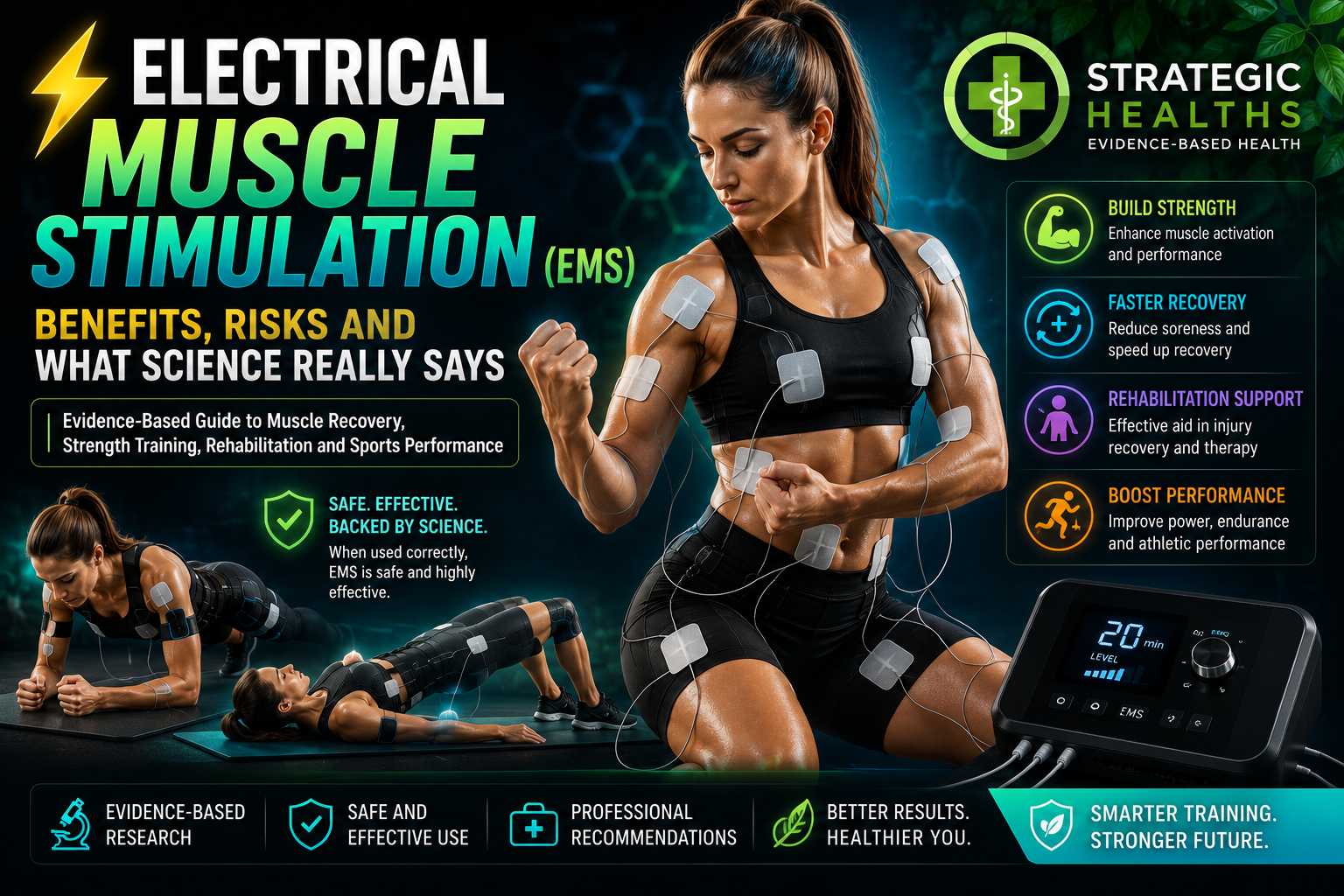

Evidence-Based Guide to Muscle Recovery, Strength Training, Rehabilitation and Sports Performance
🧠 Part 1 — What Is Electrical Muscle Stimulation (EMS)?
Understanding How Electrical Muscle Stimulation Works and What Science Really Says
Electrical Muscle Stimulation (EMS), also known as Neuromuscular Electrical Stimulation (NMES) in rehabilitation settings, is a technology that uses carefully controlled electrical impulses to stimulate peripheral nerves, producing involuntary muscle contractions.
Although EMS has become popular in gyms, fitness studios and home devices, it was originally developed for medical rehabilitation, where it continues to play an important role in helping patients recover muscle strength after injury, surgery or prolonged immobilization.
Today, EMS is used in several fields including sports medicine, physical therapy, rehabilitation, pain management and athletic performance. However, its real benefits—and its limitations—are often misunderstood.
📖 A Brief History of EMS
The relationship between electricity and muscles has fascinated scientists for centuries.
Some important milestones include:
- ⚡ 1791 – Luigi Galvani demonstrated that electricity could cause muscle contractions in frogs, laying the foundation of electrophysiology.
- 🩺 1960s–1970s – Researchers began applying electrical stimulation in rehabilitation to prevent muscle atrophy.
- 🏋️ 1970s–1980s – Eastern European sports programs investigated EMS as an adjunct to athletic training.
- 🏥 1990s onward – EMS became widely incorporated into orthopedic rehabilitation, neurological recovery and sports medicine.
- 📱 Today – Portable wireless EMS devices are available for clinical and consumer use worldwide.
Modern EMS equipment delivers precise electrical parameters designed to maximize therapeutic benefits while maintaining safety.
⚡ How Does Electrical Muscle Stimulation Work?

Normally, muscles contract because the brain sends electrical signals through the nervous system.
The sequence is simple:
Brain → Spinal Cord → Peripheral Nerve → Muscle Fiber → Muscle Contraction
EMS temporarily bypasses the brain by applying electrical impulses through electrodes placed on the skin.
These impulses activate motor nerves, which then trigger muscle contraction.
The process looks like this:
EMS Device → Electrodes → Electrical Pulse → Motor Nerve → Muscle Fibers → Muscle Contraction
The contraction produced is real—the muscle generates force just as it does during voluntary exercise.
However, the recruitment pattern of muscle fibers differs from natural movement, which helps explain both the advantages and limitations of EMS.
⚙️ What Happens During an EMS Session?
When the device is activated:
- Adhesive electrodes are positioned over specific muscles.
- Controlled electrical pulses pass through the skin.
- Motor nerves are stimulated.
- Muscle fibers contract.
- The stimulation alternates between contraction and relaxation cycles.
Depending on the selected settings, contractions may range from gentle muscle activation to strong, visible contractions similar to those experienced during resistance exercise.
Common adjustable parameters include:
- ⚡ Frequency (Hz)
- ⏱ Pulse duration
- 🔋 Current intensity
- ⏸ Work-to-rest ratio
- ⏲ Total treatment time
Each parameter influences comfort, fatigue and therapeutic outcomes.
🧬 How Electrical Current Produces Muscle Contraction

Skeletal muscles naturally respond to electrical signals.
EMS generates an external electrical field that depolarizes motor nerves.
Once the electrical stimulus exceeds the activation threshold:
- Sodium channels open.
- An action potential is generated.
- The signal travels along the motor nerve.
- Calcium is released inside muscle fibers.
- Actin and myosin interact.
- Muscle contraction occurs.
This physiological mechanism is essentially the same as during voluntary movement.
The difference lies in how the nerve is activated.
🏋️ Voluntary Contraction vs EMS-Induced Contraction

For this reason, EMS should generally be viewed as a complement—not a replacement—for conventional exercise.
📱 Types of Electrical Muscle Stimulation Devices
Several categories of devices are available.
🏥 Clinical EMS Systems
Used by physical therapists and rehabilitation professionals.
Typical applications include:
- Postoperative recovery
- Muscle strengthening
- Prevention of muscle atrophy
- Neurological rehabilitation
🏋️ Sports Performance EMS
Designed for athletes and physically active individuals.
Often used alongside exercise programs to support:
- Muscle activation
- Recovery
- Training volume
- Performance optimization
🏠 Home EMS Devices
Portable consumer devices intended for:
- General muscle stimulation
- Recovery sessions
- Light strengthening programs
Their effectiveness depends greatly on correct use and realistic expectations.
⚠️ Cosmetic EMS Devices
Frequently marketed for:
- “Abdominal toning”
- “Six-pack development”
- “Fat burning”
- “Body sculpting”
Current scientific evidence suggests these devices cannot replace exercise or produce significant fat loss on their own.
🔬 What Does Current Scientific Evidence Say?
High-quality research indicates that EMS can provide meaningful benefits in specific situations, particularly:
- Rehabilitation after orthopedic surgery
- Prevention of muscle loss during immobilization
- Improving muscle activation when voluntary contraction is impaired
- Complementing resistance training in selected populations
- Supporting recovery in some athletic contexts
However, evidence also shows that EMS cannot substitute regular resistance training, physical activity or healthy nutrition for improving overall fitness and body composition.
Like any therapeutic intervention, results depend on appropriate device settings, training protocols, individual characteristics and professional supervision when indicated.
📌 Key Takeaways
✔ EMS uses electrical impulses to activate motor nerves and produce genuine muscle contractions.
✔ The technology originated in medical rehabilitation and is now used in sports medicine, physical therapy and fitness.
✔ EMS is most effective when integrated into a broader rehabilitation or exercise program—not used as a standalone solution.
✔ Scientific evidence supports its use in selected clinical and athletic situations, while many marketing claims remain exaggerated.
⚡ Part 2 — EMS Benefits: Muscle Strength, Hypertrophy, Recovery, Rehabilitation and Weight Loss

What Electrical Muscle Stimulation Can—and Cannot—Realistically Do
Electrical Muscle Stimulation can produce genuine muscle contractions, but that does not mean every device or protocol will deliver the same results.
The effectiveness of EMS depends on several factors:
- The intensity of the electrical current
- The muscle group being stimulated
- Electrode positioning
- Pulse frequency and duration
- Session frequency
- Training experience
- Medical condition
- Whether EMS is combined with voluntary exercise
Scientific research suggests that EMS can improve muscle strength, preserve muscle tissue and support rehabilitation in selected situations. However, claims involving effortless fat loss, instant muscle definition or complete replacement of traditional exercise are not supported by strong evidence.
💪 Can EMS Increase Muscle Strength?
Muscle strength is one of the most consistently supported applications of Neuromuscular Electrical Stimulation.
When the electrical current is sufficiently intense, EMS produces contractions that impose mechanical tension on muscle fibers. Over time, repeated exposure may generate muscular and neural adaptations.
A systematic review comparing NMES with voluntary resistance training found that electrical stimulation could produce strength gains similar to conventional training when training volume and contraction intensity were appropriately matched. (PubMed)
Potential adaptations include:
- Increased activation of motor units
- Improved neural drive to the stimulated muscle
- Greater force-producing capacity
- Reduced muscle inhibition after injury or surgery
- Preservation of strength during periods of reduced mobility
However, results are strongly influenced by stimulation intensity. Very mild currents that produce only tingling or small muscle twitches are unlikely to generate substantial strength gains.
📌 Evidence-Based Conclusion
EMS can improve muscle strength, especially in weakened, immobilized or rehabilitating muscles. In healthy individuals, it may also provide benefits, but conventional resistance training remains more practical and functionally complete.
🧬 Can EMS Promote Muscle Hypertrophy?
Muscle hypertrophy refers to an increase in muscle-fiber size and overall muscle mass.
Because EMS produces involuntary contractions and mechanical tension, it can activate some of the physiological pathways involved in muscle growth.
Research examining NMES and Functional Electrical Stimulation indicates that these interventions can support increases in lean mass and muscle size, particularly when training volume is sufficient. (PubMed)
Potential hypertrophy mechanisms include:
- Mechanical tension
- Motor-unit recruitment
- Metabolic stress
- Increased protein-synthesis signaling
- Reduced muscle breakdown during inactivity
- Repeated activation of fast-twitch muscle fibers
EMS may be particularly valuable when a person cannot perform adequate voluntary resistance exercise because of:
- Surgery
- Joint pain
- Neurological impairment
- Severe weakness
- Hospitalization
- Prolonged bed rest
- Limb immobilization
Studies in hospitalized adults suggest that NMES may improve muscle strength, muscle size, walking capacity and physical function, although stimulation protocols vary considerably between studies. (PMC)
🏋️ EMS vs Traditional Resistance Training for Muscle Growth
EMS may stimulate muscle tissue, but it does not reproduce every component of resistance exercise.
Training Effect
Traditional Resistance Training
EMS

Traditional strength training develops not only muscle tissue but also coordination, balance, movement skills, tendon capacity and bone strength.
EMS mainly targets neuromuscular activation.
✅ Best Practical Strategy
For most healthy individuals, the most effective approach is:
Resistance training as the foundation + EMS as an optional complementary stimulus.
A recent systematic review found that adding NMES during resistance training may produce greater improvements in strength and muscle mass than resistance training alone. However, the authors also emphasized the need for further research to determine the best protocols and long-term benefits. (PubMed)
🧠 Why EMS Is Valuable During Rehabilitation
After injury or surgery, the nervous system may temporarily reduce its ability to fully activate a muscle.
This is frequently observed in the quadriceps after knee surgery and is sometimes described as arthrogenic muscle inhibition.
Pain, swelling, joint inflammation and reduced movement can interfere with normal muscle activation.
This creates a cycle:
Injury or Surgery → Reduced Neural Activation → Muscle Weakness → Reduced Movement → Further Muscle Loss
EMS may help interrupt this cycle by directly activating the motor nerves.
🦵 EMS After Knee Surgery
One of the most extensively researched applications of NMES is quadriceps rehabilitation following knee surgery.
After anterior cruciate ligament reconstruction, for example, quadriceps weakness may persist because the patient cannot voluntarily produce a strong contraction.
A 2025 systematic review found that NMES can support quadriceps-strength recovery and knee rehabilitation following ACL surgery. (PubMed)
Earlier systematic reviews also found that adding NMES to standard physical therapy may improve quadriceps strength and physical function during the early postoperative period. (PubMed)
Research involving total knee replacement suggests that postoperative NMES may improve quadriceps strength, pain and function, although not every measured improvement reaches a clinically meaningful threshold. (PubMed)
Potential Applications
- ACL reconstruction
- Total knee replacement
- Meniscus surgery
- Patellofemoral pain rehabilitation
- Quadriceps inhibition
- Recovery after prolonged immobilization
EMS should normally be integrated with:
- Therapeutic exercise
- Progressive strengthening
- Mobility training
- Balance exercises
- Gait rehabilitation
- Professional physiotherapy
🏥 Preventing Muscle Loss During Hospitalization
Hospitalized and critically ill patients may experience rapid muscle loss because of:
- Bed rest
- Inflammation
- Reduced food intake
- Mechanical ventilation
- Severe illness
- Reduced voluntary movement
In these situations, conventional exercise may initially be impossible.
NMES can stimulate the muscles without requiring the patient to perform complex movements.
Research suggests potential improvements in:
- Muscle strength
- Muscle thickness or mass
- Walking capacity
- Sit-to-stand performance
- Functional independence
- Recovery from intensive-care-related weakness
Evidence in critically ill patients is promising, although the quality and consistency of available protocols remain variable. (PubMed)
NMES may therefore be especially useful as an early rehabilitation tool—not as a substitute for later active exercise.
🧠 EMS in Neurological Rehabilitation

Neurological conditions may impair the communication between the brain, nerves and muscles.
Electrical stimulation may help activate weakened muscles, facilitate movement and reinforce repeated motor patterns.
Potential clinical applications include:
- Stroke rehabilitation
- Spinal cord injury
- Multiple sclerosis
- Foot drop
- Partial paralysis
- Neuromuscular weakness
- Impaired gait
A meta-analysis involving people recovering from stroke found that NMES may improve activities of daily living, particularly when applied during the subacute phase and in people with more severe weakness. Improvements in broader functional motor ability were less consistent. (PubMed)
In neurological rehabilitation, electrical stimulation may sometimes be synchronized with a functional task. This approach is commonly known as Functional Electrical Stimulation — FES.
For example:
Electrical stimulation activates the muscles responsible for lifting the foot while the patient practices walking.
This makes the stimulation more closely connected to meaningful movement.
🏃 Can EMS Improve Athletic Performance?
EMS has been studied as an additional training method for athletes.
Potential applications include:
- Increasing maximal strength
- Improving explosive force
- Enhancing muscle activation
- Supplementing sports training
- Increasing training stimulus without heavy external loads
Some research suggests that EMS may improve selected performance measures after several weeks of structured use. However, responses vary according to sport, muscle group, device settings and whether stimulation is combined with voluntary contractions.
Evidence reviews have reported improvements in muscular strength and some performance measures, but EMS should still be combined with sport-specific training. (PubMed)
Why Sport-Specific Training Remains Essential
Athletic performance depends on more than muscle contraction.
It also requires:
- Coordination
- Balance
- Reaction time
- Technical skill
- Joint stability
- Movement efficiency
- Cardiovascular conditioning
- Sport-specific decision-making
EMS cannot adequately reproduce these complex adaptations.
A sprinter cannot develop optimal sprint technique while lying down with electrodes attached to the quadriceps.
A football player cannot replace agility drills with isolated electrical contractions.
A weightlifter cannot develop barbell technique through EMS alone.
📌 Evidence-Based Conclusion
EMS may enhance certain muscular qualities, but improvements must be transferred into actual movement through conventional and sport-specific training.
🔋 Can EMS Improve Muscle Activation?

Some people have difficulty activating a specific muscle even when they attempt to contract it voluntarily.
This may occur because of:
- Postoperative inhibition
- Pain
- Joint swelling
- Neurological injury
- Prolonged inactivity
- Poor neuromuscular control
EMS may provide an external stimulus that helps the patient feel and recognize the contraction.
When combined with a voluntary contraction, it may reinforce the connection between the nervous system and the muscle.
This approach can be represented as:
Voluntary Effort + Electrical Stimulation → Stronger Contraction → Improved Muscle Activation
The combination of EMS with voluntary exercise appears more useful than passive stimulation alone in many rehabilitation and strength-training situations. (PubMed)
🔄 Does EMS Improve Exercise Recovery?
Recovery devices are frequently marketed to athletes with claims that electrical stimulation can:
- Remove lactic acid
- Reduce muscle soreness
- Improve blood circulation
- Accelerate tissue recovery
- Restore performance more quickly
Low-intensity stimulation may produce repeated muscle contractions that act like a muscular pump, potentially increasing local blood flow.
However, improvements in circulation do not automatically translate into faster recovery or better athletic performance.
Systematic reviews have generally found inconsistent or insufficient evidence that NMES meaningfully reduces delayed-onset muscle soreness or improves post-exercise recovery. (PubMed)
A 2025 meta-analysis also found that post-exercise NMES did not significantly reduce muscle soreness compared with control interventions. (PubMed)
Some individual studies have reported benefits in specific athletic settings, but the overall evidence remains mixed. (PubMed)
What EMS May Realistically Provide
- Temporary relaxation
- Gentle muscular pumping
- A subjective feeling of recovery
- Reduced sensation of stiffness in some individuals
- An active-recovery option when movement is limited
What Is Not Clearly Proven
- Significant acceleration of muscle repair
- Reliable prevention of muscle soreness
- Rapid removal of exercise-related metabolites
- Consistent restoration of athletic performance
🔥 Does EMS Burn Fat?
EMS devices are commonly marketed with images of highly defined abdominal muscles and claims such as:
- “Burn belly fat without exercise”
- “Get six-pack abs while sitting”
- “Lose weight with electrical stimulation”
- “Sculpt your body effortlessly”
These claims require careful interpretation.
Muscle contraction does require energy. Therefore, EMS can increase energy expenditure slightly during a session.
However, localized muscle contractions do not selectively remove fat from the area under the electrodes.
🚫 EMS Cannot Selectively Burn Abdominal Fat
Fat loss occurs when the body consistently uses more energy than it consumes.
The body determines where stored fat is mobilized according to factors such as:
- Genetics
- Hormones
- Sex
- Age
- Total energy balance
- Individual fat-distribution patterns
Stimulating the abdominal muscles does not force the body to burn the fat located directly above them.
This is why:
Abdominal EMS may activate abdominal muscles, but it cannot selectively eliminate belly fat.
⚖️ What Does Research Say About EMS and Body Composition?
Research involving whole-body EMS suggests that structured programs may improve:
- Muscle mass
- Strength
- Physical function
- Body-fat percentage in some populations
Meta-analyses have reported favorable changes in muscle mass, strength and fat mass, particularly in non-athletic or older populations. (PubMed)
However, several important limitations must be considered.
Many whole-body EMS studies include:
- Active exercises performed during stimulation
- Supervised sessions
- Nutritional guidance
- Participants with low initial activity levels
- Programs lasting several weeks or months
Therefore, the results cannot be attributed solely to the electrical current.
A 2025 study examining visceral fat concluded that low-volume whole-body EMS was not an ideal standalone strategy for reducing visceral adipose tissue in women with overweight or obesity. (PMC)
📌 Evidence-Based Conclusion
EMS may complement a weight-management program, but meaningful fat loss still depends primarily on nutrition, regular physical activity, resistance training, sleep and long-term energy balance.
🧍 Can EMS Tone the Body?
The term “muscle toning” is often used in marketing but is not a precise physiological concept.
The visual appearance commonly described as toned generally results from two factors:
- Sufficient muscle development
- A low enough level of body fat for the muscle to become visible
EMS may contribute modestly to muscle activation and development.
But if body fat remains elevated, visible muscle definition may not occur.
Therefore:
EMS may stimulate the muscle beneath the fat, but it does not independently reveal that muscle.
🩸 Does EMS Improve Circulation?
Repeated contractions can compress veins and encourage local blood movement.
This muscular-pump effect may temporarily increase circulation around the stimulated area.
Potential applications include:
- Supporting venous return during inactivity
- Providing gentle muscle activity
- Reducing prolonged muscular inactivity
- Assisting selected rehabilitation protocols
However, EMS is not a treatment for serious vascular disease unless specifically prescribed and supervised by a qualified healthcare professional.
People with suspected deep-vein thrombosis, severe vascular disease or unexplained limb swelling should not apply EMS without medical evaluation.
🦴 Can EMS Improve Bone Density?
Traditional resistance exercise and weight-bearing activity expose bones to mechanical loading, stimulating adaptations that help maintain bone strength.
EMS produces muscle contractions that may generate some force on bones, but the mechanical loading is generally lower and less functional than during:
- Strength training
- Walking
- Running
- Jumping
- Stair climbing
- Weight-bearing exercise
For this reason, EMS should not be considered a complete strategy for preventing osteoporosis.
It may be useful for people with severe mobility limitations, but progressive resistance and weight-bearing exercise remain central whenever medically possible.
❤️ Does EMS Improve Cardiovascular Fitness?
Most localized EMS sessions do not create the sustained cardiovascular demand associated with:
- Walking
- Running
- Cycling
- Swimming
- Aerobic interval training
Heart rate and oxygen consumption may increase modestly during intensive whole-body EMS, especially when combined with active exercise.
However, passive EMS does not usually provide the same cardiorespiratory adaptations as conventional aerobic exercise.
EMS should not replace the recommended combination of:
- Aerobic activity
- Resistance training
- Daily movement
- Reduced sedentary tim
🚨 Common EMS Myths vs Scientific Reality
❌ Myth 1: “EMS Replaces the Gym”
Reality: EMS can activate and strengthen muscles, but it does not fully train movement, balance, coordination, bone loading, cardiovascular fitness or exercise technique.
❌ Myth 2: “EMS Burns Belly Fat”
Reality: Electrical stimulation cannot selectively remove fat from one body area.
❌ Myth 3: “The Stronger the Current, the Better”
Reality: The stimulation should be strong enough to produce an effective contraction but must remain tolerable and safe. Excessive intensity can cause pain, skin irritation, severe fatigue or muscle injury.
❌ Myth 4: “Visible Contractions Guarantee Muscle Growth”
Reality: A visible contraction does not automatically provide sufficient training volume, mechanical tension or progression to produce significant hypertrophy.
❌ Myth 5: “EMS Is Only a Cosmetic Technology”
Reality: The strongest applications of NMES are found in rehabilitation, postoperative recovery, muscle activation and prevention of disuse-related weakness.
❌ Myth 6: “EMS Works Without Effort or Lifestyle Changes”
Reality: Long-term improvements in health and body composition still require exercise, nutrition, sleep, recovery and behavioral consistency.
🧩 Who May Benefit Most From EMS?
EMS may be especially useful for:
- Patients recovering from orthopedic surgery
- People with severe muscle weakness
- Individuals experiencing quadriceps inhibition
- Hospitalized or immobilized patients
- Selected stroke or neurological rehabilitation patients
- Older adults at risk of muscle loss
- Athletes seeking an additional training stimulus
- Individuals unable to tolerate heavy resistance temporarily
The expected benefit is generally greater when there is an identifiable limitation that prevents normal muscle activation or conventional exercise.
🏆 Who Should Prioritize Conventional Exercise?
Healthy individuals who can exercise safely should normally prioritize:
- Progressive resistance training
- Aerobic exercise
- Mobility work
- Balance and coordination training
- Sport-specific practice
- Daily physical activity
EMS may be added strategically, but it should not become a shortcut that reduces participation in active movement.
📌 Key Takeaways
✔ EMS can meaningfully improve muscle activation and strength when appropriate intensity and protocols are used.
✔ It is particularly valuable after surgery, during immobilization and when voluntary muscle contraction is impaired.
✔ EMS may support muscle growth, but traditional resistance training remains the primary method for hypertrophy in healthy individuals.
✔ Athletic benefits are possible, but EMS cannot replace technical and sport-specific training.
✔ Evidence for exercise recovery and soreness reduction remains inconsistent.
✔ EMS does not selectively burn belly fat or produce significant weight loss without nutritional and lifestyle changes.
✔ The best results usually occur when EMS is combined with active exercise, physiotherapy or structured rehabilitation.
🔎 Bottom Line
Electrical Muscle Stimulation is neither a miracle solution nor a useless fitness trend.
It is a legitimate neuromuscular tool with meaningful applications in rehabilitation, muscle-strength preservation and selected training situations.
Its value depends on using it for the right person, for the right objective and with an appropriate protocol.
EMS works best as a bridge to movement, a complement to training or a tool for restoring muscle function—not as a replacement for exercise.
🛡️ Part 3 — How to Use EMS Safely: Electrode Placement, Intensity, Contraindications and Device Selection

Electrical muscle stimulation can be a useful tool for muscle activation, rehabilitation, recovery and complementing conventional exercise. However, EMS should not be treated like a harmless gadget that can be placed anywhere on the body at maximum intensity.
Electrical current interacts directly with nerves and muscle fibers. Therefore, correct electrode placement, gradual intensity progression, appropriate session duration and careful screening for contraindications are essential.
The FDA has received reports involving skin irritation, pain, bruising, burns and electrical shocks associated with some muscle-stimulation devices. Interference with implanted electronic devices, including pacemakers and defibrillators, has also been reported. (U.S. Food and Drug Administration)
🎯 Step 1 — Define the Purpose of the Session

Before placing the electrodes, determine what you are trying to achieve.
EMS settings and electrode positioning may differ depending on whether the goal is:
- Activating a weak or poorly recruited muscle
- Supporting rehabilitation after injury or surgery
- Preserving muscle mass during periods of inactivity
- Complementing strength training
- Improving local circulation or recovery
- Reducing neuromuscular inhibition
- Producing a functional movement
This distinction matters because a program designed to create a strong muscular contraction is different from a low-intensity recovery or sensory-stimulation program.
EMS should not be used randomly across multiple muscles without a clear objective.
🧼 Step 2 — Prepare the Skin Correctly

Before applying the electrodes:
- Clean the skin with water and mild soap if necessary.
- Dry the area completely.
- Remove excessive oil, lotion, sweat or cosmetic products.
- Inspect the skin for cuts, irritation, infection, rash or inflammation.
- Trim excessive body hair when it prevents adequate electrode contact.
Poor contact between the electrode and the skin can cause an uneven concentration of electrical current, increasing discomfort and the risk of local irritation.
Do not place electrodes over:
- Open wounds
- Active infections
- Inflamed skin
- Severe dermatitis
- Recent burns
- Areas with significant swelling
- Painful or prominent varicose veins
- Known or suspected thrombophlebitis
The FDA specifically advises against applying muscle stimulation over swollen, infected or inflamed areas, skin eruptions, phlebitis, thrombophlebitis and varicose veins. (U.S. Food and Drug Administration)
📍 How Should EMS Electrodes Be Positioned?
Electrodes should generally be positioned over the target muscle rather than directly over bones, joints or sensitive anatomical structures.
For most surface EMS applications, one electrode is placed near the motor point—the area where the motor nerve enters the muscle—and the other is positioned along the same muscle belly.
A well-positioned electrode arrangement usually produces:
- A visible contraction of the intended muscle
- Minimal activation of surrounding muscles
- A strong but tolerable sensation
- Less discomfort at a lower electrical intensity
- A smooth contraction rather than sharp or localized pain
Because motor-point location varies between individuals, small adjustments may be required.
General placement principles
- Place both electrodes on the same target muscle unless the manufacturer or clinician provides another configuration.
- Keep the pads flat against the skin.
- Avoid overlapping electrodes.
- Do not place electrodes too close together.
- Use electrodes of the size recommended for the muscle group.
- Replace pads that are dry, damaged or no longer adhesive.
- Follow the anatomical placement diagrams supplied with the device.
Larger muscles, such as the quadriceps, gluteal muscles and hamstrings, generally require larger electrodes than smaller muscle groups.
🦵 Common Muscle Placement Examples
Quadriceps
Place one electrode on the upper portion of the front thigh and the other over the lower portion of the quadriceps muscle, while avoiding direct placement over the kneecap.
The stimulation should produce visible tightening of the thigh and, depending on intensity and position, may create a small knee-extension movement.
Hamstrings
Position the electrodes along the back of the thigh over the muscle belly, avoiding the gluteal fold and the back of the knee.
Calf muscles
Place the pads vertically along the calf muscle, avoiding the Achilles tendon and the area directly behind the knee.
Gluteal muscles
Place the electrodes over the fleshy portion of the gluteal muscle, not directly over the hip bone, lower spine or sacrum.
Abdominal muscles
Electrodes may be positioned over the abdominal muscle bellies according to the device instructions. They should not be arranged so that electrical current travels across the chest or heart.
Biceps and triceps
Place the electrodes along the muscle belly of the upper arm, avoiding the elbow joint, armpit and front or side of the neck.
🚫 Areas Where EMS Should Not Be Applied
Electrical stimulation should not be placed:
- Across the chest
- Directly over the heart
- On the front or side of the neck
- Over the carotid sinus
- Across the head or brain
- Over the eyes or mouth
- Over the genitals
- Directly over the spinal cord
- Over areas of active cancer unless specifically directed by a qualified clinician
- Over areas with impaired sensation without professional supervision
- Over infected, inflamed or damaged skin
- Over a suspected blood clot
- Across the abdomen or lower back during pregnancy without medical guidance
Transthoracic placement—positioning electrodes so that current crosses the chest—is particularly unsafe because electrical current may interfere with cardiac rhythm. The FDA also advises against transcerebral stimulation and stimulation near cancerous lesions. (U.S. Food and Drug Administration)
⚡ Step 3 — How Strong Should the Intensity Be?

Intensity should be increased gradually.
Begin at the lowest setting and slowly raise the current until the desired response is achieved.
For muscle-strengthening or activation programs, the goal is usually a visible, strong contraction that remains tolerable. The sensation may feel like tingling, pressure or rhythmic tightening, but it should not cause:
- Sharp pain
- Burning
- Severe stinging
- Electric-shock sensations
- Uncontrolled joint movement
- Numbness
- Persistent pain after the session
A higher intensity is not automatically better.
When intensity is excessive, the muscle may fatigue rapidly, the contraction may become uncomfortable and the risk of skin irritation may increase.
A practical intensity progression
- Start at zero or the lowest available level.
- Increase slowly until tingling is clearly felt.
- Continue increasing until a visible muscle contraction appears.
- Stop increasing when the contraction is strong but comfortable.
- Reduce the intensity if the sensation becomes painful or irregular.
As the user becomes accustomed to stimulation, intensity can sometimes be increased gradually over subsequent sessions. However, progression should be based on comfort, contraction quality and the treatment objective—not on reaching the device’s maximum setting.
⏱️ How Long Should an EMS Session Last?
There is no universal session length for every device, muscle or clinical objective.
Many consumer and rehabilitation protocols use sessions lasting approximately 10 to 30 minutes, but the correct duration depends on:
- The targeted muscle
- Program frequency
- Pulse duration
- Duty cycle
- Intensity
- Physical condition
- Rehabilitation objective
- Manufacturer instructions
- Professional recommendation
Beginners should generally start with shorter sessions and observe how the muscle and skin respond.
A cautious introductory approach may involve:
- Approximately 10–15 minutes for the first sessions
- One targeted muscle group at a time
- Adequate recovery before repeating intensive stimulation
- Gradual progression only when no significant soreness or irritation occurs
Longer or more frequent sessions are not necessarily more effective.
Excessive stimulation can produce neuromuscular fatigue and delayed muscle soreness, especially when strong contractions are repeatedly generated.
🔁 How Often Can EMS Be Used?
Frequency depends heavily on the intensity and purpose.
Low-intensity recovery programs may sometimes be used more frequently than high-intensity muscle-contraction protocols. Strong NMES sessions should be treated more like resistance exercise because they can substantially fatigue the recruited muscle fibers.
Avoid performing intense stimulation repeatedly on the same muscle without adequate recovery.
Monitor for:
- Persistent soreness
- Reduced muscle performance
- Unusual weakness
- Swelling
- Cramping
- Dark urine
- Severe muscle pain
Severe muscle pain, swelling, weakness or dark urine after an intense EMS session may indicate significant muscle damage and requires prompt medical evaluation.
Rare cases of rhabdomyolysis—a serious breakdown of muscle tissue—have been reported after whole-body EMS, particularly after unusually intense initial sessions. (PMC)
🧠 EMS and Muscle Fatigue
Electrically stimulated contractions are not identical to voluntary contractions.
During normal voluntary movement, the nervous system rotates motor-unit recruitment to help delay fatigue. EMS may recruit motor units in a more synchronized and repetitive manner, which can cause the stimulated muscle to fatigue relatively quickly.
Signs of fatigue include:
- A progressively weaker contraction
- Reduced joint movement
- Muscle trembling
- Increasing discomfort
- Inability to maintain contraction quality
When contraction strength falls substantially, increasing the intensity repeatedly may only create discomfort without restoring effective muscle performance.
Allow the muscle to recover instead.
🚨 Who Should Avoid EMS or Seek Medical Advice First?
Medical evaluation is recommended before EMS use in people with:
- A pacemaker
- An implanted defibrillator
- An implanted neurostimulator
- Other active electronic implants
- Known cardiac arrhythmias
- Significant heart disease
- Epilepsy or seizure disorders
- Pregnancy
- Active or suspected deep-vein thrombosis
- Thrombophlebitis
- Severe peripheral vascular disease
- Active cancer in or near the treatment area
- Recent surgery
- Unstable fractures
- Active bleeding
- Severe skin disease
- Loss of sensation
- Neurological disorders
- Unexplained muscle weakness
- Severe kidney disease
- Previous rhabdomyolysis
Electrical stimulation is considered contraindicated over areas of active or suspected deep-vein thrombosis and thrombophlebitis because muscle contraction and increased local circulation could theoretically dislodge a clot. (PMC)
People with implanted cardiac devices require particular caution because electrical stimulation may interfere with device function. (U.S. Food and Drug Administration)
🤰 Can EMS Be Used During Pregnancy?
Pregnant individuals should not use EMS over the abdomen, pelvis or lower back unless the treatment is specifically prescribed and supervised by an appropriately qualified healthcare professional.
Evidence regarding EMS over distant body areas during pregnancy is limited, and consumer devices commonly list pregnancy as a contraindication or major precaution.
The safest approach is to obtain medical approval before using any electrical-stimulation device during pregnancy.
❤️ EMS and Pacemakers: Why Is There Concern?
Pacemakers and implantable cardioverter-defibrillators monitor and regulate cardiac electrical activity.
An external electrical-stimulation device may potentially create electromagnetic or electrical interference. The risk can depend on:
- Electrode location
- Distance from the implant
- Device type
- Stimulation settings
- Lead configuration
- Individual cardiac condition
For this reason, people with pacemakers, defibrillators or other active implants should not experiment with EMS independently.
Use should only be considered when specifically evaluated and supervised by the patient’s cardiology and rehabilitation teams.
⚠️ Possible Adverse Effects

When EMS is correctly applied, adverse effects are often mild and temporary. However, they may include:
- Skin redness
- Itching
- Contact dermatitis
- Mild burning
- Tingling after the session
- Muscle soreness
- Cramping
- Fatigue
- Local pain
- Bruising
- Headache or dizziness
- Temporary muscle weakness
The FDA has documented reports of shocks, burns, bruising, skin irritation and pain involving electronic muscle stimulators. (U.S. Food and Drug Administration)
Stop the session immediately if you experience:
- Sharp or burning pain
- Chest discomfort
- Palpitations
- Dizziness or faintness
- Difficulty breathing
- Sudden severe headache
- Loss of sensation
- Severe cramping
- Abnormal involuntary movement
- Rapidly increasing swelling
- Blistering or burns
- Severe muscle pain
- Dark or cola-colored urine
Seek medical care when symptoms are severe, persistent or associated with systemic weakness, swelling or urinary changes.
🩹 How to Reduce Skin Irritation
To lower the risk of skin reactions:
- Use clean, intact electrodes.
- Make sure the pads fully contact the skin.
- Do not use dried-out electrodes.
- Clean the skin before application.
- Avoid creams and oils before treatment.
- Do not repeatedly place pads over already irritated skin.
- Rotate electrode position slightly between sessions when appropriate.
- Use the electrode size recommended by the manufacturer.
- Stop using the product if an allergic reaction develops.
Redness that disappears shortly after treatment may occur, but persistent redness, blistering or burning is not normal.
🛒 How to Choose an Appropriate EMS Device
Not all electrical stimulators are equivalent.
Some devices are designed primarily for pain relief, while others are intended to produce muscle contraction.
Understand the terminology
TENS — Transcutaneous Electrical Nerve Stimulation
TENS is primarily used for pain modulation. It usually produces a sensory tingling sensation and does not necessarily create a strong muscle contraction.
NMES — Neuromuscular Electrical Stimulation
NMES is designed to stimulate motor nerves and produce visible muscle contractions. It is commonly used for muscle activation, strengthening and rehabilitation.
FES — Functional Electrical Stimulation
FES applies electrical stimulation during a functional task, such as assisting ankle movement during walking.
A device marketed only as TENS may not provide the settings required for effective muscle strengthening.
✅ Features to Look for in an EMS Device
A well-designed device should provide:
- Clear intended-use information
- Adjustable intensity
- Programs appropriate for the user’s goal
- Clearly labeled pulse and timing settings
- Automatic shutoff
- Quality reusable electrodes
- Replacement pads that are easy to obtain
- Complete electrode-placement diagrams
- Contraindication and safety information
- Manufacturer contact details
- Warranty and technical support
- Regulatory clearance or authorization appropriate to the country of sale
For muscle strengthening, useful adjustable parameters may include:
- Pulse frequency
- Pulse width
- Contraction time
- Rest time
- Ramp-up and ramp-down time
- Session duration
- Independent channel intensity
Beginners may prefer preset programs, while clinicians and experienced users may need greater parameter control.
🔍 Questions to Ask Before Buying
Before purchasing a device, consider:
- Is it intended for pain relief, muscle activation or both?
- Does it produce a visible muscular contraction?
- Does it provide programs for the intended muscle group?
- Are electrode-placement instructions included?
- Can intensity be adjusted gradually?
- Are replacement electrodes affordable and available?
- Does the manufacturer clearly disclose contraindications?
- Is the device authorized or cleared by the relevant regulatory authority?
- Does it include a warranty?
- Is professional guidance recommended for the intended use?
Avoid devices that promise effortless fat loss, dramatic abdominal definition or complete replacement of physical exercise.
The FDA states that no EMS device has been cleared for weight loss, reduction of body circumference or obtaining “rock-hard” abdominal muscles. Electrical stimulation alone does not create the cardiovascular, metabolic or whole-body adaptations produced by conventional exercise. (U.S. Food and Drug Administration)
🚩 Red Flags When Evaluating EMS Products
Be cautious when a product claims to:
- Burn large amounts of fat without exercise
- Replace resistance training completely
- Produce rapid six-pack abdominal muscles
- Permanently eliminate cellulite
- Treat multiple diseases
- Repair injuries without medical evaluation
- Be safe for everyone
- Deliver better results simply because it has stronger electrical output
Marketing claims should not be confused with clinical evidence.
A more credible manufacturer clearly explains what the device is designed to do, what it cannot do, how it should be used and who should not use it.
🏋️ Can EMS Be Combined With Exercise?
Yes. In appropriate users, EMS can be used alongside voluntary exercise.
Possible approaches include:
- Applying EMS during isometric contractions
- Combining it with controlled rehabilitation exercises
- Using it after injury to restore muscle recruitment
- Using it during periods of immobilization
- Adding it to conventional resistance training
- Using low-intensity programs during recovery
However, EMS should be considered an adjunct—not a replacement for:
- Progressive resistance training
- Aerobic exercise
- Adequate protein intake
- Sleep
- Mobility work
- Rehabilitation exercises
- Treatment of the underlying medical condition
Clinical reviews suggest that NMES may improve muscle strength and size in selected hospitalized or debilitated populations, although protocols vary and correct professional application remains important. (PMC)
📋 Practical Beginner Safety Checklist
Before each session, confirm:
✅ The device is appropriate for muscle stimulation
✅ You have read the manufacturer’s instructions
✅ You do not have an implanted electronic device
✅ The skin is clean, dry and intact
✅ The electrodes are in good condition
✅ The pads are positioned over the intended muscle
✅ Current will not pass across the chest or head
✅ Intensity begins at the lowest setting
✅ The contraction is strong but not painful
✅ Session duration follows the recommended protocol
✅ You stop immediately if abnormal symptoms develop
🧭 When Professional Supervision Is Recommended
Consult a physiotherapist, physician or other qualified healthcare professional when EMS is being considered for:
- Postoperative rehabilitation
- Stroke recovery
- Spinal cord injury
- Multiple sclerosis
- Significant muscle atrophy
- Chronic neurological disease
- Severe osteoarthritis
- Persistent pain
- Recovery after major trauma
- Muscle weakness of unknown cause
- Pelvic-floor dysfunction
- Foot drop
- Cardiopulmonary disease
Professional assessment helps determine whether the muscle and peripheral nerves are capable of responding appropriately, which parameters should be selected and whether another treatment is more suitable.
📌 Final Evidence-Based Perspective
EMS can produce meaningful muscle contractions and may support rehabilitation, muscle activation and strength preservation in selected situations. Its effectiveness depends on appropriate intensity, correct electrode positioning, consistent use and integration with an evidence-based exercise or rehabilitation program.
It is not a passive shortcut to major muscle growth, fat loss or complete physical conditioning.
The safest approach is to:
- Select a reputable device
- Follow the manufacturer’s instructions
- Begin with conservative settings
- Avoid prohibited anatomical areas
- Screen for contraindications
- Monitor skin and muscle response
- Seek professional guidance when medical conditions are present
When used responsibly, EMS may be a valuable complementary tool. When used aggressively, incorrectly or in people with contraindications, it can cause avoidable discomfort, skin injury, muscle damage or interference with implanted medical devices.
⚕️ Medical Disclaimer
This article is for educational purposes only and does not replace individualized medical evaluation, diagnosis or treatment. Electrical stimulation parameters and contraindications may differ according to the device, medical condition and treatment objective. People with cardiac disease, implanted electronic devices, pregnancy, epilepsy, vascular disease, neurological disorders, recent surgery or unexplained muscle symptoms should consult a qualified healthcare professional before using EMS.
🏁 Final Thoughts
Electrical Muscle Stimulation (EMS) has become increasingly popular among athletes, rehabilitation professionals, fitness enthusiasts, and even consumers seeking convenient home-based training solutions. However, scientific evidence clearly shows that EMS is not a miracle technology, nor is it a substitute for regular exercise.
When used correctly, EMS can effectively activate muscles, preserve muscle mass during periods of immobilization, improve neuromuscular function, complement rehabilitation programs, and enhance conventional resistance training in selected situations.
Its greatest benefits are consistently observed when EMS is integrated into a comprehensive evidence-based program that includes:
✅ Progressive resistance training
✅ Adequate dietary protein
✅ Regular physical activity
✅ Sufficient sleep
✅ Proper recovery
✅ Individualized medical or physiotherapy guidance when indicated
Conversely, unrealistic marketing claims suggesting effortless fat loss, automatic six-pack abs, or complete replacement of exercise are not supported by current scientific evidence.
Like any therapeutic technology, EMS should be viewed as a valuable tool—not a shortcut.
When applied appropriately, it may contribute meaningfully to muscle health, rehabilitation and performance. When used improperly, it may lead to discomfort, skin injury or unnecessary complications.
Ultimately, long-term health and physical performance continue to depend on consistent healthy lifestyle habits rather than any single device.
❓ Frequently Asked Questions (FAQ)
Can EMS replace strength training?
No. EMS may complement resistance training but cannot reproduce all of the metabolic, cardiovascular, neurological and functional adaptations produced by conventional exercise.
Does EMS burn body fat?
Current evidence does not support EMS as an effective standalone method for weight loss or significant fat reduction. Sustainable fat loss still depends primarily on nutrition, physical activity and maintaining a calorie deficit.
Can EMS build muscle?
Yes—but primarily as an adjunct intervention.
Research suggests that neuromuscular electrical stimulation can increase muscle strength and help preserve or improve muscle mass in specific populations, particularly during rehabilitation or when voluntary exercise is limited.
Is EMS safe?
For most healthy adults, EMS is generally safe when used according to manufacturer instructions and appropriate clinical guidelines.
However, people with pacemakers, implanted defibrillators, pregnancy, epilepsy, active thrombosis or other important medical conditions should consult a healthcare professional before use.
Does EMS hurt?
Most users describe EMS as producing a tingling sensation followed by rhythmic muscle contractions.
Properly adjusted stimulation should feel strong but tolerable—not painful.
Sharp pain or burning sensations indicate that stimulation should be reduced or stopped.
How often should EMS be used?
The optimal frequency depends on the treatment goal, muscle group and stimulation intensity.
High-intensity sessions require adequate recovery, similar to resistance training.
Following the manufacturer’s recommendations and individualized professional guidance remains the safest approach.
Is EMS better than TENS?
No.
Although both use electrical stimulation, they have different purposes.
TENS primarily targets pain relief.
EMS (NMES) is specifically designed to stimulate muscles and produce contractions.
The two technologies should not be considered interchangeable.
🔗 Suggested Internal Links
Readers interested in EMS often benefit from exploring other evidence-based topics related to muscle health, exercise and recovery.
You may also enjoy:
- 🏋️ 💪 Creatine Explained: Benefits, Dosage, Safety and What Science Really Says
- 🥩 🥩 Leucine Explained: Benefits, Muscle Protein Synthesis and Evidence-Based Uses
- ☕ ☕ Caffeine Explained: Benefits, Risks, Safe Dosage and What Science Really Says
- 🧬 🧔 Hypogonadism: Early Signs, Diagnosis and Evidence-Based Treatment
- 🌙 😴 Sleep Apnea and Weight Training: Can You Exercise Safely?
- 🫀 🫀 Fatty Liver (MASLD): Can Exercise and Supplements Reverse Liver Fat?
- 🩺 💊 Coenzyme Q10 (CoQ10): Benefits, Safety and Scientific Evidence
- 🐟 🐟 Omega-3 Benefits: What Science Really Says About Heart, Brain and Longevity
🛒 Recommended Products
Disclosure: As an Amazon Associate, StrategicHealths may earn a commission from qualifying purchases at no additional cost to you.
The following products may complement an evidence-based training and rehabilitation program.
⚡ Neuromuscular Electrical Stimulation (EMS) Devices
Portable FDA-cleared or clinically recognized EMS units designed for muscle strengthening, rehabilitation and neuromuscular activation.
Ideal for:
- Rehabilitation
- Muscle activation
- Home physiotherapy
- Strength assistance
🩹 Replacement Electrode Pads
High-quality reusable self-adhesive electrode pads compatible with most EMS and TENS devices.
Look for:
- Medical-grade gel
- Strong adhesion
- Latex-free materials
- Multiple size options
💪 Whey Protein Isolate
High-quality whey protein supports muscle protein synthesis and recovery after exercise.
Look for products providing:
- Approximately 20–30 g of protein per serving
- Third-party quality testing
- Low added sugar
🥩 Creatine Monohydrate
Creatine monohydrate remains one of the most extensively studied supplements for improving strength, muscle performance and lean mass when combined with resistance training.
Prefer:
- 100% Creatine Monohydrate
- Micronized formulations
- Third-party tested products
🧴 Foam Rollers and Massage Recovery Tools
Recovery tools may complement training by promoting mobility and reducing post-exercise discomfort when combined with appropriate exercise programming.
📚 References
- American College of Sports Medicine (ACSM). ACSM’s Guidelines for Exercise Testing and Prescription.
- American Physical Therapy Association (APTA). Clinical Practice Resources.
- U.S. Food and Drug Administration (FDA). Electronic Muscle Stimulators (EMS): Consumer Information.
- Maffiuletti NA, et al. Neuromuscular electrical stimulation for strength training and rehabilitation. Sports Medicine.
- Gondin J, et al. Neuromuscular electrical stimulation training. Sports Medicine.
- Bax L, et al. Clinical effectiveness of neuromuscular electrical stimulation. Physical Therapy Reviews.
- European Society of Cardiology (ESC). Guidelines on cardiovascular prevention.
- American Heart Association (AHA). Physical Activity Recommendations.
- National Institute for Health and Care Excellence (NICE). Rehabilitation Guidelines.
- Cochrane Library. Reviews on Neuromuscular Electrical Stimulation and Rehabilitation.
Medical Disclaimer
This content is intended for educational purposes only and should not replace professional medical advice, diagnosis or treatment. Always consult a qualified healthcare professional before beginning any rehabilitation program, electrical stimulation therapy or new exercise routine, especially if you have a chronic medical condition, implanted electronic devices, pregnancy or recent surgery.
Leave a Reply